
L-theanine is an amino acid found almost only in the tea plant, and it is a big part of why tea feels different from coffee. It tastes faintly sweet and savory, and it is the compound people usually mean when they say tea gives “calm focus.” A cup of tea also contains caffeine, so the two arrive together.[1]
Most pages on this topic are about matcha and gyokuro, which are Japanese shade-grown teas. We sell Chinese tea, so this guide covers what we can stand behind: what L-theanine does, how much a cup of each Chinese tea type holds according to published measurements, and which of our teas make sense when you want a steady, focused lift.
What L-theanine does, and how well that is proven
L-theanine is a water-soluble amino acid that is not used to build proteins. A 2022 review in Frontiers in Nutrition credits it with a mellowing effect on tea’s bitterness and lists a long run of possible benefits, but most of those come from cell and animal studies. The same review says human research is still limited.[1]
The best-known human evidence is about L-theanine paired with caffeine. In a crossover trial of 27 healthy adults, 100 mg of L-theanine plus 50 mg of caffeine improved speed and accuracy on an attention-switching task at 60 minutes and reduced distraction on a memory task, compared with placebo. Caffeine alone improved alertness and some accuracy, so the pairing added something modest, not dramatic.[2]
We would call that interesting, not settled. These are short lab tasks in small groups.
How much L-theanine is in a cup of Chinese tea
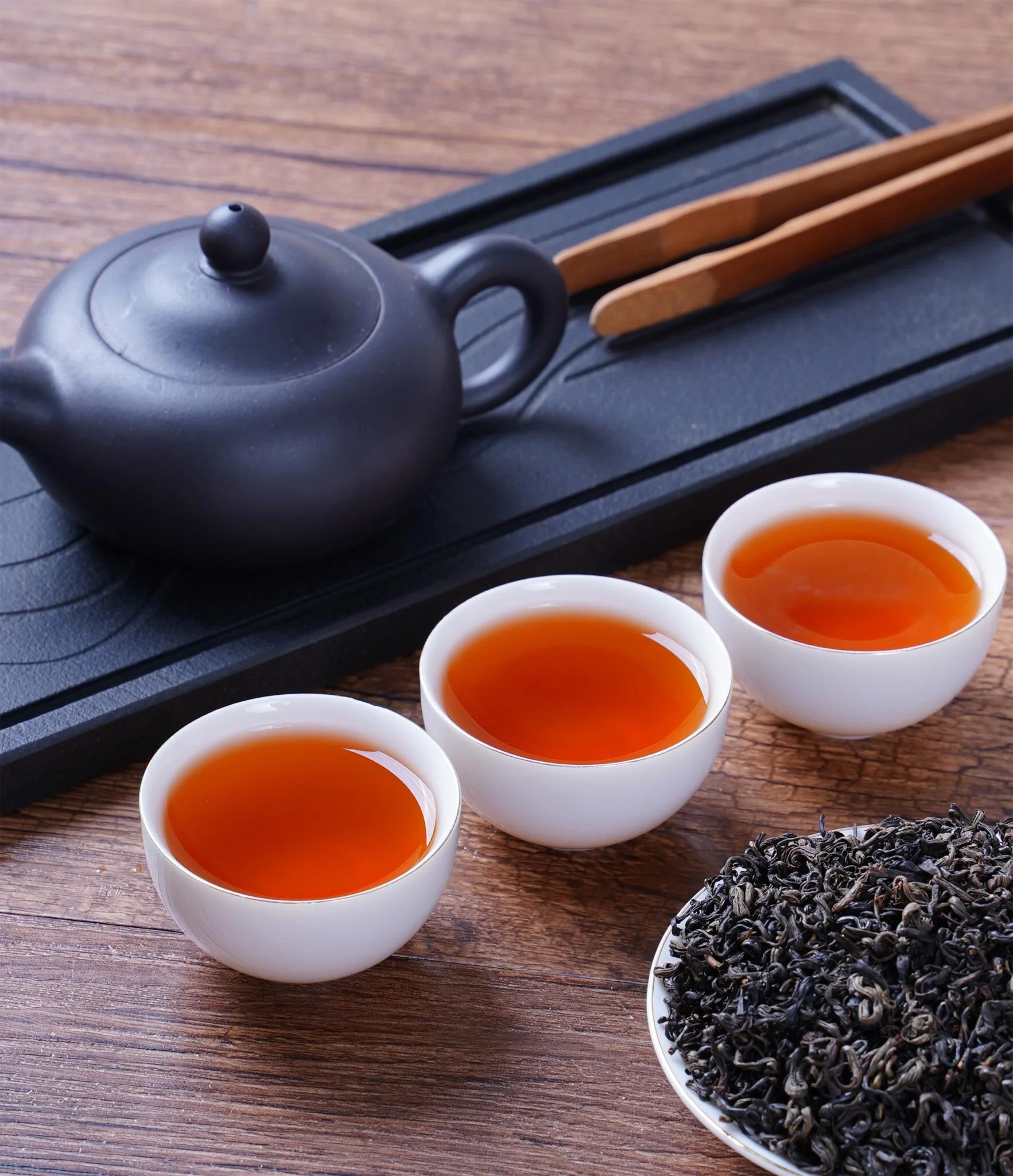
A 2025 study in Foods measured L-theanine and caffeine in brewed infusions of 68 tea samples, reporting milligrams per 200 mL. Here are the 10 minute steeps at 80°C, with the theanine-to-caffeine ratio worked out from the study’s own numbers:[3]
| Tea type | L-theanine (mg/200 mL) | Caffeine (mg/200 mL) | Theanine per mg of caffeine |
|---|---|---|---|
| Green | 17 | 28 | 0.6 |
| Black | 22 | 28 | 0.8 |
| White | 4.3 | 24 | 0.2 |
| Oolong | 2.8 | 19 | 0.15 |
| Pu-erh | 4.6 | 38 | 0.1 |
Two cautions. The theanine measurements came from only 20 samples (3 white, 4 green, 3 oolong, 6 black, 2 pu-erh), so one batch can move a category a lot. And these are results for commercial samples brewed in a lab, not for any specific tea we sell. No published figure exists for a particular Longjing or Tieguanyin, and we will not invent one.
The pattern is still useful. In this study green and black teas gave the most L-theanine per cup, and white, oolong and pu-erh gave much less, while their caffeine was in a similar range. You may see claims elsewhere that white tea and oolong are rich in L-theanine. This measurement does not support that for the brewed cup, though dry-leaf figures can tell a different story. The Frontiers review lists dry-weight averages of 6.56 mg per gram for green tea, 6.26 for white, 6.09 for oolong and 5.13 for black.[1] Dry leaf and cup are different measurements, because what ends up in your water depends on how much leaf dissolves.
For caffeine, see our guides to green tea caffeine, white tea caffeine, oolong tea caffeine and pu-erh caffeine.
A cup of tea gives you far less than the trial dose
The trial above used 100 mg of L-theanine. By the numbers in the table, that is roughly five strongly steeped cups of black tea or six of green. A single cup gives you around 12 to 22 mg in the best cases. That is not a reason to skip tea. It means the tea ritual should be judged on how it feels, not on whether it matches a supplement dose.
The ratio is worth noting too. The trial used twice as much L-theanine as caffeine. Tea runs the other way around, with less L-theanine than caffeine in every row above. Green and black come closest.
Why shading raises L-theanine, and why Chinese teas mostly skip it
Growers of Japanese matcha and gyokuro cover their tea bushes before harvest, and shading is generally reported to raise L-theanine in the leaf. A 2022 study of gyokuro-style tea grown in Australia found that shading of about 99 percent of visible light was needed to improve quality, and tied the improvement to changes in theanine and caffeine.[4] The paper did not give a percentage for theanine in the abstract we could access.
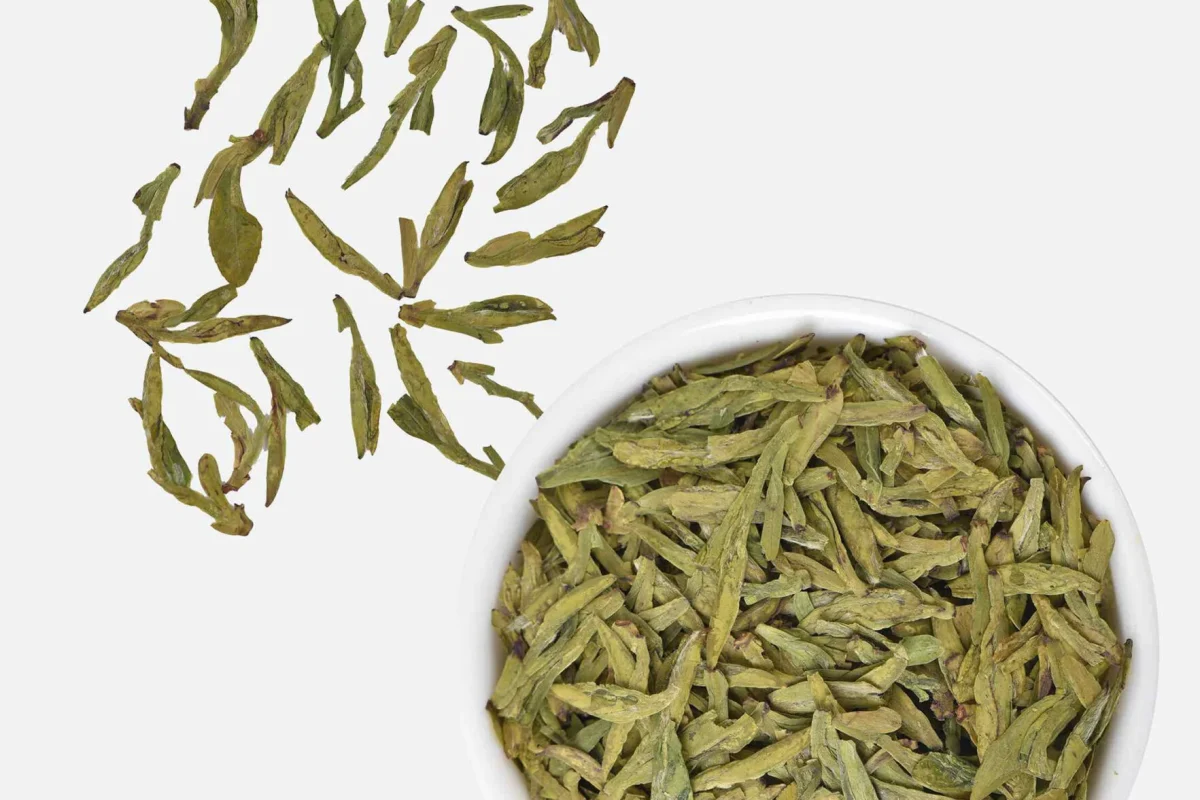
Famous Chinese green teas such as Longjing are traditionally picked early in spring and are not shade-grown the way gyokuro is, so we would not expect them to match it on this one number. We have no published measurement to compare them directly. What they offer instead is a toasted chestnut sweetness and a clean finish.
Leaf age, harvest and processing change the number
Young growth holds more L-theanine. A Food Chemistry study of tea grown in the Azores measured 7.02 percent of dry weight in young shoots and 6.10 percent in mature leaves. The same study found 2.28 percent in fermented tea against 3.10 percent in non-fermented tea.[5] That is one study of one region, but it points the same way as the cup data: green tea keeps more, and oxidized or heavily processed teas keep less.
For buying, this means early spring picks and bud-heavy grades are the better bet. Our spring-picked West Lake Longjing and Dongting Biluochun fit that description. It also means a long gongfu session or a 10 minute steep of any tea extracts more of everything, L-theanine and caffeine alike. Steeping time and temperature moved caffeine in the Foods data far more than they moved L-theanine, which stayed fairly flat after about 5 minutes. A shorter, cooler steep gives you a gentler caffeine dose without losing much L-theanine.[3]
Which Chinese tea to brew for calm focus
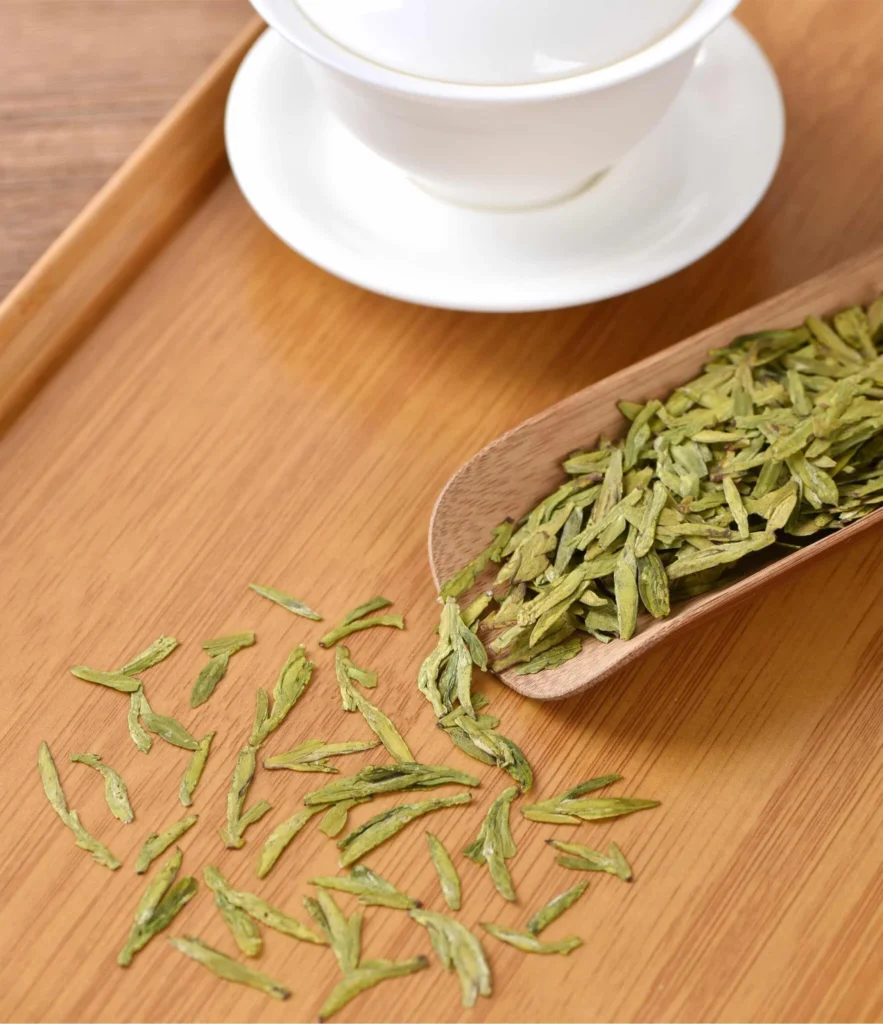
Our picks follow the evidence above: more L-theanine per cup from green and black, plus short steeps to keep caffeine in check.
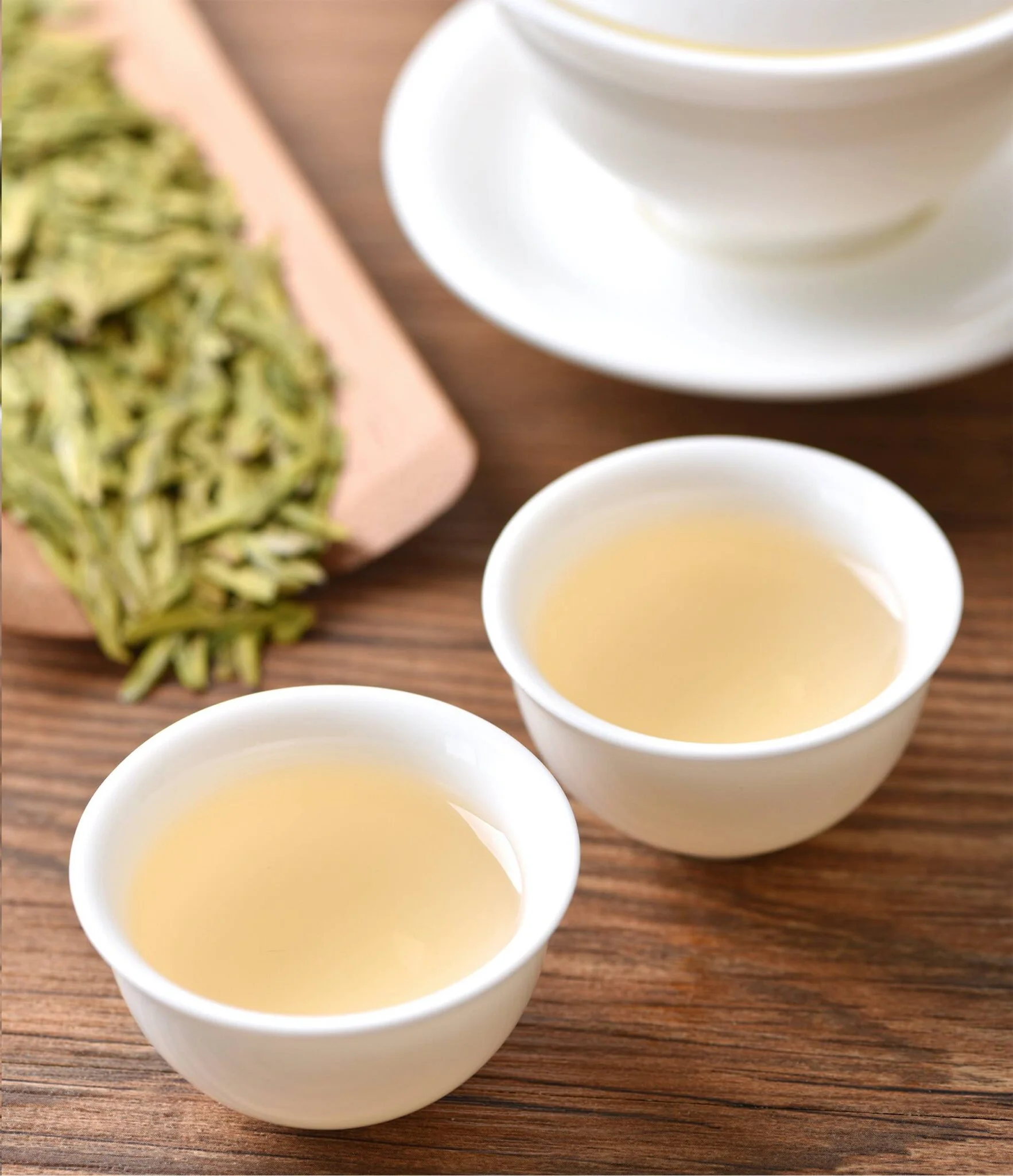
- Green tea for a morning start. West Lake Longjing, Dongting Biluochun or Huangshan Maofeng. Brew at about 80°C for 2 to 3 minutes. Browse the full green tea collection.
- Black tea for a fuller, steadier cup. Qimen (Keemun) Maofeng or Yunnan Gold Tip. The study’s black tea samples led on L-theanine per cup, though they also carry caffeine like the rest. See the black tea collection.
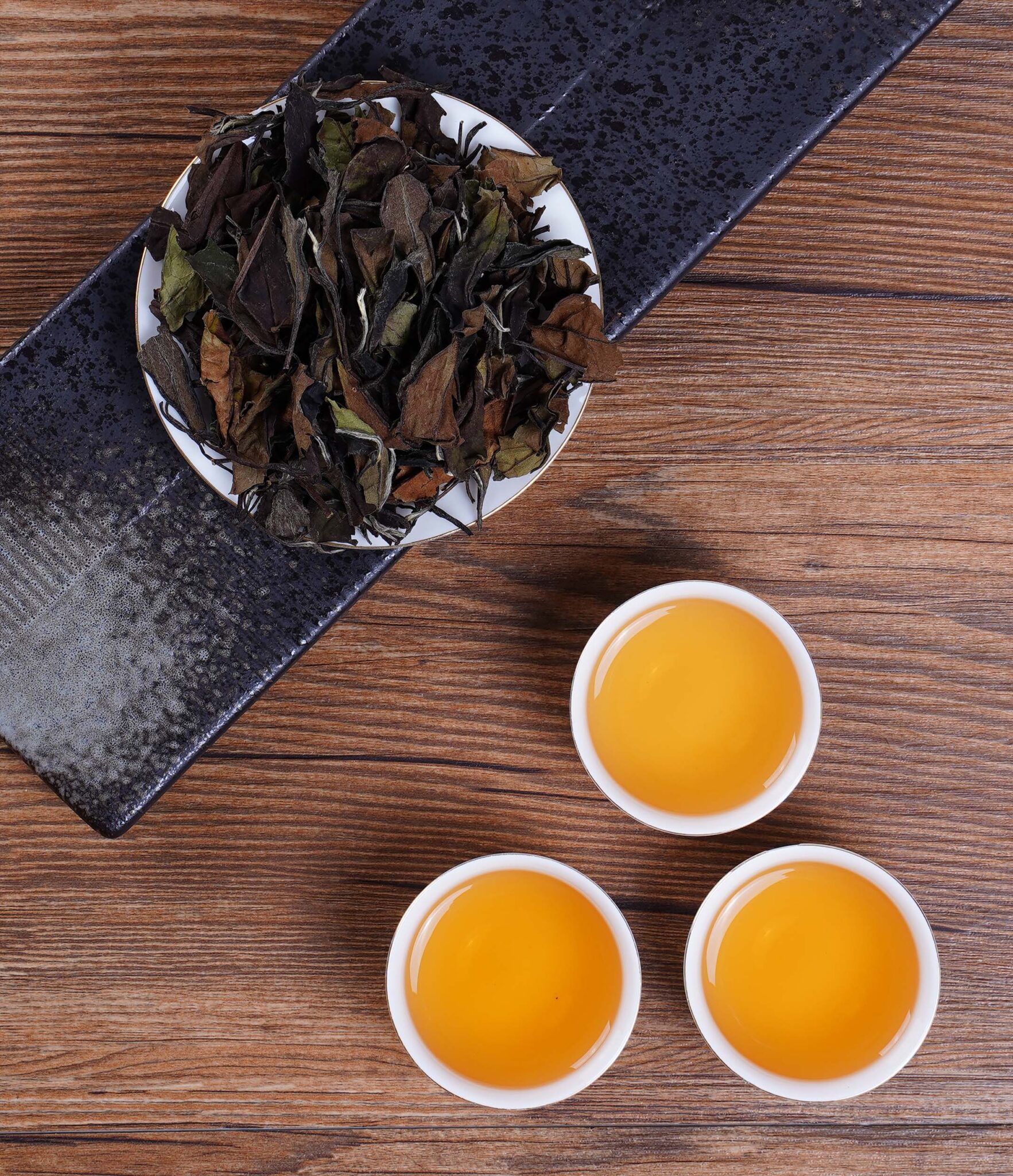
- White tea for a lighter afternoon cup. Silver Needle or Shoumei. Lower in cup L-theanine in the lab data, but also the gentlest on caffeine. See the white tea collection.
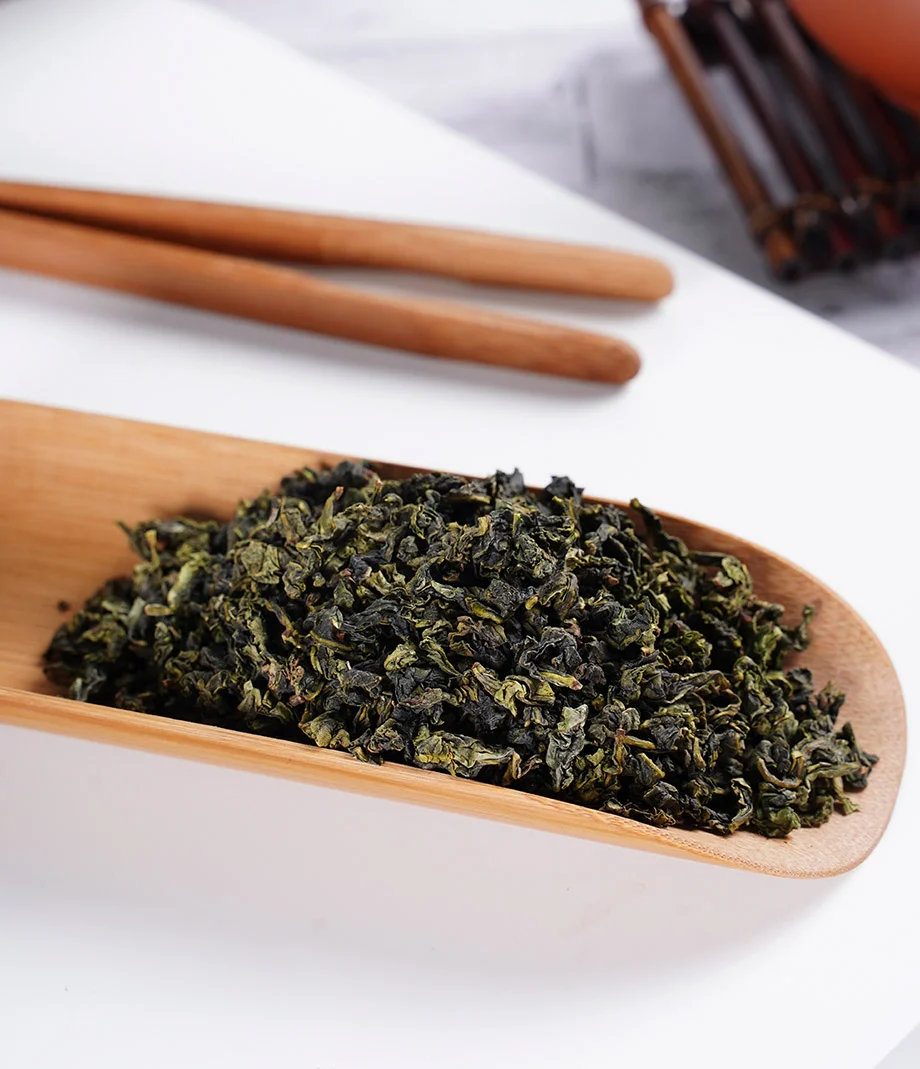
- Oolong for slow sessions. Tieguanyin suits gongfu steeping, where you sip small cups over an hour. The oolong collection has more.
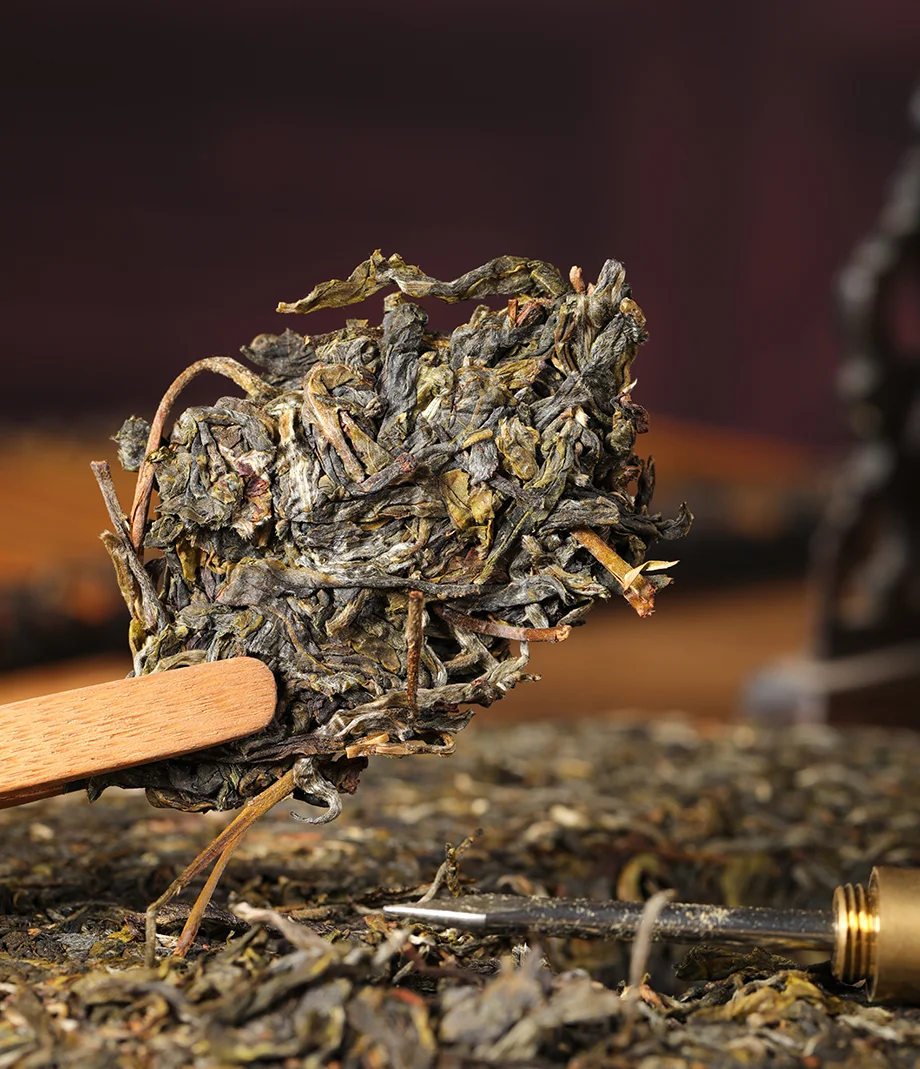
- Pu-erh after a meal. Jingmai Mountain raw pu-erh is the one to pick for flavor, not for L-theanine. The pu-erh collection covers raw and ripe.
If you want help with brewing gear, a gaiwan makes short steeps easy to control. For how tea caffeine compares with coffee, read caffeine in tea vs coffee.
Is there a tea with L-theanine and no caffeine?
Not among true teas. Every tea made from Camellia sinensis, whether white, green, oolong, black or pu-erh, contains caffeine. Decaffeinated tea is a separate product made by stripping caffeine out of regular tea. Sources describe decaffeination as targeting caffeine while leaving much of the L-theanine, but we found no published cup measurements for commercial decaf, so we cannot give you a number. Herbal teas and tisanes, such as chrysanthemum or rooibos, are not made from the tea plant and contain no L-theanine unless a manufacturer adds it. Check the label.
Common questions
Which tea is best for L-theanine? In the published cup data above, green and black tea rank highest, with green tea closest to an even balance with caffeine. Shade-grown Japanese teas such as matcha and gyokuro are widely reported higher still, but we do not sell them.
What tea is good for ADHD? We cannot recommend tea as a treatment. One review mentions a small study of five boys with ADHD where L-theanine with caffeine improved sustained attention, which is far too small to guide anyone.[1] Talk to a clinician about ADHD care.
Can people with type 2 diabetes drink green tea? Plain unsweetened tea has almost no sugar, but we did not find evidence strong enough to make health claims here, and your medication and glucose targets are individual. Ask your doctor, and skip sweetened bottled versions.
What is L-theanine supposed to do? It is studied for promoting relaxed attention, especially alongside caffeine. The evidence is early and mostly short-term, so treat it as a pleasant property of tea, not a remedy.