Does oolong tea have caffeine? Yes. Published figures for a standard 8 oz cup of oolong tea put the caffeine between 30 and 55 mg, against roughly 95 mg for a cup of brewed coffee.
Now the part almost nobody tells you: that number is the least useful thing on this page. When researchers measured caffeine in tea infusions by HPLC, brewing time, water temperature, and even the format the tea was served in all changed the result significantly. Steeping longer alone drove one tea’s caffeine up several times over.[2] The leaf sets a starting point. Your kettle decides the cup.
So the question worth answering is not whether oolong tea has caffeine, or even how much it has on average. It is how much caffeine is in the cup you are about to drink, and that is something you control.
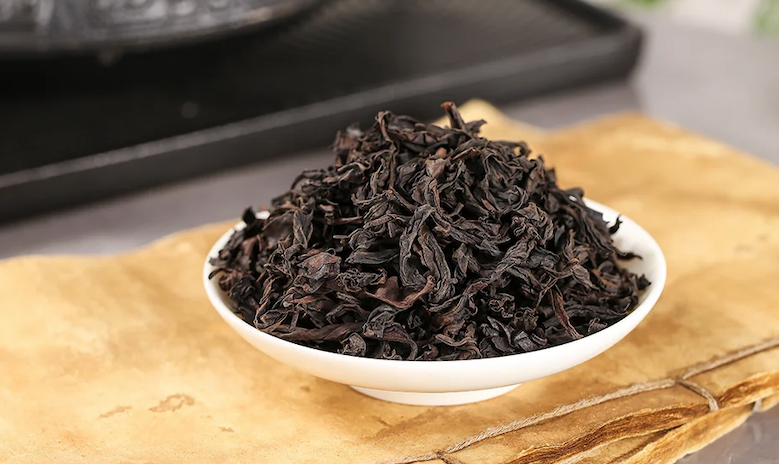
How much caffeine is in oolong tea
Per 8 oz cup, brewed western style with about 3 grams of leaf:
| Drink | Typical published range |
|---|---|
| White tea | 15 to 40 mg |
| Green tea | 25 to 50 mg |
| Oolong tea | 30 to 55 mg |
| Black tea | 30 to 60 mg |
| Brewed coffee | 80 to 100 mg |
Treat these as bands, not facts. They describe an average cup, brewed an average way. They do not describe yours, and the ranges overlap enough that brewing choices can move a tea clean out of its own band.
So does oolong tea have caffeine at the top of that band, or the bottom? That is not settled by the leaf you bought. It is settled in the next three minutes.
The three levers that actually decide your cup
Steep time. The single biggest lever, and the easiest to ignore. Caffeine is highly water soluble and it leaves the leaf quickly. In the HPLC study above, extending the brew to 10 minutes raised measured caffeine dramatically compared with a short steep.[2] If you leave the leaves sitting in the pot while you answer email, you are brewing a much stronger cup than you think.
Water temperature. Hotter water extracts more, and extracts it faster. The same study found brewing temperature significantly changed the caffeine that ended up in an oolong infusion.[2] Boiling water pulls harder than water at 80°C.
How much leaf. The most obvious lever, and the one people actually adjust. More leaf in the same volume of water gives you more of everything, caffeine included.
Everything else is downstream of these three.
Gongfu brewing changes the arithmetic
Almost every caffeine guide answers for one western mug: a few grams of leaf, one long steep, drink, done.
That is not how oolong is drunk in Chaozhou or Anxi, and it is not how we brew it. Gongfu brewing uses far more leaf, around 7 to 8 grams in a small gaiwan, with very short steeps of 5 to 15 seconds, repeated 10 or more times across a session.
Two things follow, and both are useful.
The early infusions carry the most. Because caffeine extracts quickly, the opening steeps give up a disproportionate share of it and each later infusion surrenders less. By the eighth or ninth pour you are drinking something far gentler than the first, even though the aroma is still going. This is why a long gongfu session does not land like 10 cups of coffee.
You are drinking in mouthfuls, not mugs. A gaiwan pour is small. What you actually take in depends on how many pours you finish, not on the alarming-looking 8 grams of leaf you started with.
Across a full session, oolong tea does have caffeine adding up. It simply arrives as a long, flat curve instead of a single spike.
If you want a lower-caffeine session, rinse the leaf and pour off the first infusion before you start drinking. Caffeine leaves early, so this costs you less aroma than you would expect and takes a real bite out of the stimulant.
Loose leaf and tea bags do not behave the same
A tea bag is usually broken leaf and dust, not whole leaf, and the difference in surface area matters more than people expect. Broken leaf has far more of itself exposed to the water immediately, so it extracts fast and hard.
This is measurable. In the same study, black tea in cup-sized bags delivered significantly more caffeine than the same tea served as loose leaf.[2] The serious-looking loose leaf was the gentler cup.
If you are drinking whole-leaf oolong and comparing it to a supermarket bag, you are not comparing like with like.
Roast changes the flavour. Brewing changes the caffeine.
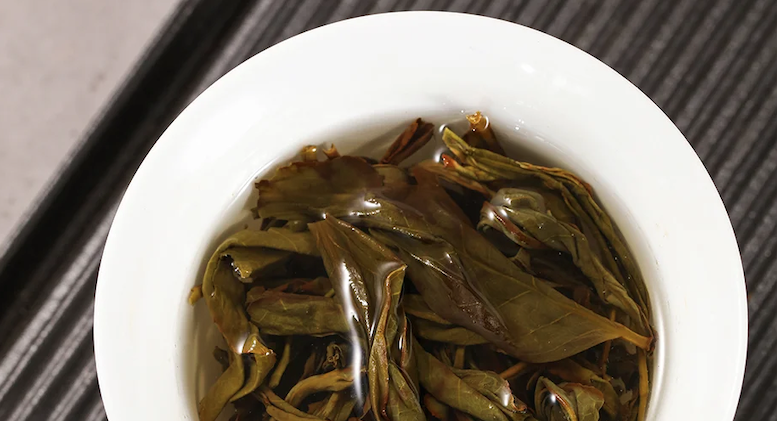
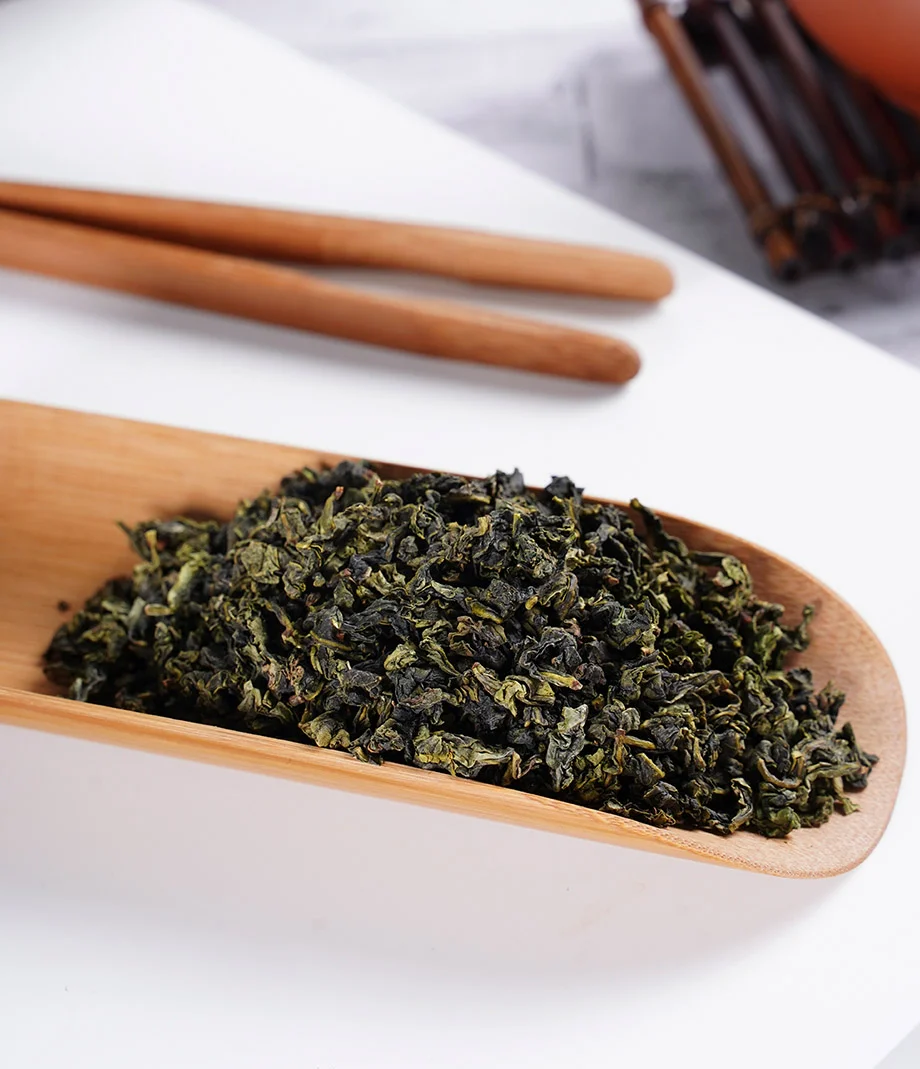
We sell Ya Shi Xiang and Ya Shi Xiang roasted, and Tieguanyin alongside Tieguanyin roasted. Same cultivar, same farm, different finishing.
Roast transforms the flavour. The unroasted Tieguanyin is green, floral, and bright. The roasted one is darker and nuttier, the orchid note tucked under a warm toasted character. Anyone can taste it in a single sip.
If your goal is a gentler cup, the lever to reach for is a shorter steep and cooler water, not a different roast. That is the change that reliably works.
Does oolong tea have caffeine like coffee, green, or black?
Against coffee, oolong tea has caffeine at roughly half the level, and the experience differs at the same dose. Tea carries L-theanine, an amino acid found in the tea plant and effectively absent from coffee, which has been studied for its effects on stress and cognition.[3] Most drinkers describe the result the same way without being prompted: steadier, longer, less jagged than coffee.
Against green and black tea, be careful with confident answers. Published comparisons disagree with each other, and measured values shift with the brewing protocol used to obtain them. A hard-steeped Da Hong Pao will out-caffeinate a gently brewed green without difficulty, and the reverse is just as easy to arrange. We go further into the comparison in caffeine in tea versus coffee and in does green tea have caffeine.
Does oolong tea have caffeine if it is decaf?
Some, yes. Start from the rule: any tea made from Camellia sinensis contains caffeine, and oolong tea is no exception. A tea sold as caffeine-free is either not made from the tea plant, in which case it is a herbal infusion, or it has been decaffeinated industrially.
Decaffeinated oolong exists and it is not zero. The process removes most of the caffeine, leaves a residue, and costs the tea a great deal of its aroma along the way. For a tea whose whole reason for existing is aroma, that is a poor trade. Brew a real oolong shorter and cooler instead, or drink it earlier in the day.
Flavoured supermarket oolongs, including milk oolong and peach oolong, follow the same rule. The caffeine comes from the leaf. The flavouring does not change that.
How much is too much
For most healthy adults, 400 mg of caffeine a day is not associated with negative effects, which is roughly 4 to 5 cups of coffee. Caffeine content varies considerably between products, and people vary in their sensitivity to it.[1] At oolong’s typical 30 to 55 mg per cup you have a great deal of room.
Oolong tea has caffeine, and it has considerably less of it than coffee. What it also has is a set of dials, and every one of them is in your hands.
Brew it with attention, in a gaiwan, and watch what changes when you change your steep. Start with our oolong teas and our Phoenix Dan Cong cultivars.