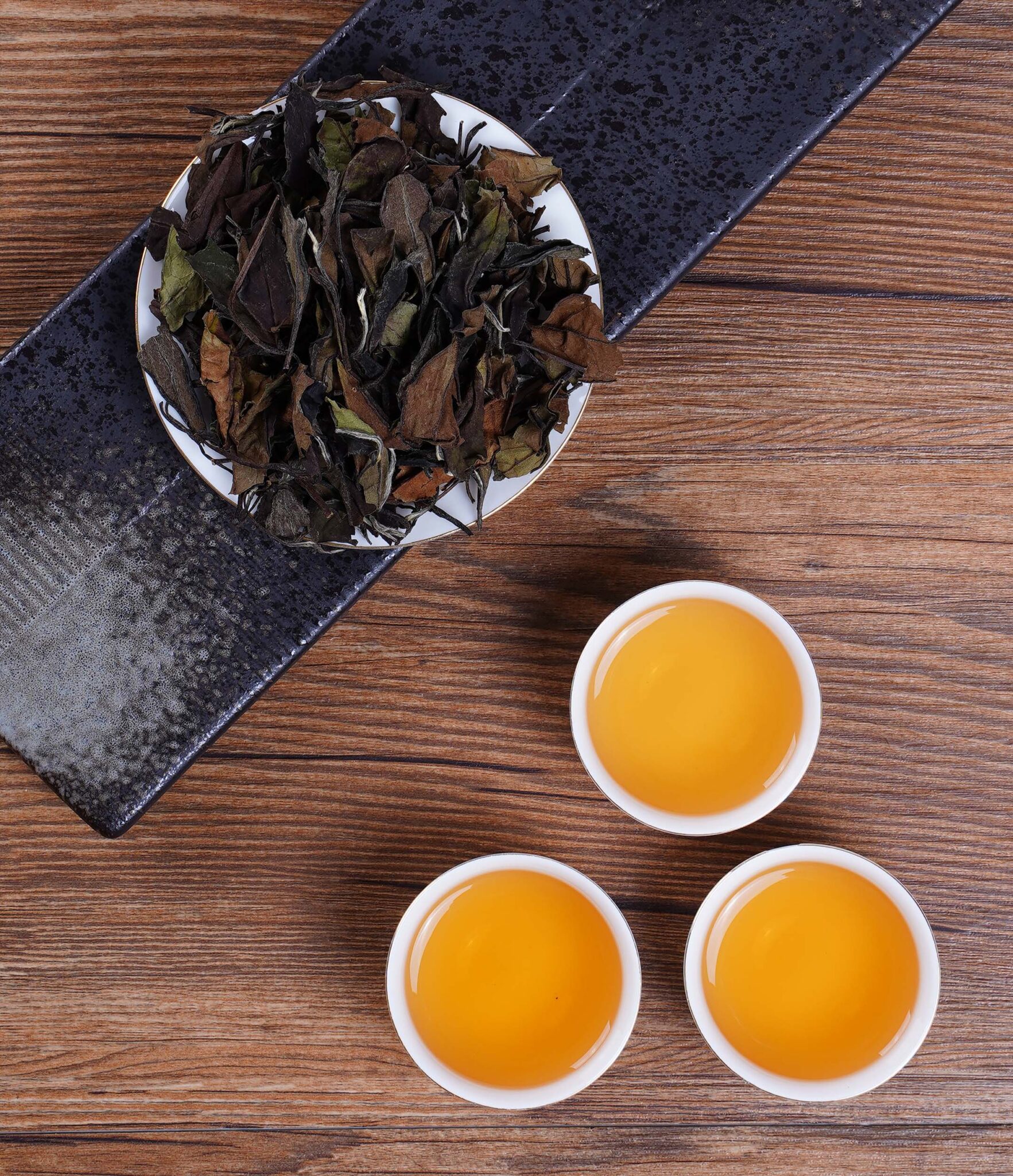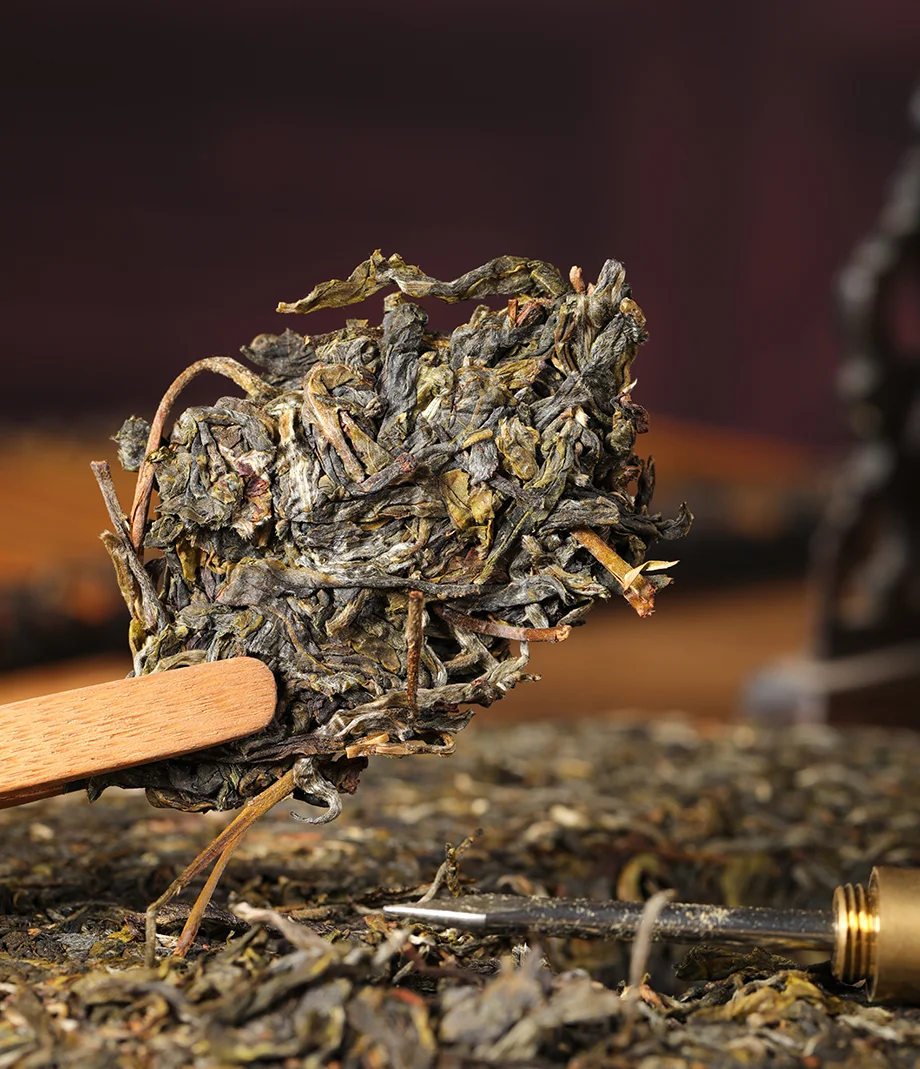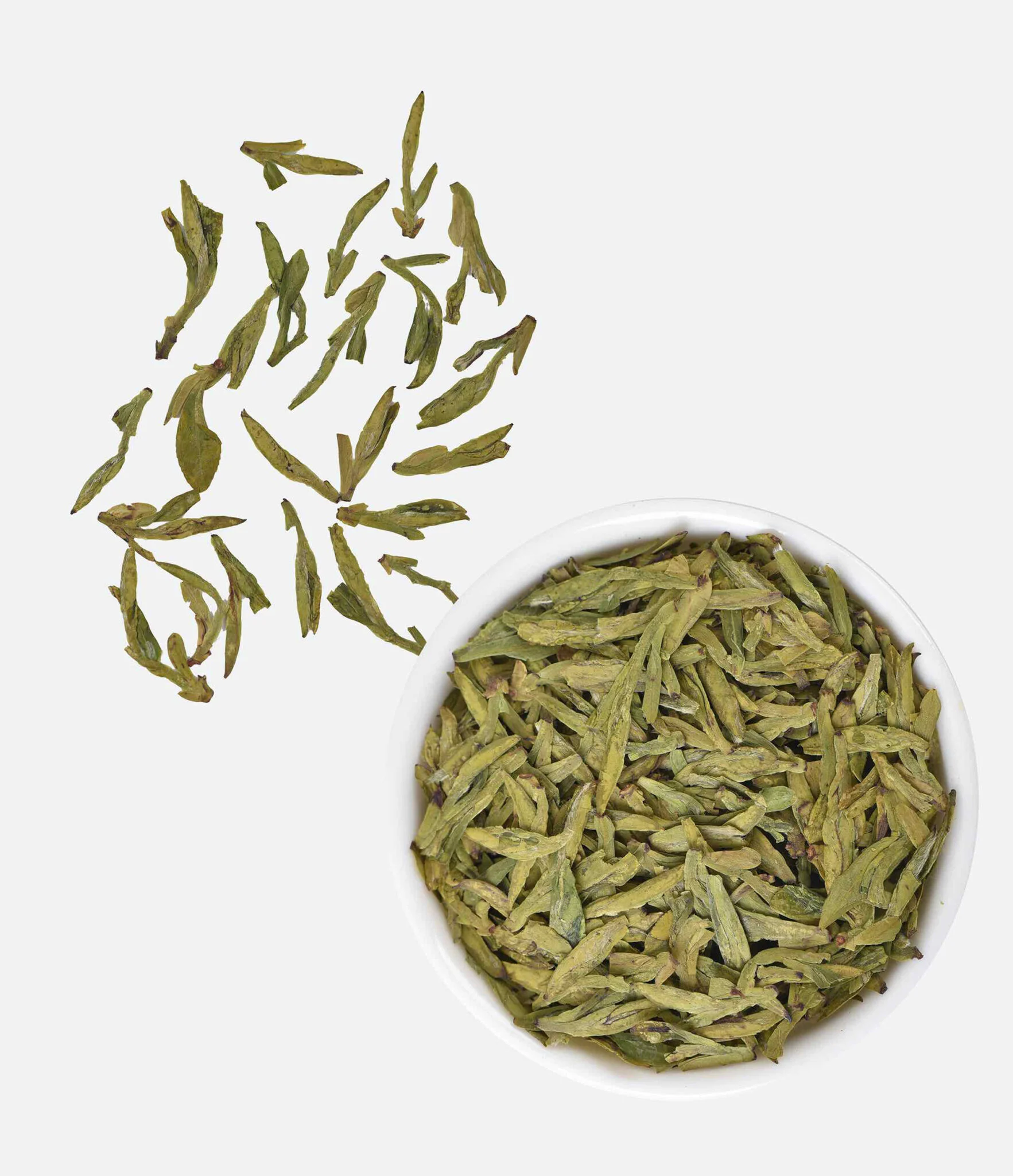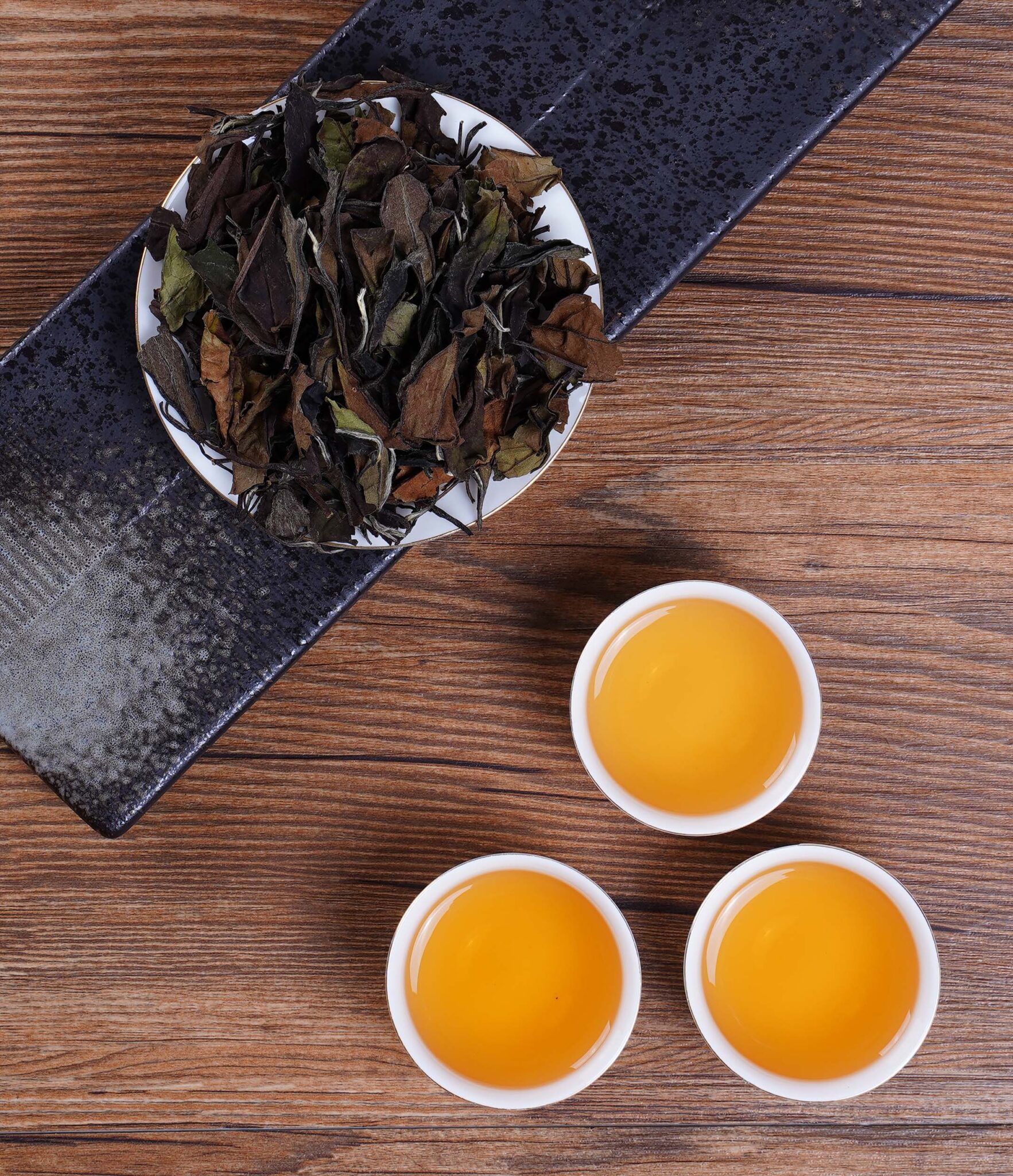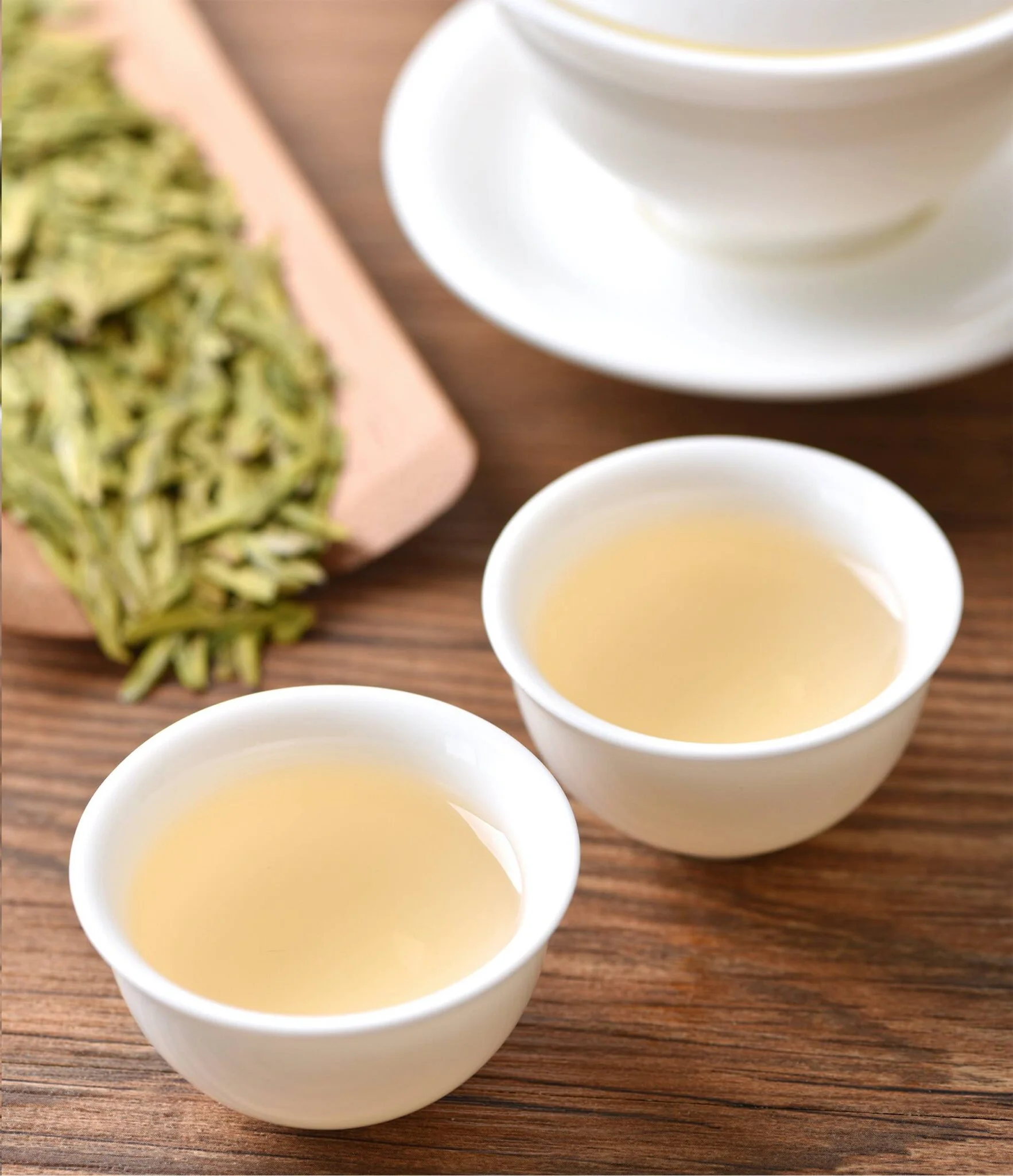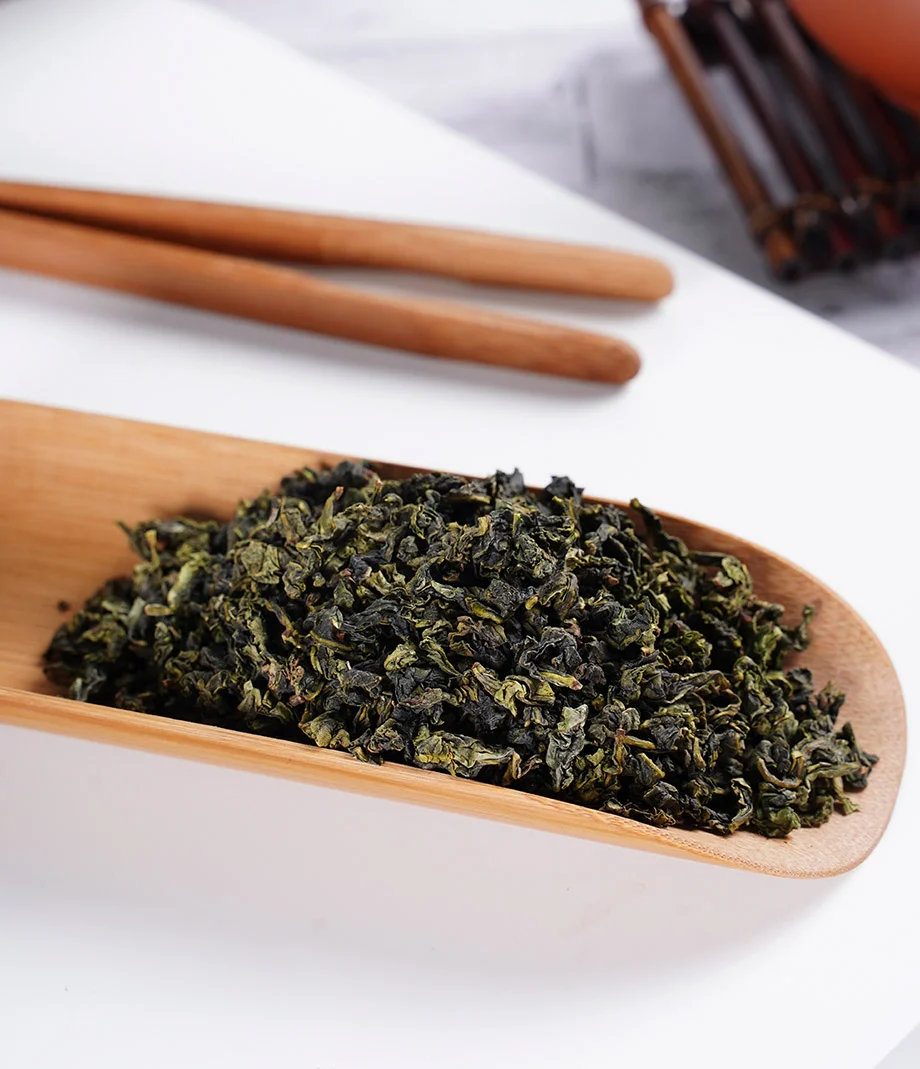

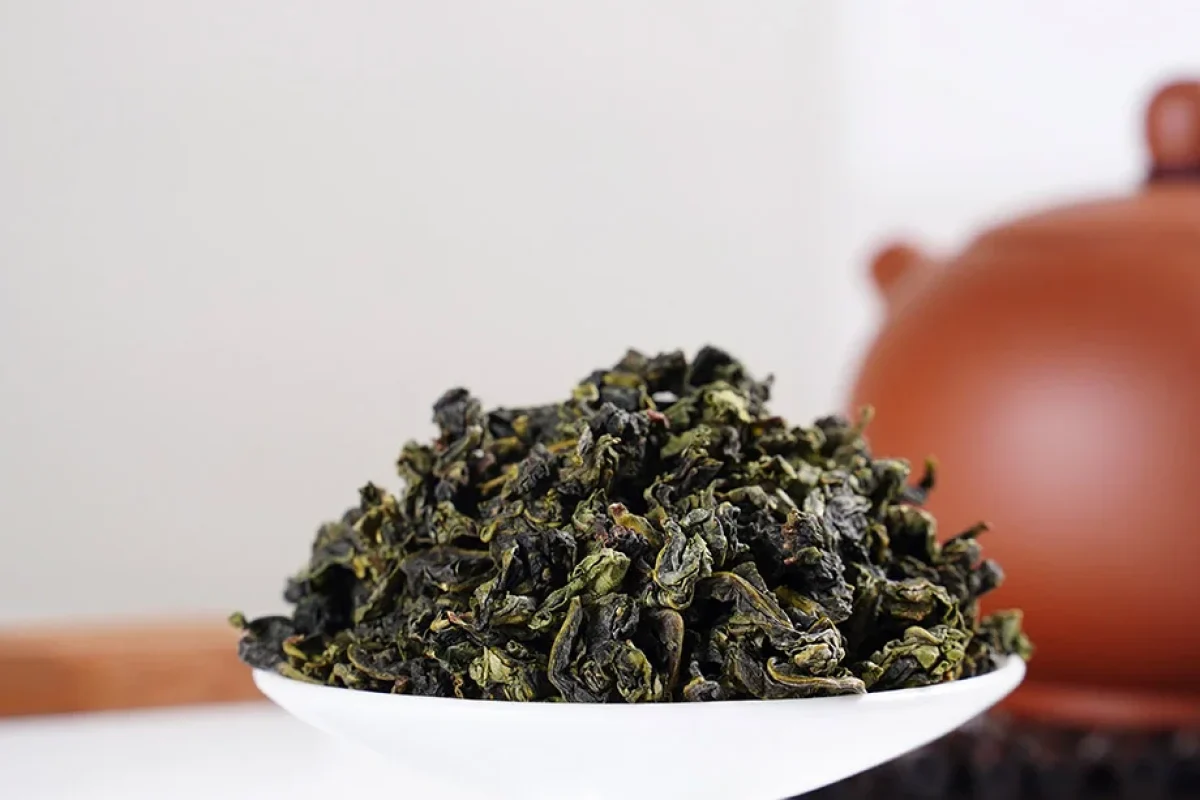
Tea brewing temperature runs from 70°C for spring green tea to a full 100°C for black tea, and the rule is simple: the more delicate the leaf, the cooler the water. Green tea sits at 70°C to 80°C, white tea at 80°C to 85°C, oolong at 90°C to 100°C, Phoenix Dan Cong and raw pu-erh at 95°C to 100°C.
Those are the ranges printed on our own product pages, tea by tea. The reason other guides disagree with them is that water temperature and steep time work as a pair. Pick one without the other and the advice contradicts itself.
Brewing temperature by tea
Starting temperatures for the teas we sell. Use the low end for a first brew and move up if the cup tastes thin.
| Tea | Examples | °C | °F |
|---|---|---|---|
| Green | West Lake Longjing, Biluochun, Huangshan Maofeng | 70 to 80 | 158 to 176 |
| Jasmine green, blooming tea | Jasmine Green, Jasmine Fairies | 70 to 80 | 158 to 176 |
| White | Silver Needle, Shou Mei | 80 to 85 | 176 to 185 |
| Wuyi rock oolong | Shuixian | 90 to 96 | 194 to 205 |
| Oolong | Tieguanyin, Da Hong Pao, Rou Gui | 90 to 100 | 194 to 212 |
| Phoenix Dan Cong | Ya Shi Xiang, Mi Lan Xiang, Snowflake | 95 to 100 | 203 to 212 |
| Raw pu-erh | Jingmai Mountain cake | 96 to 100 | 205 to 212 |
| Black | Songluo, Qimen Maofeng, Yunnan Gold Tip | 100 | 212 |
| Chrysanthemum | Golden Silk King | 90 to 100 | 203 to 212 |
Browse the teas by type in our collections for green, white, oolong, pu-erh and black tea.
Hot water extracts faster, and bitterness comes with it
Heat pulls catechins and caffeine out of the leaf faster. Past a point it pulls out the astringent compounds faster still. A study of Turkish green tea tested 75°C, 85°C and 95°C for 1 to 45 minutes and scored each cup for taste. The best result came at 85°C for 3 minutes, which gave the peak EGCG yield (50.69 mg per 100 ml) and the highest sensory score (8.6 out of 10). At 95°C, EGCG peaked after just 2 minutes. Long steeps scored near the bottom: 95°C for 45 minutes rated 0.1 out of 10, and 85°C for 45 minutes rated 2.1.[1]
A second lab comparison tested water from 60°C to 95°C and steeps from 5 to 30 minutes. Hotter water and longer time did not reliably raise the concentration of polyphenols and EGCG in the cup.[2]
Two things follow. A long steep at high heat ruins green tea, and the time matters as much as the degrees.
Leaf structure decides how much heat the tea can take
The ranges in the chart track what the leaf is made of:
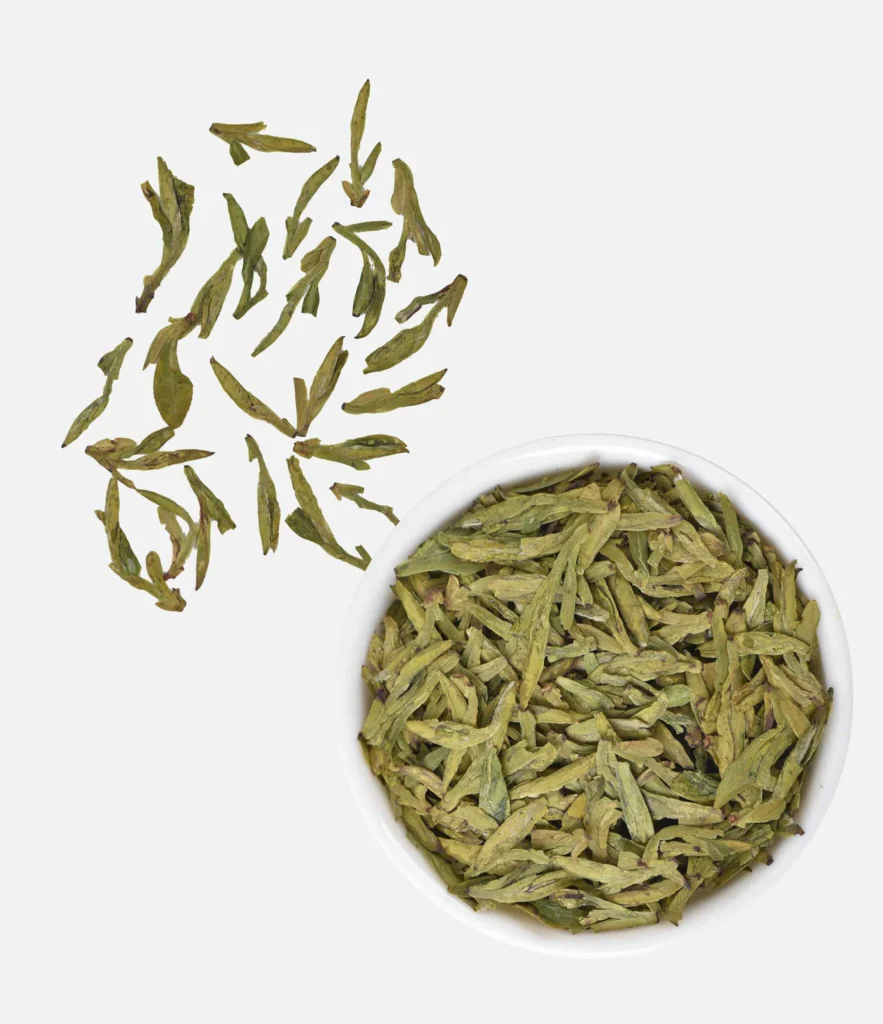
- Buds and young leaves (Longjing, Silver Needle) release flavor fast and turn harsh fast. They want 70°C to 85°C.
- Rolled and roasted oolong (Tieguanyin, Wuyi rock tea) is dense or fired, so it needs 90°C to 100°C to open and give up its aroma.
- Twisted strip leaf (Phoenix Dan Cong) needs near-boiling water and very short steeps. Our Dan Cong brewing guide notes that cooler water leaves the cup flat and mutes the floral lift.
- Compressed cake (raw pu-erh) needs near-boiling water to loosen the pressed leaf. Our pu-erh brewing guide explains why young raw cake is still safe at 96°C to 100°C: the steeps are seconds long.
- Fully oxidized black tea is the most heat-tolerant, which is why it takes a full 100°C.
Temperature and steep time trade against each other
Hot water for 15 seconds and hot water for 3 minutes are two different methods. The gongfu method uses a high ratio of leaf to water and very short steeps, so the leaf can take hotter water. The mug method uses less leaf and long steeps, so the water has to come down.
First-steep times in a gaiwan, from our gaiwan guide:
| Tea | Leaf per 100 ml | First steep |
|---|---|---|
| Green | 3 g | 15 seconds |
| White, bud grades | 4 g | 20 seconds |
| White, Shou Mei | 5 g | 10 seconds |
| Oolong, rolled | 6 g | 20 seconds |
| Oolong, strip (Dan Cong) | 5 g | 8 seconds |
| Black | 4 g | 10 seconds |
| Raw pu-erh | 6 g | 8 seconds |
Add 5 seconds to each infusion after the first. When the liquor thins, add 15 to 20 seconds instead.
For a mug, the numbers shift. Raw pu-erh in a mug takes 3 to 4 g in 250 ml at about 90°C for 60 to 90 seconds. Oolong takes about 3 g in 250 ml for 2 to 3 minutes. Our oolong brewing guide lays out both methods side by side.
Get the number right without guessing
A kettle with a temperature setting removes the problem. Without one, boil the water and let it sit, then check it with a probe thermometer the first few times. Your kettle, your room and your vessel set the wait, so measure once and reuse the timing.
Warm the gaiwan or pot first, so the vessel does not cool the water before it reaches the leaf.
When the cup tastes wrong, change one variable
- Bitter or drying: lower the temperature by 5°C, or cut the steep time. Pour the whole vessel out each round so no leaf sits in water.
- Flat or watery: raise the temperature by 5°C, or add leaf. More leaf is usually the better fix for a thin cup than a longer steep.
Change one thing at a time. Two changes at once tell you nothing about which one worked.
Start with the tea that matches your kettle habit
If you boil the kettle and pour, start with oolong, Dan Cong or black tea, which take full heat. If you will wait for the water to cool, green and white tea reward the effort. Pick a white tea or oolong and brew it with the first-steep table above.