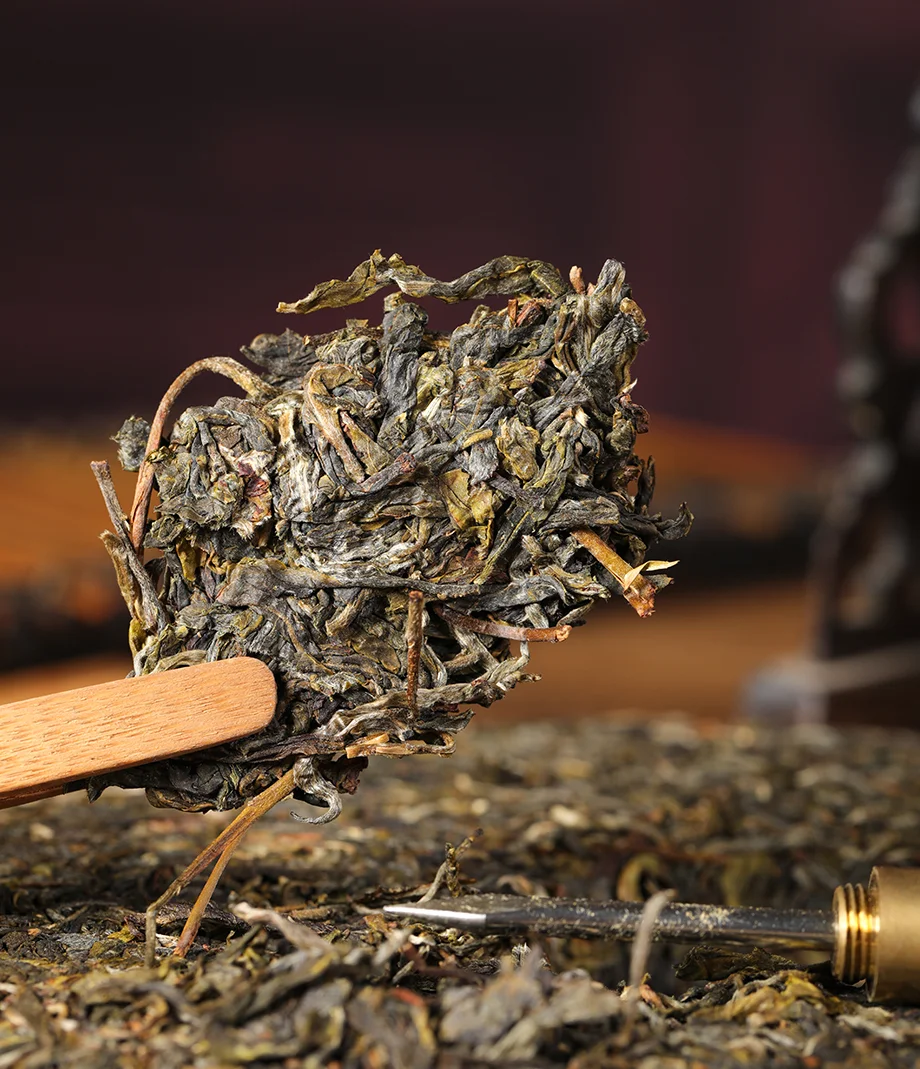

Most tea arrives ready to brew. Pu-erh arrives as a disc pressed hard enough to hurt yourself on, so how to brew pu-erh starts with a question no other tea asks: how do you get any leaf out of it at all.
Then comes the second problem. Look up the water temperature and you will be told 185°F by one guide and a full rolling boil by another, with everything in between, each stated with total confidence. The leaf quantities are worse: published advice for the same tea ranges from three grams per cup to four times that.
Neither spread is random. Both come from a distinction the ranking pages leave out, and once it is on the table the numbers stop contradicting each other.
Why every guide gives you a different temperature
The advice splits along a line most pages never draw: how old the pu-erh is, and how long you plan to steep it.
Young raw pu-erh, pressed within the last few years, still behaves like a green tea in some respects. It is bright, brisk, and carries real astringency. Hit it with boiling water and leave it there for three minutes and it turns harsh. That experience is where the “brew raw pu-erh cool” advice comes from, and within western brewing it is sound.
Aged raw pu-erh and ripe pu-erh are a different matter. Years in storage, or weeks of pile fermentation, soften the leaf and dampen the astringency. Those teas want full boiling water and are hard to over-extract by comparison.
The part that resolves the contradiction is that temperature and steep length work together rather than separately. What actually determines whether you extract bitterness is how much total contact the leaf gets, so hot water for fifteen seconds and hot water for three minutes are not variations on one method. They are two different methods, and only the second one needs the water cooled down.
Our own guidance for the Jingmai Mountain raw cake is 96°C to 100°C, and for the Little Citrus a full 100°C. That is the hot end, and it is correct, because it assumes short infusions. Near-boiling water opens compressed leaf properly and lifts the aromatics that make young sheng worth drinking. What you do not do alongside it is walk away for three minutes.
If you would rather brew in a mug and forget about it, drop the water to around 90°C and keep the steep under two minutes. You will lose a little aroma and avoid a lot of bitterness. That is the trade, and it is yours to make.
Start with the cake
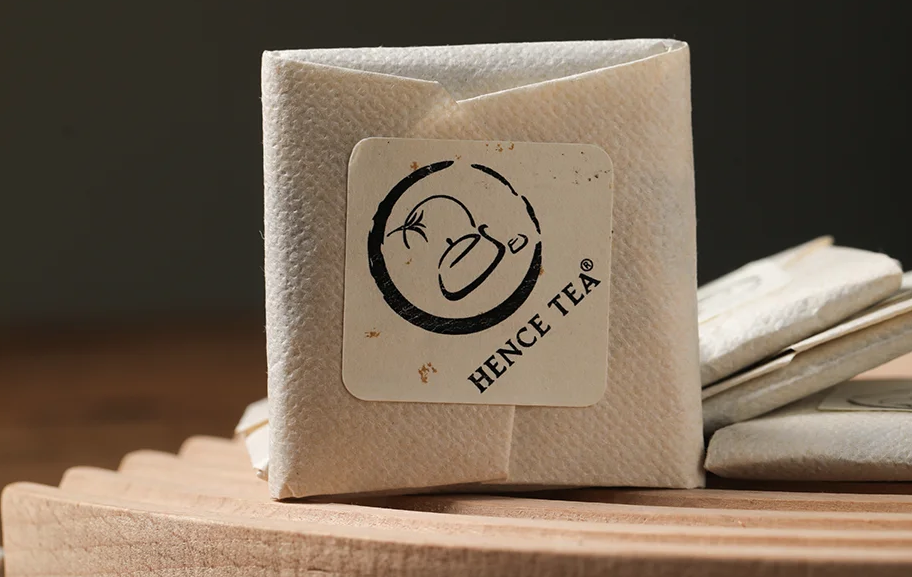
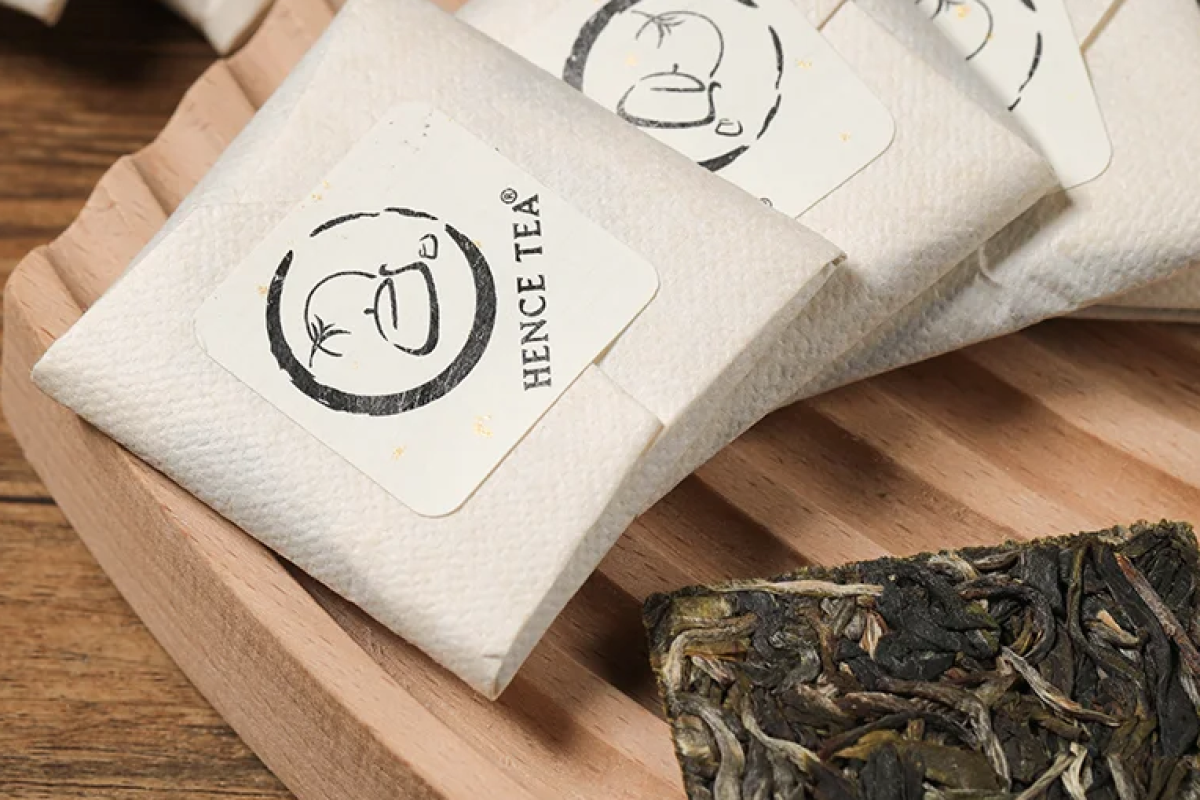
Our raw pu-erh comes as a traditional 357 g cake, about 12.6 oz, or as a mini cake of 1.7 oz, roughly 48 g. The mini is not a single-serving pellet. It is a smaller pressing of the same tea, around a seventh of a full cake, and you break into it the same way.
Use a pu-erh pick, not a knife. A short, sturdy awl is the right tool. Kitchen knives slip on a hard cake, and a slipped knife is how people cut themselves. Our Six Gentlemen sets include the tools for handling compressed leaf.
Work from the edge and from the side. Set the cake flat and go in at the rim, angling the pick along the plane of the disc rather than stabbing down into the face. Rock it gently and lift. You are trying to separate layers along the seams where the leaf naturally lies.
Aim for flakes, not powder. Whole leaf that comes away in intact chunks brews evenly and re-steeps many times. Leaf you have crushed into dust extracts fast, turns bitter, and clouds the cup. If you find yourself grinding rather than prying, change your angle.
Let the first pieces be uneven. A new cake is tightest at the centre and around the pressed dimple on the back. The first few grams often come away ragged. That is normal, and those pieces are still perfectly good tea.
Once opened, keep the cake somewhere dry, dark, and free of strong smells, loosely wrapped in its original paper. Pu-erh is the one tea you are not racing to finish, and it wants to breathe rather than sit sealed in plastic. We have written more on storing tea properly.
How much leaf
This is where the published advice diverges by a factor of four, and the reason is simply that two different methods share one name.
| Method | Leaf | Water | First steep |
|---|---|---|---|
| Gongfu, in a gaiwan | 5 to 7 g | 100 ml | 10 to 15 seconds |
| Western, in a mug or pot | 3 to 4 g | 250 ml, 8 oz | 60 to 90 seconds |
Per millilitre of water, the gongfu ratio is roughly four times the western one. Neither figure is wrong. A page quoting 5 to 6 grams per 100 ml and a page quoting 3 grams per cup are describing different rituals, and most of them never say which.
Pu-erh rewards the gongfu approach more than almost any other tea, because a good cake will give you ten or more infusions and each one tastes different from the last. Brewing it once in a large mug extracts most of what the leaf has in a single pass and throws the rest away. The same split between the two methods applies across the category, and we set it out in more detail in our guide to brewing oolong tea.
How to brew pu-erh gongfu style, step by step
You need a small vessel. A gaiwan is the most versatile and the easiest to learn on. A zisha pot holds heat better and is the traditional choice for pu-erh, and unglazed clay is usually dedicated to one type of tea. A gong dao bei is worth having, since it lets you decant the whole infusion at once so it stops brewing.
- Pry 5 to 7 g of leaf from the cake into the gaiwan.
- Rinse. Fill with water just off the boil, wait about ten seconds, and pour the liquid away. This wakes the compressed leaf and starts it opening. It also discards a share of the caffeine, which leaves the leaf early.
- Warm your cups with the rinse water rather than tipping it out. Cold porcelain flattens the first infusion.
- First infusion, 10 to 15 seconds. Fill, cover, decant completely into the gong dao bei. Do not let it sit.
- Build from there. Add roughly five seconds per infusion. The second and third are usually the best of a young sheng.
- Keep going. Ten infusions is normal from good leaf, and the later ones stretch to a minute or more as the leaf gives up the last of itself.
Watch the leaf rather than the clock as you go. Compressed chunks keep unfurling for the first several rounds, so a piece that was still tight on the second infusion will be wide open by the fifth and will extract faster.
How to brew pu-erh western style
For a mug, use 3 to 4 g in 8 oz of water at around 90°C, and steep 60 to 90 seconds. Taste before you go longer. Re-steep the same leaf two or three times, adding thirty seconds each round.
Rinse first here too. It matters more with compressed tea than with loose leaf, because the leaf has to physically open before it can give you anything.
Our raw pu-erh, and how each behaves
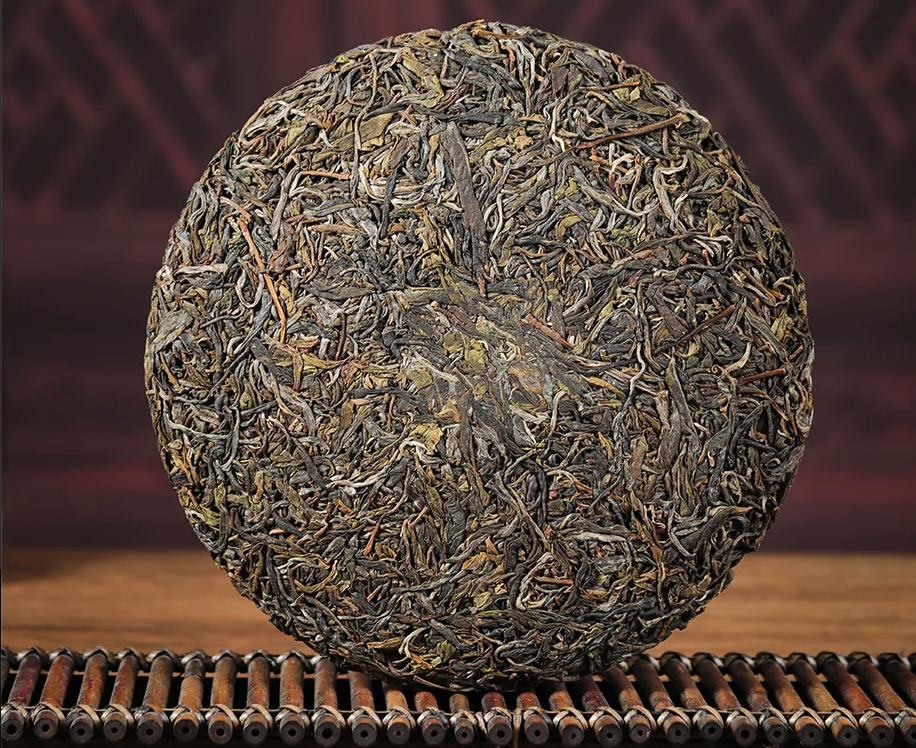
We do not stock ripe pu-erh. Every pu-erh we sell is raw, which means everything above applies directly.
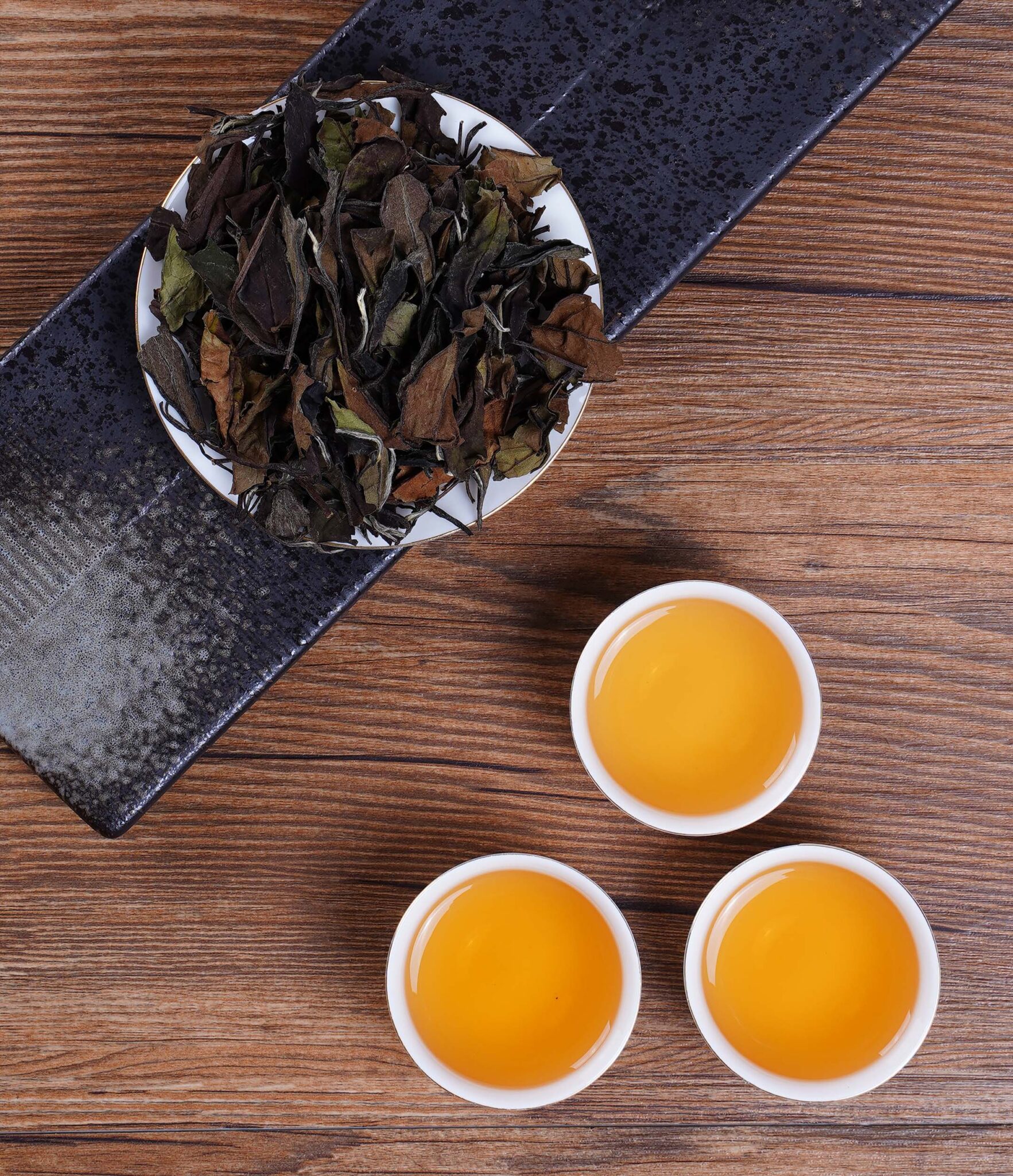
Jingmai Mountain comes from ancient tea gardens near Pu’er City in Yunnan, plucked from trees more than a hundred years old. It brews to a clear golden infusion with fresh earth and light floral aroma, a brisk and verdant body, apricot notes, and a sweet lingering finish. It takes 96°C to 100°C well in short steeps and is the one to start with if you want to understand what raw pu-erh is supposed to taste like. Also available as a mini cake.
Bangwai Mountain, also from Yunnan, is the other traditional 357 g pressing in the collection, and comes as a mini cake as well. Treat it the same way as the Jingmai and let the differences between the two mountains show up in the cup, which is most of the pleasure of drinking single-origin pu-erh.
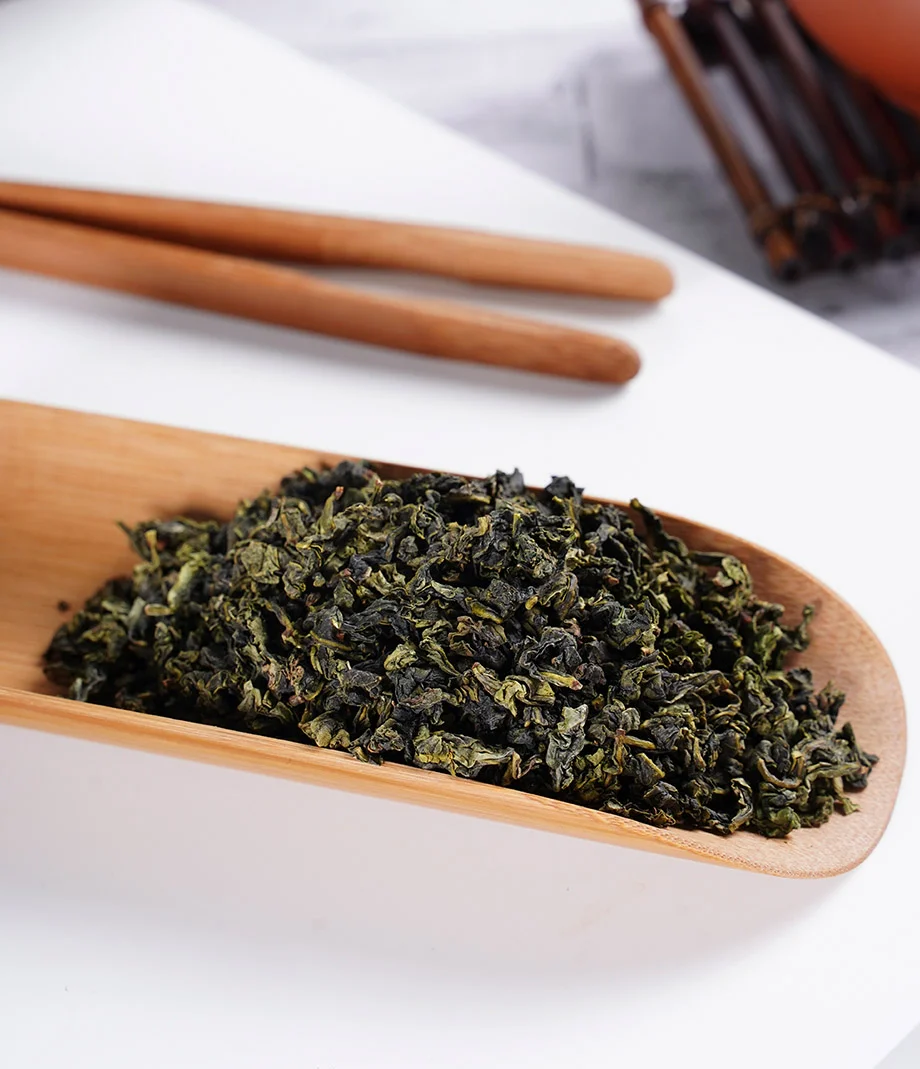
Little Citrus is the exception in handling, since it comes as loose leaf mixed with dried citrus peel from Xinhui in Guangdong rather than pressed into a cake. There is nothing to pry. Brew it at a full 100°C in a gaiwan or porcelain pot. The peel is oily and gives up its aroma quickly, so keep the early steeps short.
Where people go wrong
Stabbing down into the face of the cake. It breaks leaf, makes dust, and risks your hand. Go in from the edge.
Skipping the rinse. With loose leaf it is optional. With a compressed cake it is the step that makes the first real infusion taste like anything.
Treating one temperature as universal. Young raw, aged raw, and ripe pu-erh are three different problems. Almost every guide gives one number for all three.
Letting it sit. Decant completely, every time. Leaf left standing in water keeps extracting, and young sheng punishes it faster than most teas.
Judging a cake on the first infusion. Compressed leaf needs a few rounds to open. The tea you paid for usually shows up on the second or third.
Browse the pu-erh collection, or start with a mini cake if a full 357 g feels like a lot of tea to meet at once. If you want to know how much caffeine you are pouring, we answered that in caffeine in pu-erh. For the same method applied to other teas, see how to brew oolong tea and brewing Phoenix Dan Cong, and for the gardens these cakes come from, Jingmai Mountain.