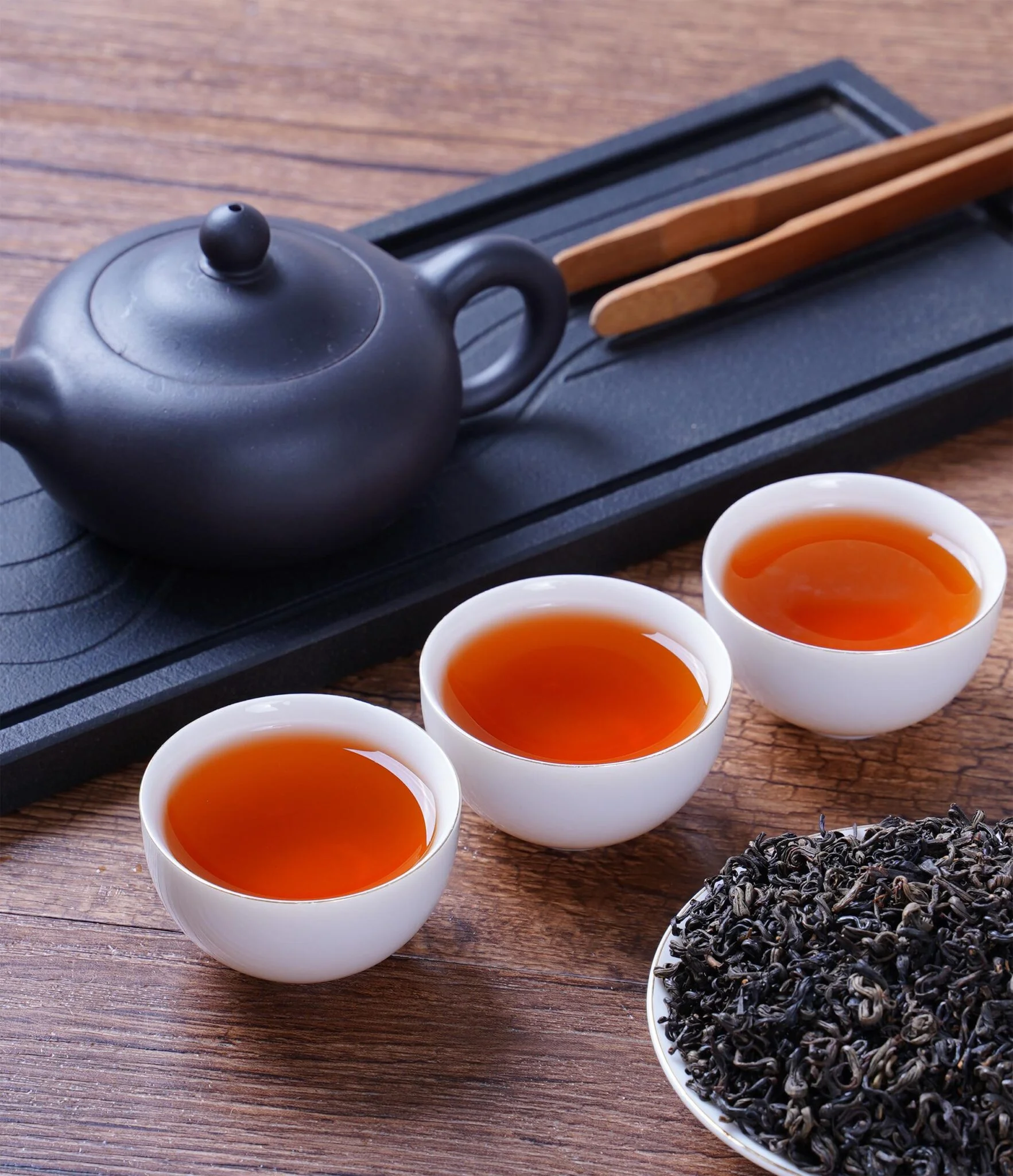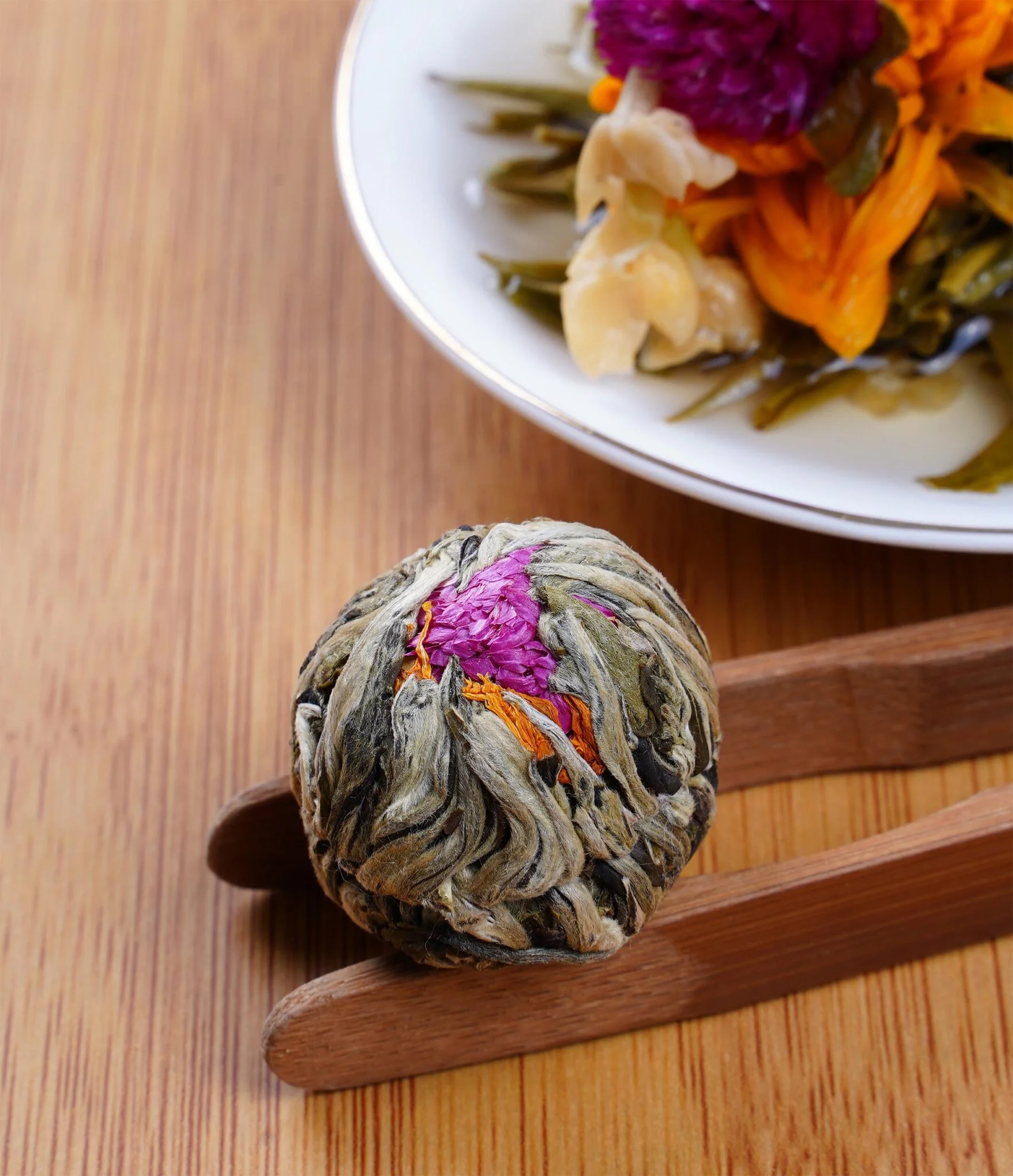

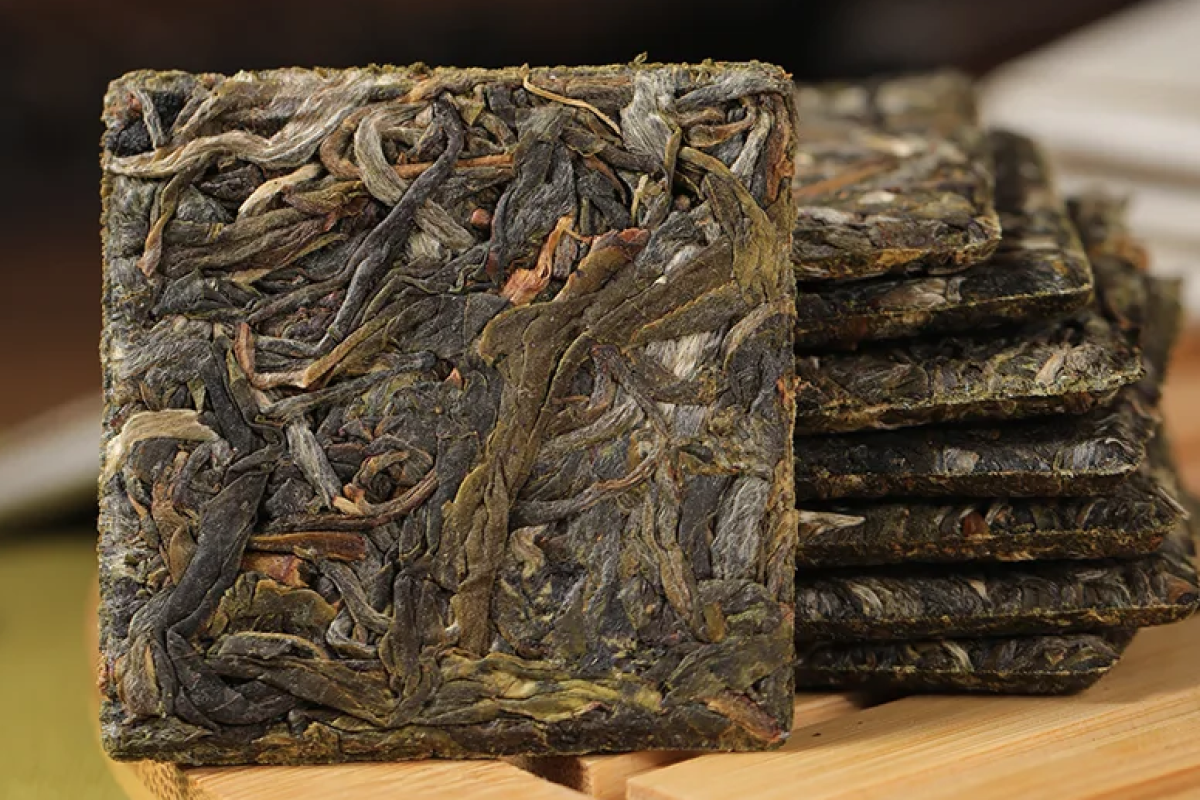
Does pu-erh tea have caffeine? Yes, and more than most people expect. Pu-erh is widely treated as the gentle, mellow, late-evening tea, which is a reputation built on how it tastes rather than on what has been measured in the cup.
The published figures are a mess. Read across the pages answering this question and you will find pu-erh described as a low-caffeine tea, a tea with as much caffeine as coffee, and everything between. Some sources put the number in the single digits. Others put it near 100 mg. The claim you will meet most often is that fermentation burns caffeine off, so ripe pu-erh is the mild one and raw is the strong one, and that is the one claim here with published research directly against it.
How much caffeine is in pu-erh tea
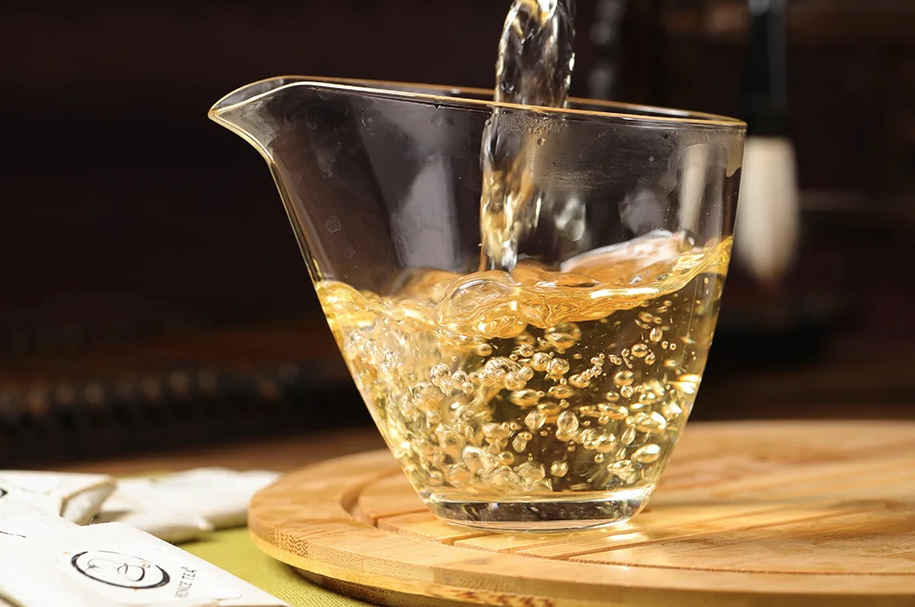
Per 8 oz cup, brewed western style with roughly 3 grams of leaf:
| Drink | Typical published range |
|---|---|
| White tea | 15 to 40 mg |
| Green tea | 25 to 50 mg |
| Oolong tea | 30 to 55 mg |
| Black tea | 30 to 60 mg |
| Pu-erh tea | 30 to 70 mg |
| Brewed coffee | 80 to 100 mg |
Treat these as bands, not facts. They describe an average cup brewed an average way, and how you brew moves a tea out of its own row easily.
Two things are worth noticing in that table. Pu-erh sits at the top of the tea rows, not the bottom. And its band is the widest, which is the honest signal that the category covers more ground than a single number can.
What fermentation actually does to caffeine
Very little, as far as the measurements go.
When researchers brewed six tea types under one fixed protocol, 80°C for two minutes, and measured them by HPLC, pu-erh infusions came in at 13 mg per 200 mL. Black tea was 14 mg. Green was 11 mg, and white was 5.8 mg. The paper’s conclusion on the point is plain: caffeine is largely unaffected by fermentation, and the most heavily fermented teas in the set, black and pu-erh, read slightly higher rather than lower.[1]
So pu-erh landed essentially level with black tea, above green, and more than double white. Under a controlled brew, the most fermented tea in the experiment was also close to the most caffeinated.
The raw against ripe question has been looked at directly too. A study profiling both kinds by LC-MS found raw and ripe pu-erh extracts carried a similar caffeine content, despite the very different processing routes that produce them.[2]
Pile fermentation changes a great deal about a tea. It darkens the leaf, thickens the body, replaces bright fruit with earth and wood, and rearranges much of the chemistry that governs taste. Caffeine is one of the few things it mostly leaves alone, because caffeine is a stable molecule and the microbial work of fermentation is not acting on it.
So if you have been choosing ripe pu-erh over raw for the evening, choose it because you prefer how it tastes at that hour. It is not buying you a meaningfully lower dose.
Why the published numbers disagree so wildly
“Pu-erh” is not one product. The word covers young raw cakes pressed last spring, raw cakes that have been aging for twenty years, and ripe pu-erh pushed through pile fermentation in a matter of weeks. It covers leaf plucked from ancient trees and leaf from young plantation bushes. Any single figure published for “pu-erh” has to stretch across all of that.
Most pu-erh is brewed hot and strong. The 13 mg figure above came from an 80°C brew. Almost nobody brews pu-erh at 80°C. Our own guidance for the Jingmai Mountain raw cake is 96°C to 100°C, and for the Little Citrus it is a full 100°C. Hotter water pulls harder. The cup in front of you is very likely carrying more caffeine than the controlled experiment measured, not less.
Gongfu brewing changes the arithmetic in both directions. A gongfu session uses far more leaf per volume than a western cup, which pushes caffeine up. It also uses steeps of ten to twenty seconds, which pulls it down, and it spreads the total across many small cups rather than one large one. Sources describing the same tea can differ several times over simply because one measured a mug and the other measured a session.
Does pu-erh tea have caffeine you can control?
Yes, and to a greater degree than the wrapper suggests. Three levers, in descending order of force.
Steep time. Caffeine dissolves early and readily. In the study above, longer brewing raised caffeine significantly across the set, with the sharpest movement between two and five minutes, and one tea pushed to a ten minute steep reached 53 mg per 200 mL.[1] Leaving the leaf sitting in the pot is the single most effective way to brew a stronger cup than you meant to.
Water temperature. Hotter water extracts faster. The same work found temperature alone moved an oolong infusion from 4.4 to 13.5 mg per 200 mL.[1] With raw pu-erh this lever is delicate, because the temperature that suits the leaf is high. Shortening the steep is the better tool here.
How much leaf. More leaf in the same water gives you more of everything.
There is a fourth, smaller one. Pour off a quick first infusion and discard it before you begin drinking. Because caffeine leaves the leaf early, that rinse takes a real share of it with comparatively little of the aroma. It is standard practice with compressed pu-erh anyway, since the leaf needs a moment to open.
Everything we sell is raw, and what that means for your cup
We do not stock ripe pu-erh. All five of our pu-erh products are raw, and four of them are young pressings rather than aged stock.
The Jingmai Mountain and Bangwai Mountain cakes come from Yunnan, both available as a traditional 357g cake and as a modern mini cake if you would rather not commit to a full one. The Jingmai leaf is picked from trees more than a century old and brews to a clear golden infusion, bright and verdant, with apricot notes and a sweet finish. The Little Citrus pairs Yunnan pu-erh with dried citrus peel from Xinhui in Guangdong.
Young raw pu-erh is the least mellow thing in the category. It has more in common with a vigorous green tea than with the dark, earthy cup most people picture when they hear the word. That character is the reason to drink it, and it is also a fair warning about the caffeine: this is not the tea to reach for if you want the mildest cup in the house. For that, look at our white tea, which measured lowest of the six types in the same study and which we have written up separately.
Brewed the way we recommend, in short infusions in a gaiwan or a zisha pot, you also get a good deal of control. Ten to fifteen seconds gives you a very different cup from three minutes, and with a cake you will be re-steeping the same leaf many times regardless.
Pu-erh against coffee, and against other teas
Against coffee, a cup of pu-erh runs somewhere around a third to two thirds of the caffeine. The more interesting difference is the shape of the dose rather than its size. Tea carries L-theanine, an amino acid present in the tea plant and effectively absent from coffee, studied for its effects on stress and cognitive performance.[3]
Pu-erh also gets drunk in an unusual pattern. Nobody sits down to a single decisive mug of it. A gongfu session spreads the same leaf across ten or more small cups over the better part of an hour, so the caffeine enters gradually instead of in one go. Two people can take an identical amount of caffeine from identical leaf and have quite different afternoons, depending only on whether they drank it in a session or in a travel mug on the way to work.
Against other teas, the ordering follows the brewing more than the colour of the leaf. Under one fixed protocol pu-erh sat just under black and clearly above green and white. Change the protocol and the order can move. We have answered the same question for oolong, green tea, and white tea separately, and there is an older piece comparing tea and coffee directly.
Drinking pu-erh later in the day
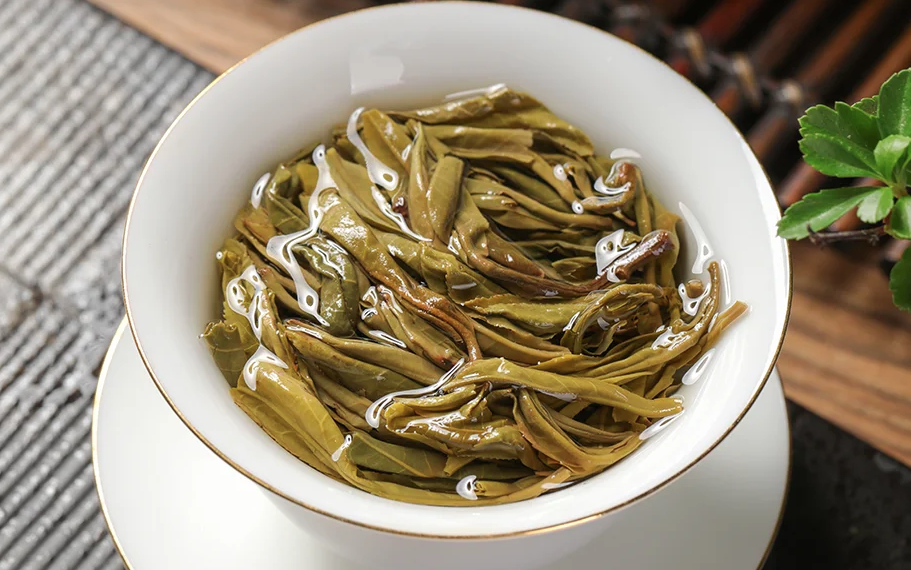
Treat young raw pu-erh as a daytime tea and you will rarely be caught out. If you want it in the evening, the tools are the ones above: discard the rinse, keep the steeps short, use a little less leaf than usual.
No true tea is caffeine free, and pu-erh is a poor candidate for the claim. The FDA puts 400 mg a day as the level not generally associated with negative effects for healthy adults, and notes that caffeine content varies widely between products.[4] A few cups of pu-erh leave room against that figure, but less room than the tea’s gentle reputation suggests.
Browse the pu-erh collection. If you are new to the category, a mini cake is the low-commitment way in, and the Jingmai and Bangwai gardens are worth reading about before you drink them.