Most of the health research on pu-erh points at one area: blood lipids. Fermentation turns the leaf’s catechins into theabrownins and gallic acid, and those compounds drive the cholesterol and triglyceride findings. The human trials are small, though, and for weight, skin and liver the evidence is thin or absent.
Most pages on this topic say pu-erh will “detox” you or melt fat. Neither claim has a trial behind it. Below is what has been measured, in which people, at what dose, and what that does and does not tell you about a cup of tea at your table.
Fermentation turns catechins into theabrownins and gallic acid
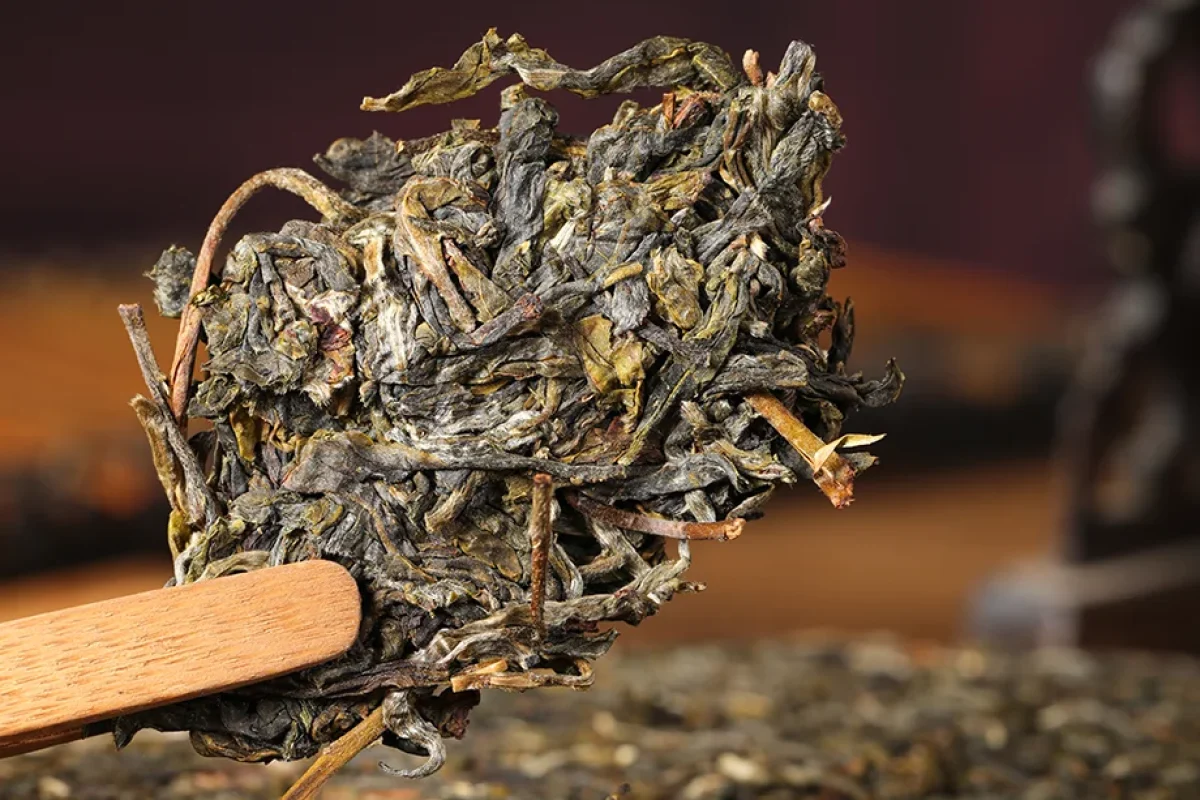
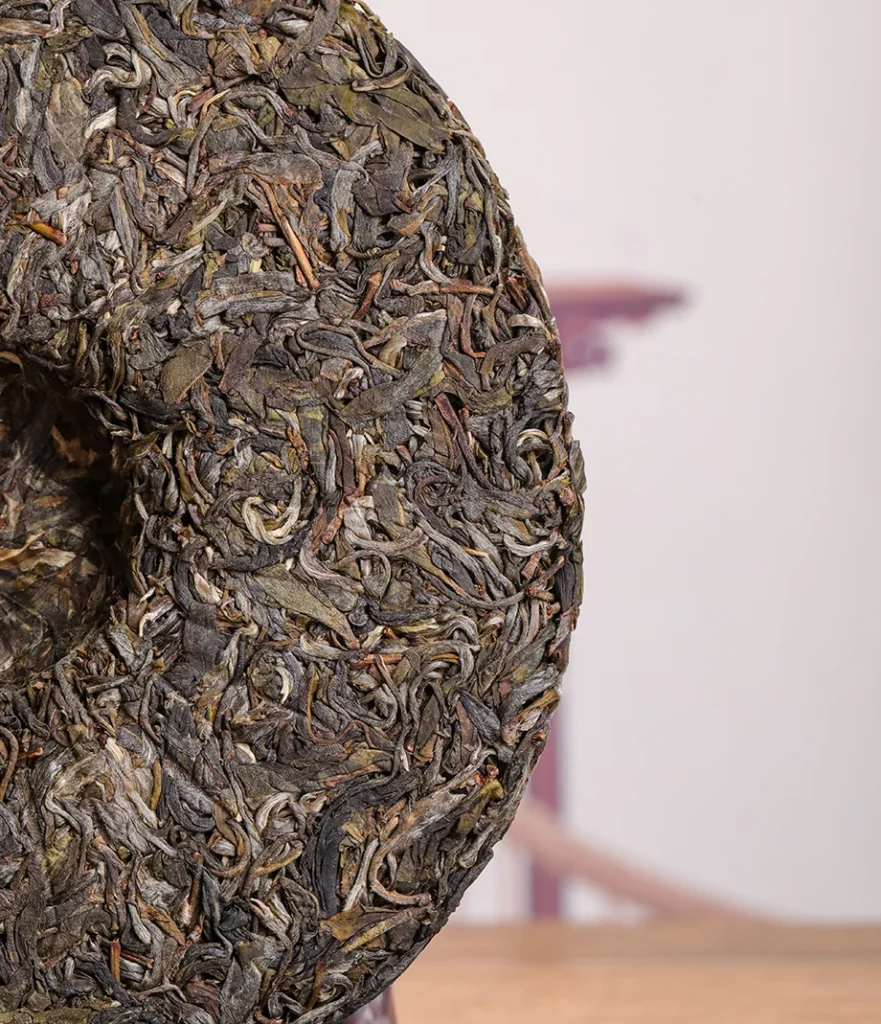
Pu-erh is a dark tea, fermented by microbes rather than only oxidized by air. Ripe (shou) pu-erh goes through wet-pile fermentation for several weeks. Raw (sheng) pu-erh skips that step and ferments slowly in storage over years.
Researchers who made pu-erh and three other dark teas from a single batch of raw leaf tracked the chemistry. During microbial fermentation, catechins and free amino acids dropped sharply while gallic acid and theabrownins rose significantly. Pu-erh ended with the highest theabrownin content of the four, about 11.8% of the leaf.[1] Theabrownins are the dark pigments that give ripe pu-erh its deep red-brown cup, and they are the compound most often named in the health research.
That shift explains why ripe pu-erh tastes round and earthy where young raw pu-erh tastes bright and astringent. It also explains why the two are not interchangeable in the studies. A fermentation-driven benefit measured in ripe pu-erh extract is not automatically present in a young raw cake.
Cholesterol and triglycerides have the strongest evidence, and it is still small
A 2022 review in the Journal of Traditional Chinese Medical Sciences describes cholesterol and lipid lowering as the property pu-erh is best known for, and proposes that the liver and gut microbiome together drive it.[2] The clearest mechanism work comes from a 2019 Nature Communications paper on theabrownin.
In mice on a high-fat diet, pu-erh and purified theabrownin lowered serum and liver cholesterol and triglycerides. Theabrownin worked by changing gut microbes that process bile acids, so the body excreted more cholesterol-derived bile acid.[3] The same paper ran a small human arm: 13 healthy men drank about 300 mL of instant pu-erh twice daily for 4 weeks. Serum cholesterol and triglycerides fell, and body weight did not change.[3] The authors state that the sample is small, all male, and short, and that longer trials are needed.
A larger placebo-controlled trial ran 20 weeks in 59 overweight adults with cholesterol of 220 mg/dL or higher. Participants took 3 g a day of pu-erh extract or placebo. Cholesterol fell in the pu-erh group compared with its own baseline, but there was no significant difference from placebo for total cholesterol or LDL. Triglycerides in the pu-erh group dropped below 150 mg/dL by week 8, a trend that did not reach significance against placebo.[4] The study was sponsored by a company that sells pu-erh extract.
The mechanism holds up in animals, the human signal for triglycerides and total cholesterol is promising, and the evidence for LDL specifically is weak. Both human studies used concentrated extract, not a cup brewed from a cake.
Weight loss shows up as about 1 kg, not as fat burning
The weight claims online trace back to animal studies. In humans, the 4-week trial above saw no change in body weight.[3] The 20-week extract trial found the pu-erh group lost about 1 kg on average, with a significant difference from placebo on weight, though not on total body fat.[4]
That is a modest result from a concentrated extract over 5 months. A brewed cup is unlikely to do more than that. Its practical edge is that it can replace a sugared drink, since a cup has essentially no calories.
Digestion, skin and liver have no direct trials
Pu-erh has a long tradition as an after-meal tea in Yunnan and Guangdong. The bile acid and gut microbiome findings in mice give that tradition a plausible mechanism, and we found no controlled human trial that measures digestive comfort. Skin and liver are named in search results constantly, and neither has a solid human study behind it. We leave them out of the benefits list on purpose.
If you want the broader picture across tea types, our overview of teas and their health benefits covers white, green, oolong and black, and how much tea you should drink each day covers the practical side.
Sheng and shou differ in chemistry, and most studies used shou
| Sheng (raw) | Shou (ripe) | |
|---|---|---|
| Fermentation | Slow, in storage over years | Wet-pile, several weeks |
| Theabrownins | Low when young, rise with age | High |
| Catechins | Mostly retained | Heavily converted |
| Taste | Bright, floral, astringent | Earthy, smooth, dark |
| Caffeine | Similar in both | Similar in both |
Most of the lipid research above used ripe pu-erh, instant pu-erh or extracts, so the theabrownin findings belong mainly to the shou column. Raw pu-erh keeps more of its original catechins, and that is a different set of compounds with its own research, which is closer to the green tea literature than to the theabrownin papers.
We sell raw pu-erh. Our Jingmai Mountain raw cake and Bangwai Mountain raw cake are young pressings from Yunnan, and no trial has tested them. We will not borrow a ripe-tea result for a raw-tea product. The Little Citrus pu-erh pairs the leaf with dried citrus peel from Xinhui and drinks softer. Browse the full pu-erh tea collection to see what is in stock.
Pu-erh is not for everyone: caffeine, iron, medication and sourcing
Caffeine. Pu-erh is not a caffeine-free evening tea. A cup runs roughly 30 to 70 mg, and fermentation does little to reduce it. Our guide to how much caffeine pu-erh has covers the numbers. Pregnancy guidance from ACOG puts the limit at under 200 mg of caffeine a day from all sources, so count tea toward that.[5] People sensitive to caffeine, or with sleep or anxiety problems, should drink it earlier in the day.
Iron. Tea polyphenols reduce the absorption of iron from plant foods. If you are low in iron, drink pu-erh between meals instead of with them.
Empty stomach. Strong young raw tea can feel harsh on an empty stomach. Brew it lighter, or eat first.
Medication. If you take cholesterol medication, blood thinners or other prescription drugs, ask your clinician before making large amounts of pu-erh a daily habit. Studies on pu-erh extract used controlled doses and do not tell you how a heavy habit interacts with a prescription.
Sourcing. A 2018 review of mycotoxins in tea found that ripe pu-erh’s wet-pile process can encourage mould, and concluded that the data were too limited to call exposure a public health problem.[6] The practical step is to buy from a seller who knows the farm and stores tea dry, and to skip any cake that smells musty or sour.
None of this is medical advice. Pu-erh is a tea, not a treatment, and the research above does not support using it in place of care for high cholesterol.
How to drink pu-erh for the most reliable benefit
The studies point to regular, moderate drinking over weeks, not heavy dosing. A few small cups a day, brewed gongfu style with short infusions, fits that pattern. Our guide on how to brew pu-erh gives temperatures and leaf amounts for raw cakes and for the citrus tea, and the story of the 357g pu-erh cake explains why the format looks the way it does.