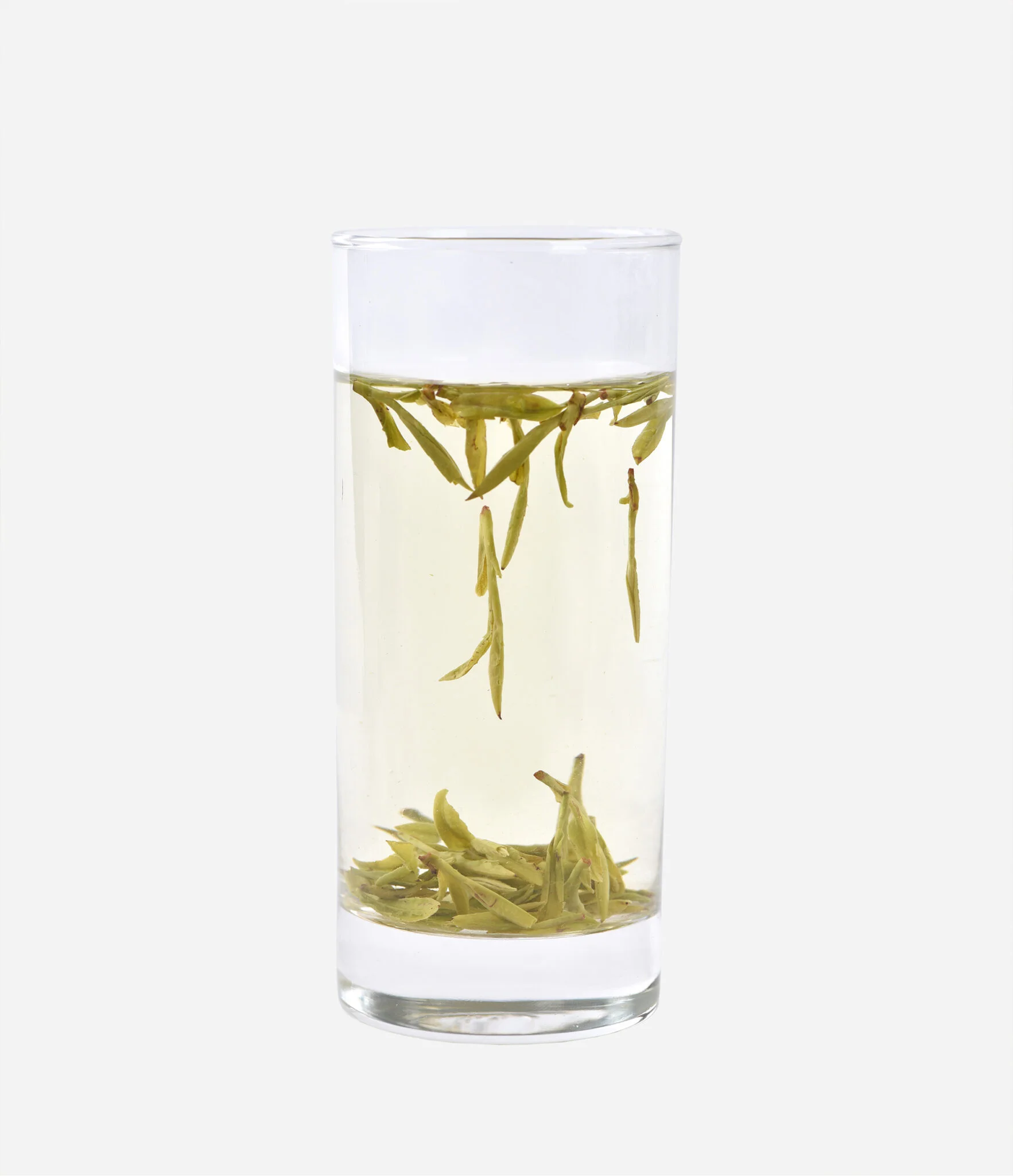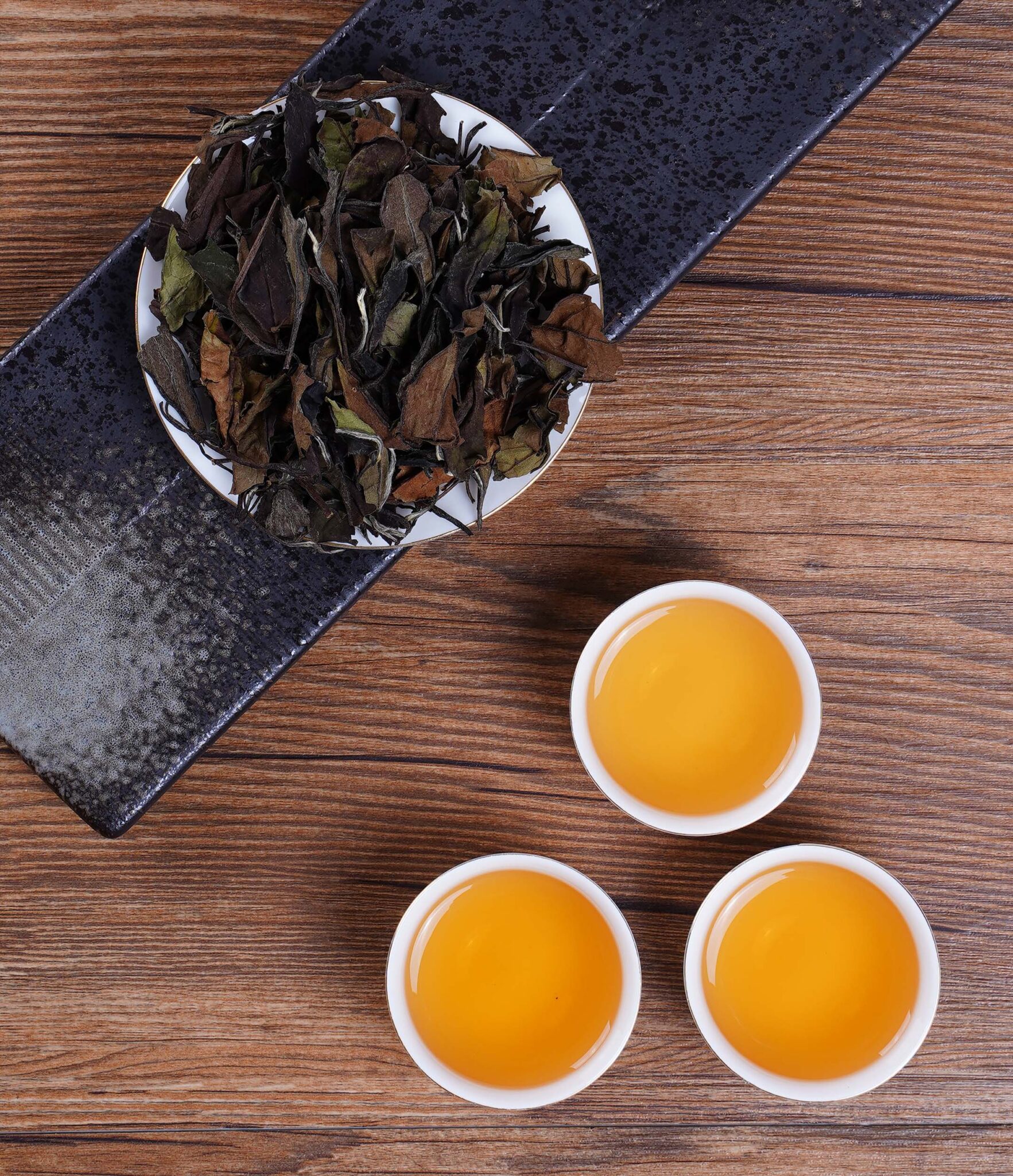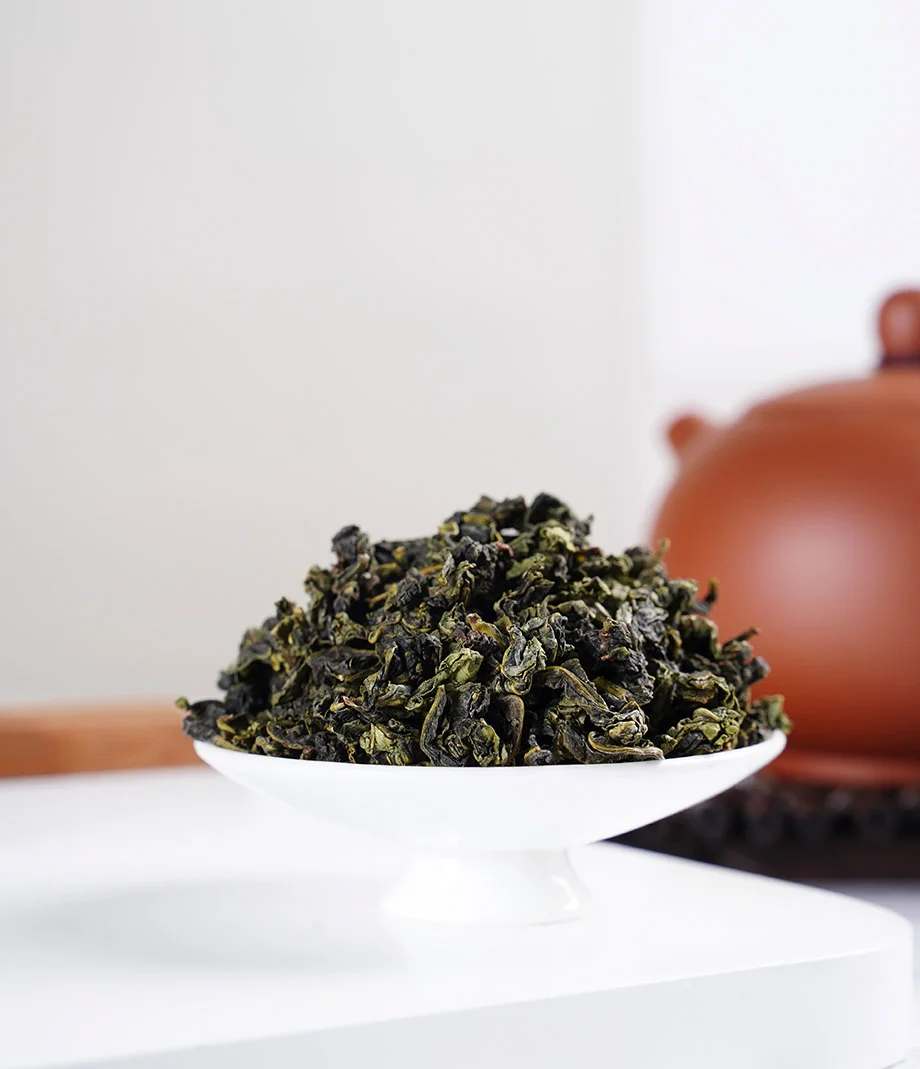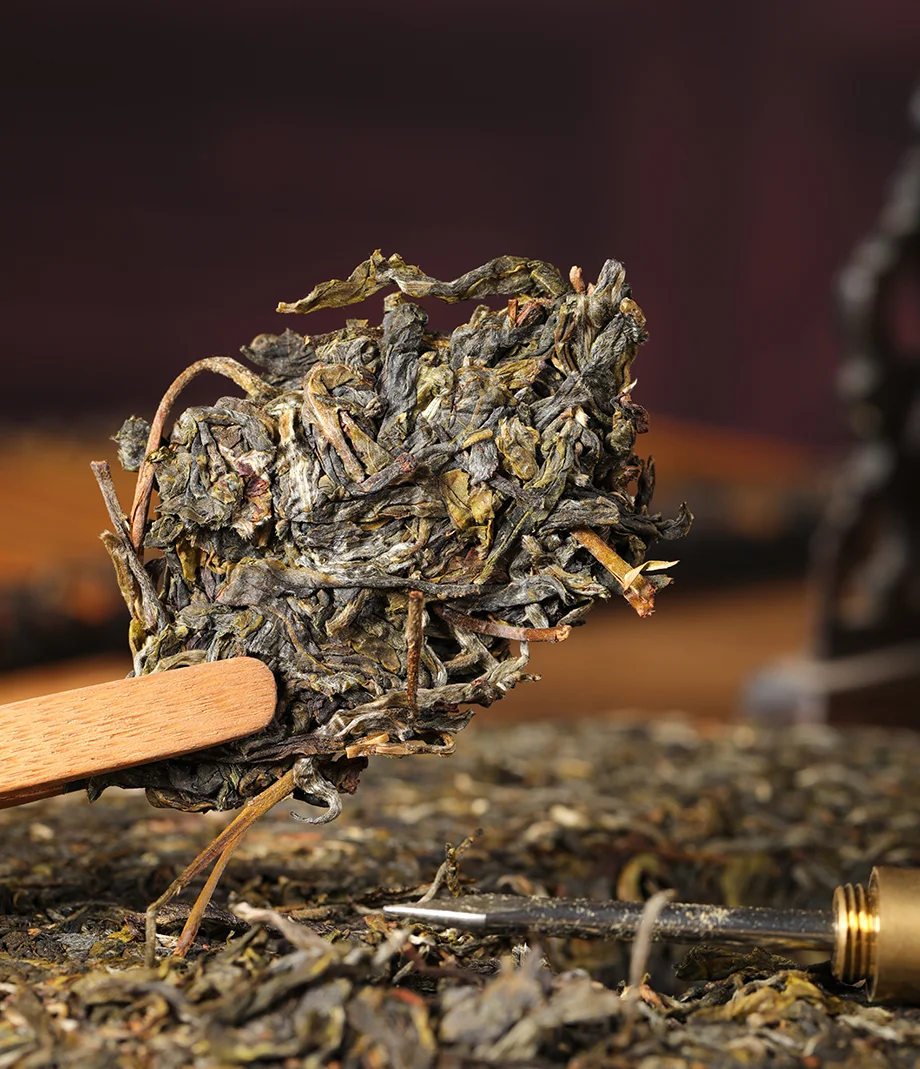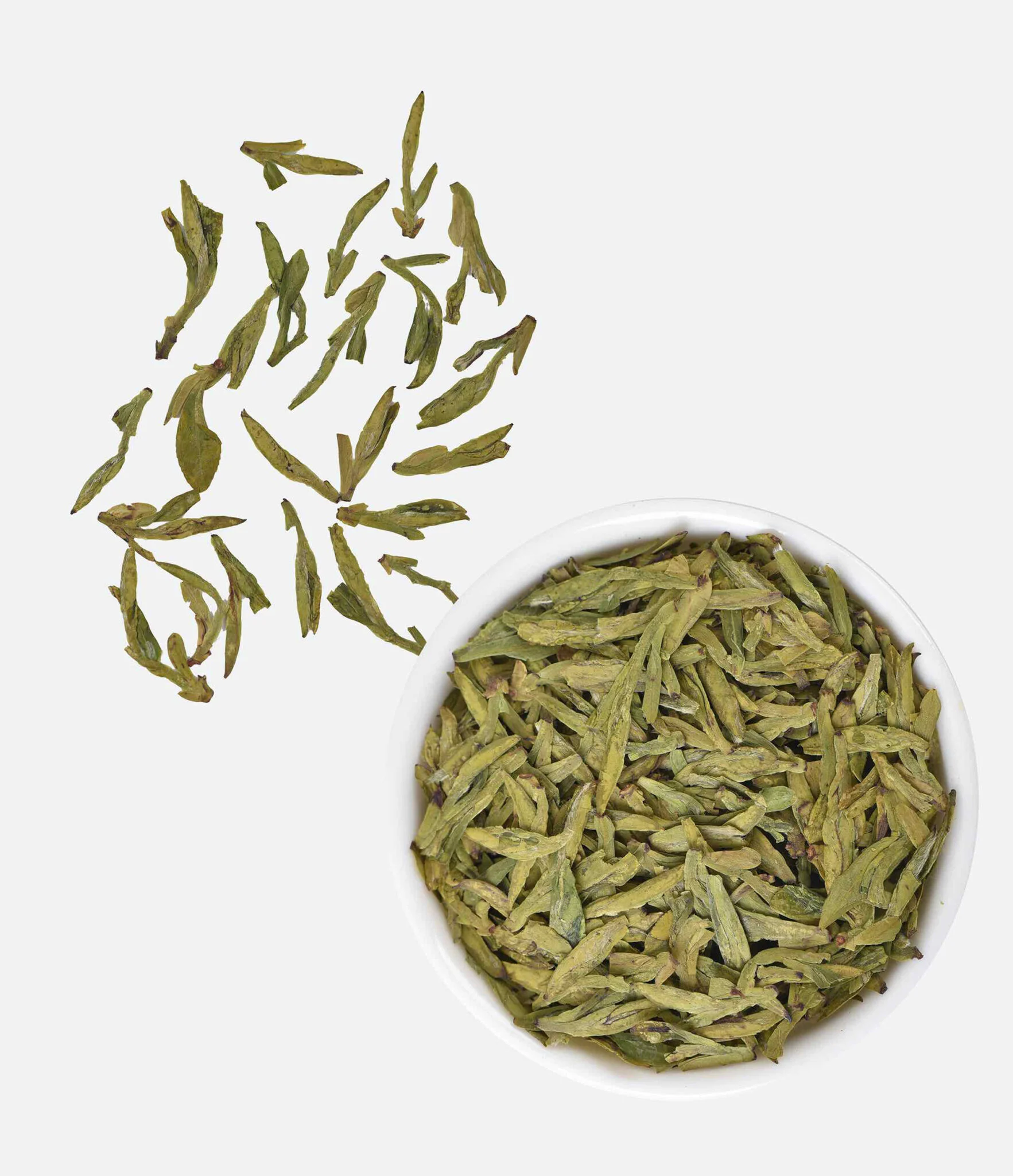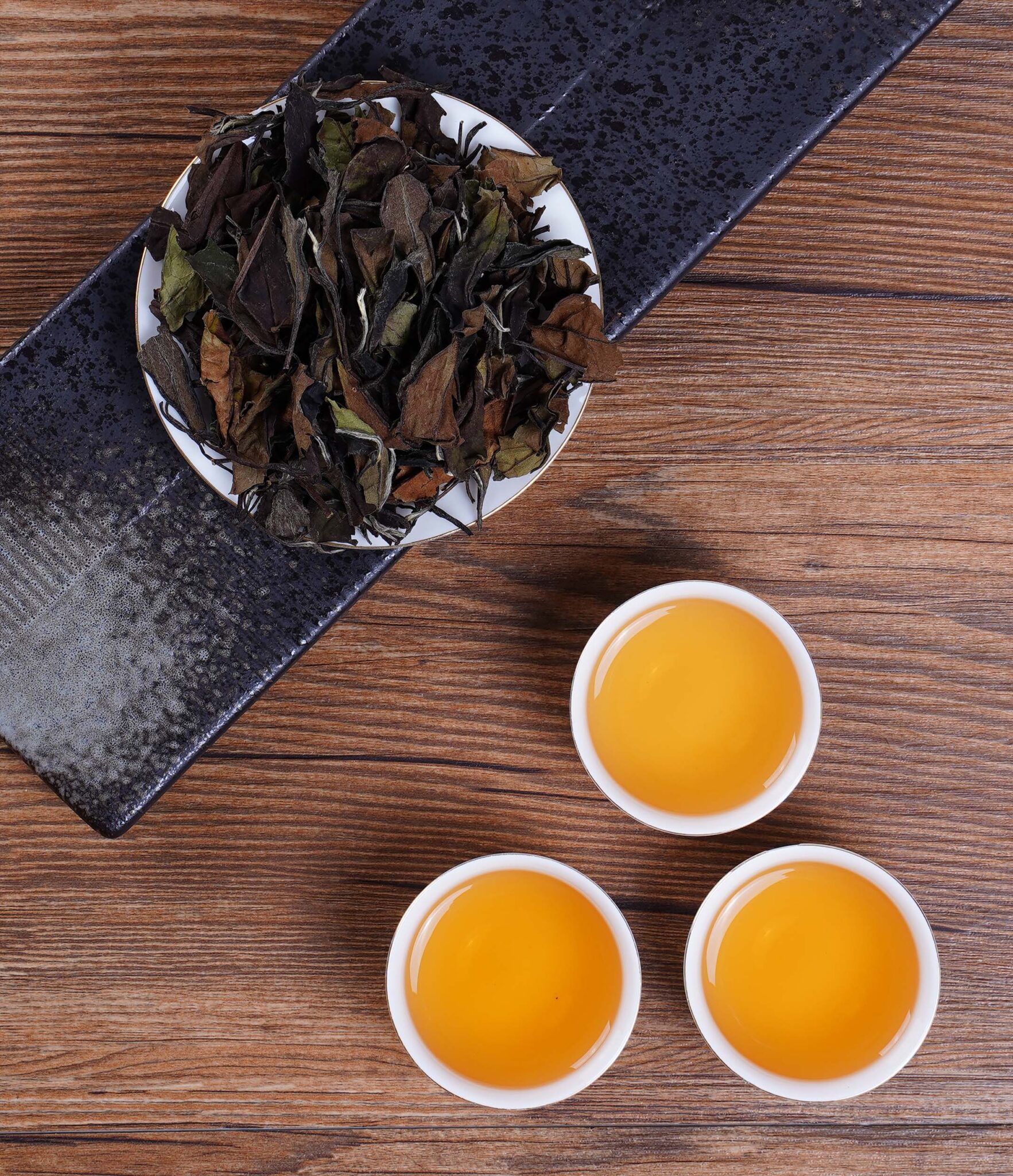
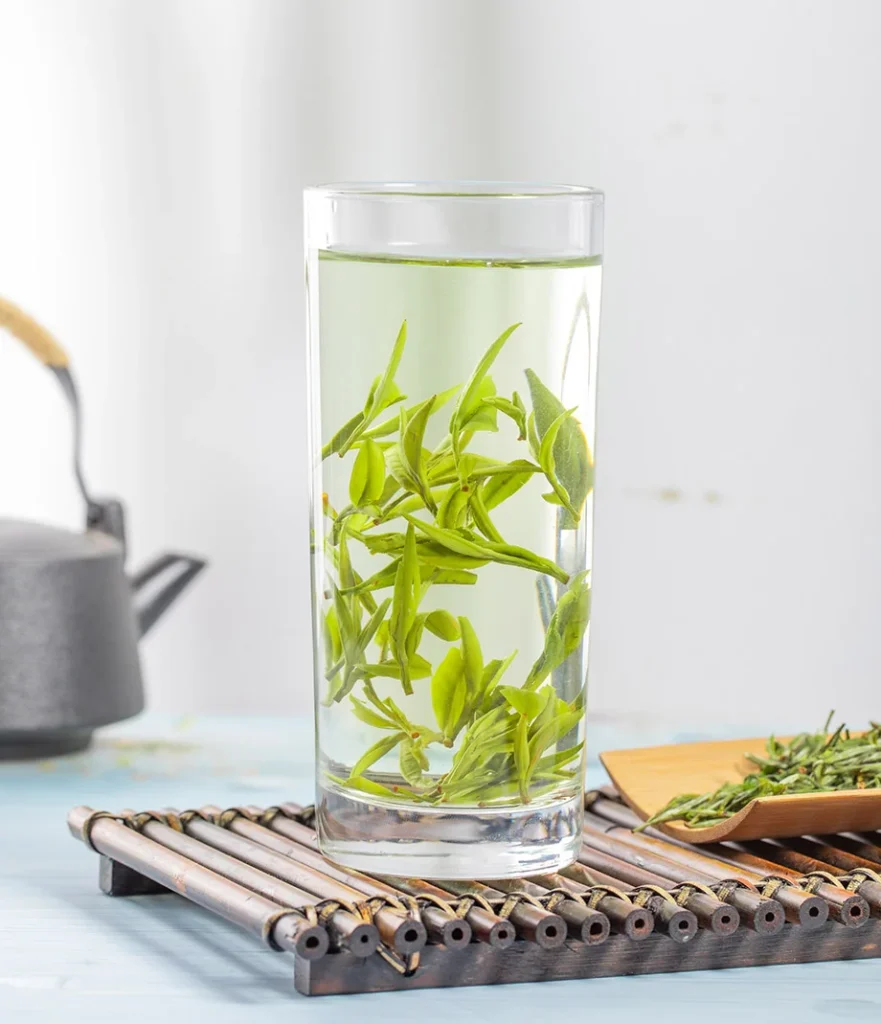
Huangshan Maofeng is a green tea from the Yellow Mountain district of Anhui province, picked in early spring as one bud with two newly opened leaves. Its liquor is a clean, light apricot color, and the cup is mellow and smooth, with a delicate sweetness, a fresh floral aroma and no astringency.
“Maofeng” means “fur peak,” after the soft white fuzz on the bud and the pointed shape of the finished leaf. The name also causes confusion, because it is attached to two very different teas.
Maofeng names two teas: a green from Huangshan and a black from Qimen
Search for Maofeng and you will find a green tea and a black tea under the same word. Huangshan Maofeng is the green, grown at the root of the Huangshan mountain range. Qimen (Keemun) Maofeng is a black tea from Qimen, in the southeastern corner of Anhui just west of Huangshan.
They share a province and a word, and little else. The Qimen leaf is tightly twisted and jet-black with golden tips, and it brews a coppery cup at 100°C. Qimen black tea won gold prizes at the 1913 World Expo in Italy and the 1915 Panama-Pacific International Exhibition, and it anchors classic blends such as English Breakfast. The green Maofeng below brews at 70°C to 80°C and is closer to a Longjing than to anything black.
The plucking standard is a bud and two leaves
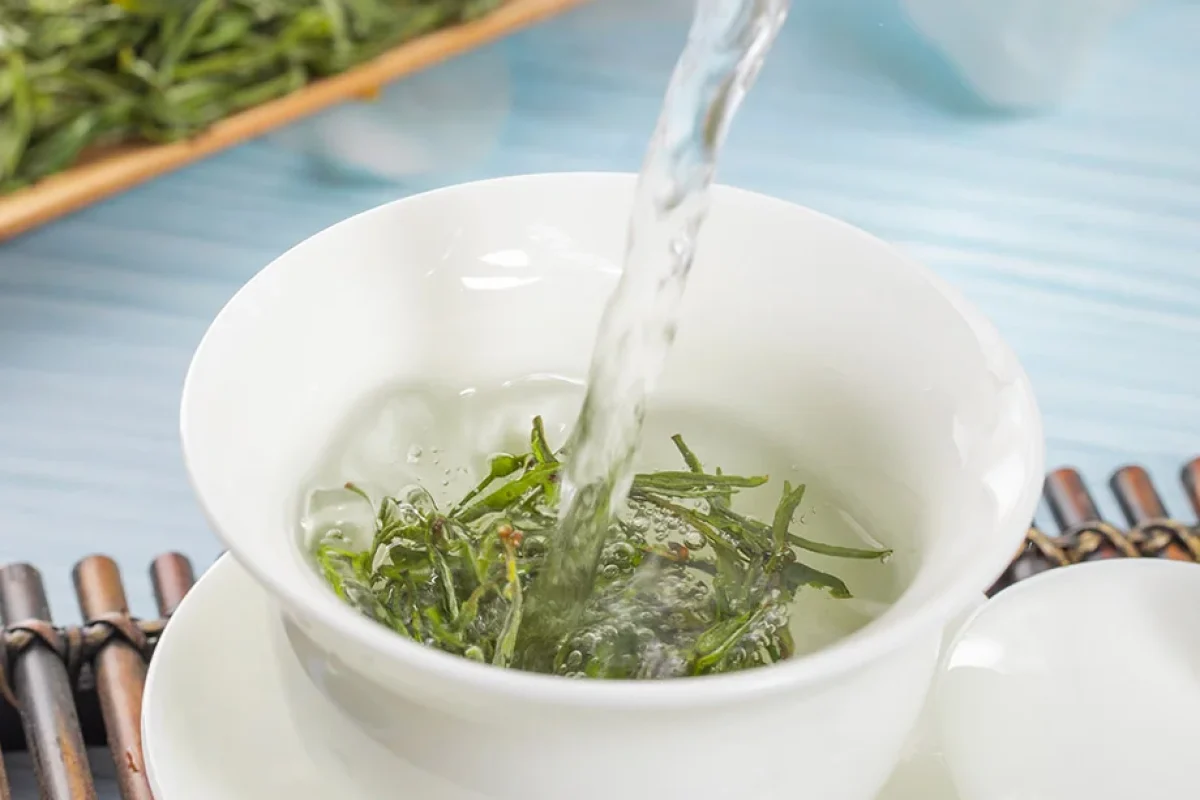
Pickers take only the bud and two newly opened leaves. That is a slightly larger pick than the one or two leaves per bud used for West Lake Longjing, and it shapes the cup. The leaf unfolds in the glass into the image of new growth on a tea tree.
Local farmers say the leaves resemble orchid buds. The dry leaf is fresh green with a soft white fuzz, which is the “fur” in the name. Our Huangshan Maofeng is sold as a pre-Qingming spring tea, picked around the Qingming Festival on April 5 or 6.
Huangshan Maofeng is a baked green tea
Chemists who profiled the aroma describe Huangshan Maofeng as a famous baked green tea known for a clean, fresh flavor. In that study, concentrations of hexanal, cis-3-hexenyl butyrate and geraniol rose with the tea’s grade. Jasmine lactone and gamma-nonanolactone also contributed to flavor quality.[1]
In plain terms, a higher grade smells greener and more floral. The baking step is part of what separates it from a Longjing, which is fired in a wok and pressed flat.
Grade is judged by eye and tongue, because chemistry alone did not sort it
Tea graders have long relied on sensory evaluation, which takes professional knowledge. One research group tried to replace it with measurements and found that traditional component tests could not directly determine the grade of Huangshan Maofeng samples. A combination of ultraviolet spectra and color difference did sort them.[2]
For a buyer, that explains why a vendor’s grade label means little without a harvest window and an origin beside it. Look for both on the product page.
In the cup: apricot, mellow, and no astringency
Brewed well, Huangshan Maofeng gives a clean, light apricot liquor. The taste is mellow and smooth with a delicate sweetness, a fresh floral aroma and a light, mouth-watering aftertaste. It is mild enough to drink every day, and the lack of astringency makes it a forgiving first green for drinkers who find other greens sharp.
Brew at 70°C to 80°C
Use water between 70°C and 80°C (158°F to 176°F) in a gaiwan, a glass or a porcelain pot. A glass shows the leaf unfolding. Start with about 3 grams of leaf per 200 ml of water and steep for 2 to 3 minutes, pouring all of the tea off the leaf each time so nothing keeps extracting in the pot. Our gaiwan guide covers the grip and timing if you brew that way.
For how this temperature range works across the other greens, and how Maofeng compares with Longjing and Biluochun, see our guide to green tea antioxidants and brewing. Caffeine follows the usual green tea pattern, and our green tea caffeine guide shows how steep time moves it.
Maofeng and Longjing side by side
| Huangshan Maofeng | West Lake Longjing | |
|---|---|---|
| Origin | Huangshan, Anhui | West Lake, Hangzhou, Zhejiang |
| Pick | One bud with two newly opened leaves | One or two leaves per bud |
| Cup | Sweet, floral, mellow, no astringency | Toasted chestnut and fresh-cut grass |
| Water | 70°C to 80°C | 70°C to 80°C |
Choose Maofeng for a soft, floral everyday cup. Choose Longjing for the toasted, nutty one.
Start with the spring harvest
For a first bag, take the pre-Qingming lot and drink it fresh. Once it is open, follow our tea storage guide. Compare it with the rest of the green tea collection, or go straight to Huangshan Maofeng.