
Does green tea have caffeine? Yes.[2] Published figures for a standard 8 oz cup of green tea put the caffeine between 25 and 50 mg, against roughly 95 mg for a cup of brewed coffee.
That number is where most articles stop. It is also the least useful thing on this page. When researchers measured caffeine in tea infusions by HPLC, brewing time, water temperature, and the format the tea was served in all changed the result significantly, and steeping longer alone drove measured caffeine up several times over.[3] The leaf sets a starting point. Your kettle decides the cup.
Two people can brew the same West Lake Longjing on the same afternoon and take in very different amounts of caffeine. The difference is not the tea. It is what they did with it.
How much caffeine is in green tea
Per 8 oz cup, brewed western style with about 3 grams of leaf:
| Drink | Typical published range |
|---|---|
| White tea | 15 to 40 mg |
| Green tea | 25 to 50 mg |
| Oolong tea | 30 to 55 mg |
| Black tea | 30 to 60 mg |
| Brewed coffee | 80 to 100 mg |
These are bands, not facts. They describe an average cup brewed an average way, and they overlap enough that how you brew can move a tea out of its own band entirely.
So does green tea have caffeine at the top of that band, or the bottom? The leaf sets the range. The next two minutes decide where inside it you land.
Does green tea have caffeine in smaller amounts than other teas?
On average, yes, but not reliably. This is worth saying plainly, because a lot of people choose green tea in the evening on the assumption that it is the safe one.
Published ranges do put green tea below black tea on average. But the ranges overlap, and your brewing moves the result more than the label does. A green tea steeped for 5 minutes in boiling water can comfortably out-caffeinate a black tea given a short, cool brew. If you want a gentler cup, the tea type is the wrong lever to pull. The kettle is the right one.
The three levers that actually decide your cup
Green tea has caffeine across a range, not at a fixed point, and three things decide where your cup lands inside it.
Steep time. The biggest lever, and the easiest to ignore. Caffeine is highly water soluble and leaves the leaf quickly. In the HPLC study above, extending the brew to 10 minutes raised measured caffeine dramatically against a short steep.[3] Leaving the leaves in the pot while you get on with something else is a decision, whether or not you meant it as one.
Water temperature. Hotter water extracts more, and faster. This matters more for green tea than for anything else, because green tea is the tea most often ruined by water that is too hot. The same mistake that scorches the leaf and turns the cup bitter also drives the caffeine up. Brew green tea around 80°C, not at a rolling boil. You get a sweeter cup and a gentler one at the same time.
How much leaf. More leaf in the same water gives you more of everything.
Loose leaf and tea bags do not behave the same
A green tea bag is not simply a smaller portion of loose leaf. It is usually broken leaf and dust, and the difference in surface area matters.
Whole leaf has to unfurl and give itself up slowly. Broken leaf and dust have far more surface exposed to the water immediately, so they extract fast and hard. This is measurable: in the same study, black tea served in cup-sized bags delivered significantly more caffeine than the identical tea served loose.[3]
That cuts against the intuition that loose leaf, being the more serious product, must be the stronger one. In caffeine terms the bag often arrives faster and harder. We covered the wider trade-off in loose leaf tea versus teabags.
Matcha is a different question
Matcha is where most green tea caffeine confusion comes from, and it deserves a straight answer.
With every other tea you drink an infusion. The leaf gives part of itself to the water, and the spent leaf, along with a good deal of the caffeine, is thrown away. With matcha you whisk powdered leaf into water and drink the leaf itself. Nothing is left behind. A 2 gram serving commonly lands at 60 to 80 mg, which puts it above a normal cup of green tea and into coffee’s territory.
So when someone tells you green tea gave them the jitters, it is worth asking whether they were drinking matcha. It usually is. Brewed green tea does have caffeine, but it rarely arrives with that kind of force.
We do not sell matcha. We are a Chinese tea house and matcha is a Japanese tradition, and we would rather tell you honestly what it is than sell you something we do not source.
Green tea against coffee
Roughly a quarter to a half the caffeine, and a different experience at the same dose.
Tea contains L-theanine, an amino acid found in the tea plant and effectively absent from coffee. It has been studied for its effects on stress and cognition.[4] Most people describe the result the same way without prompting: a steadier, longer, less spiky alertness than coffee gives. The caffeine does not arrive on its own.
For the fuller comparison, see caffeine in tea versus coffee, and the same mechanics applied to oolong in does oolong tea have caffeine.
Our green teas, and how to brew them gently
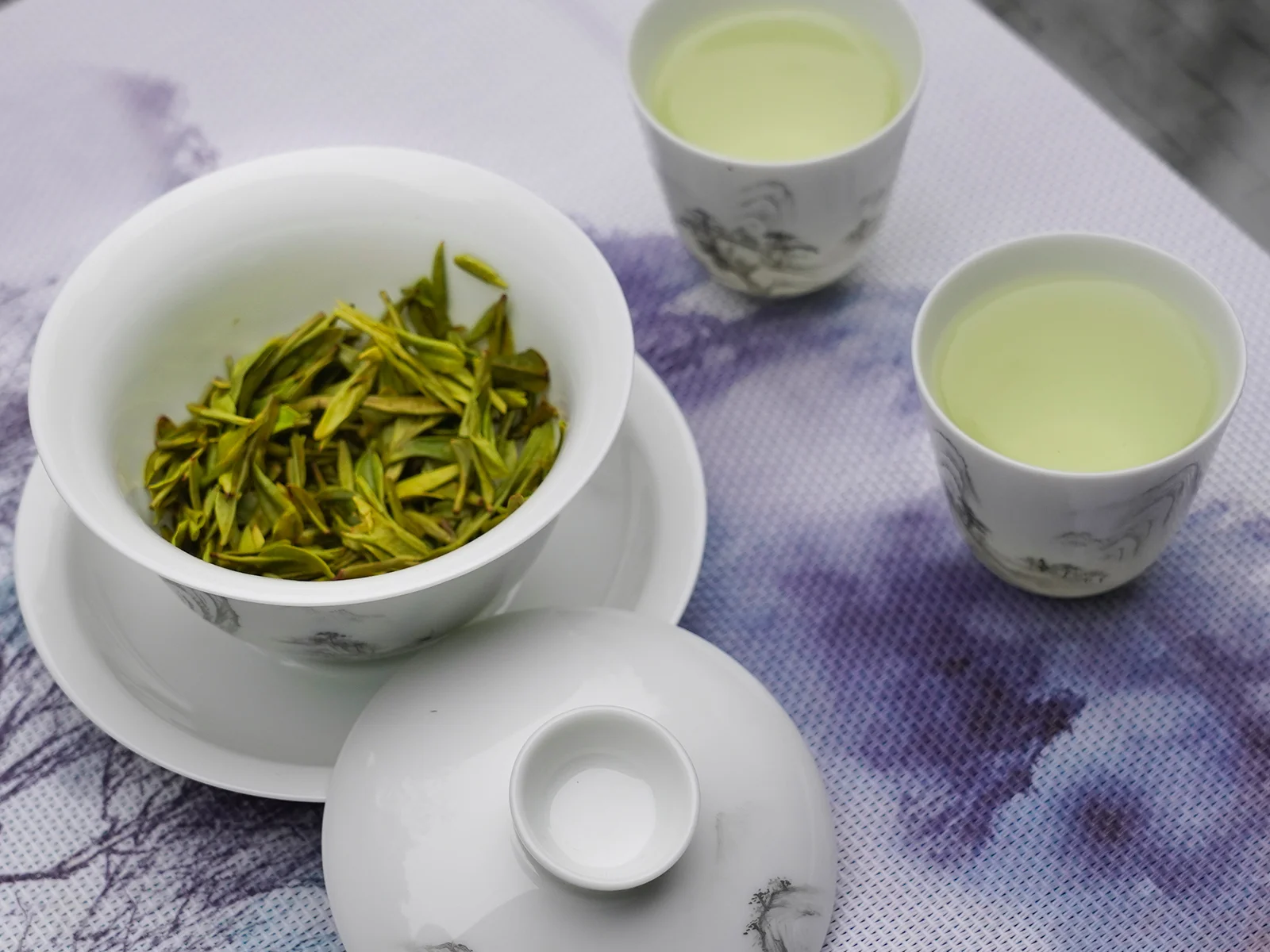
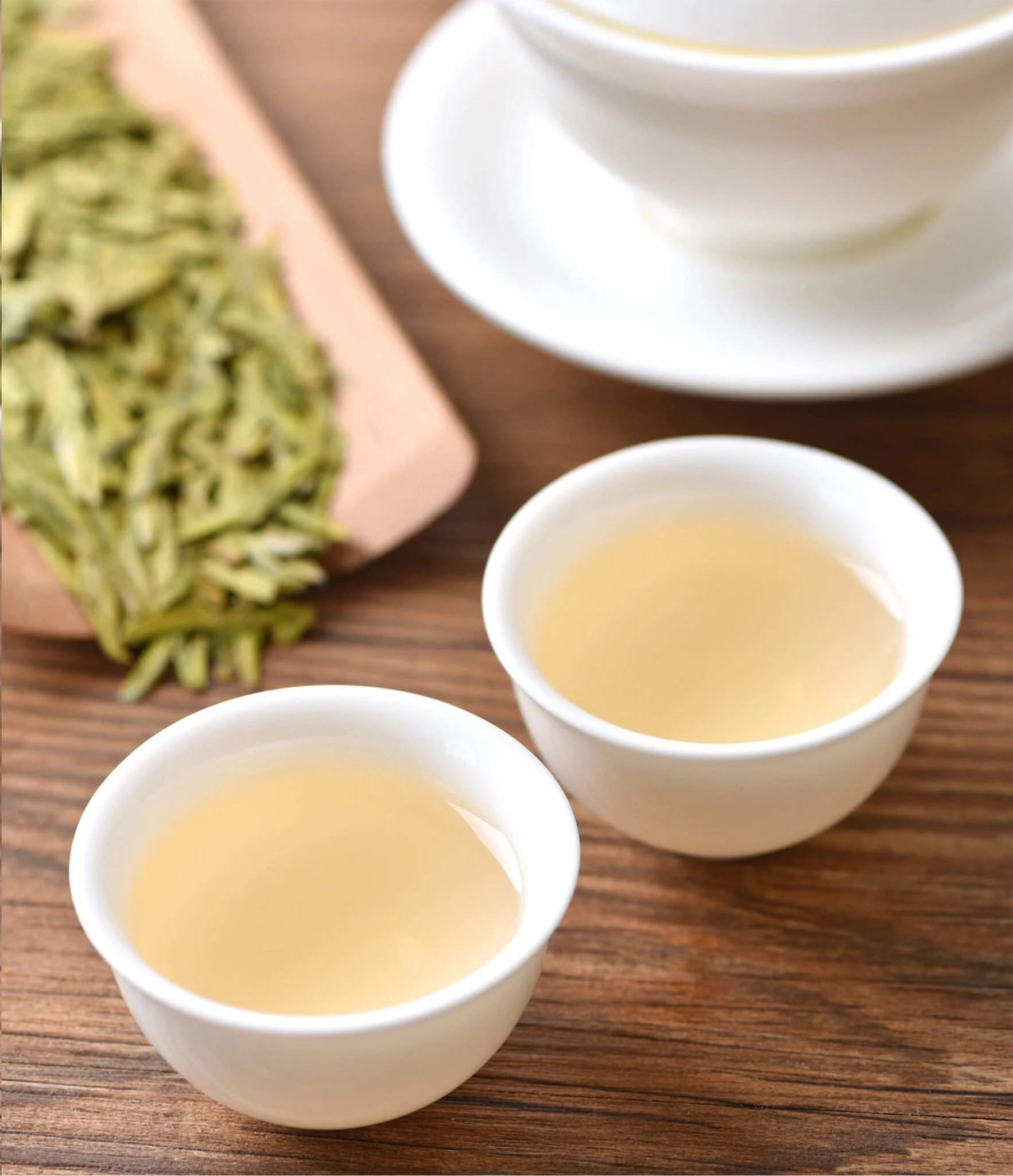
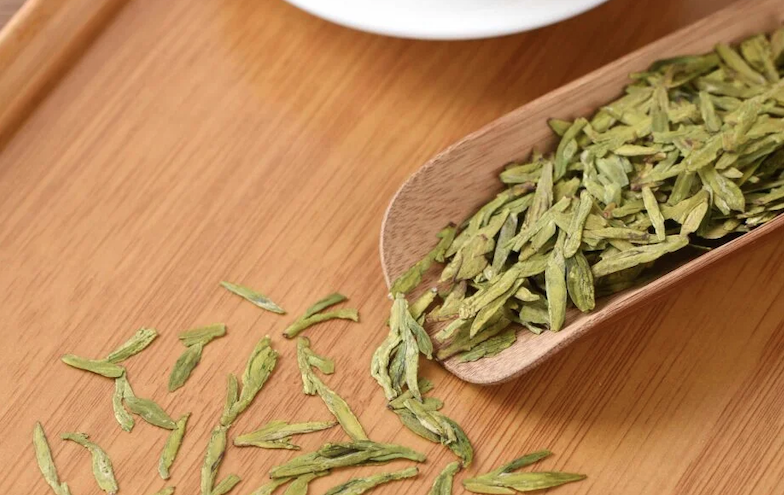
West Lake Longjing is picked young, flat-pressed, and gently fired. Biluochun is picked so small that it takes an enormous number of leaves to make a single measure, and you can see the fine white down on the curl when you open the bag. We wrote about how it is made in our piece on the artisanal craft of Biluochun.
Here is how to get the cup you want out of them:
- Brew at around 80°C, never boiling.
- Keep the steep short. Start at 1 to 2 minutes and taste.
- Use a little less leaf if you want a lighter cup.
- Rinse the leaf and pour off the first infusion. Caffeine leaves early, so this costs less flavour than you would expect.
- Drink it earlier in the day.
Every one of those is a bigger lever than switching to a different tea.
Does green tea have caffeine if it is decaf?
Some, yes. There is no genuinely caffeine-free green tea. Anything made from Camellia sinensis contains caffeine.[2] A product marketed as caffeine-free is either a herbal infusion, which is not tea, or it has been decaffeinated industrially.
Decaffeinated green tea is not zero either. The process strips most of the caffeine, leaves a residue, and takes a real toll on aroma and sweetness on the way through. The list above will get you further, and it costs you nothing.
How much is too much
For most healthy adults, 400 mg of caffeine a day is not associated with negative effects, which is around 4 to 5 cups of coffee. Caffeine content varies considerably between products, and people vary in their sensitivity.[1] Green tea at 25 to 50 mg a cup leaves a wide margin.
Green tea has caffeine, and rather less of it than coffee. It also hands you more control over the dose than almost anything else you make at home.
Brew it at the right temperature, drink it while it is fresh, and pay attention to what changes when you change your steep. Start with our green teas.