Every true Chinese tea contains caffeine, and a standard 8 oz cup lands between roughly 15 and 70 mg depending on the type. White tea sits at the low end, pu-erh at the high end, and brewed coffee runs about 80 to 100 mg.[1] These are ranges, and how you brew moves a cup further than which tea you pick.
The leaf sets the starting point. Steep time, water temperature and the amount of leaf you use do the rest. Below are the ranges for the five tea types we sell, what shifts them, and a link to our guide on each type.
How much caffeine is in each type of Chinese tea
Per 8 oz cup, brewed western style with about 3 grams of leaf, published figures run like this:
| Tea type | Typical published range | Our guide |
|---|---|---|
| White tea | 15 to 40 mg | White tea caffeine |
| Green tea | 25 to 50 mg | Green tea caffeine |
| Oolong tea | 30 to 55 mg | Oolong tea caffeine |
| Black tea | 30 to 60 mg | Caffeine in tea vs coffee |
| Pu-erh tea | 30 to 70 mg | Pu-erh tea caffeine |
| Brewed coffee | 80 to 100 mg | Caffeine in tea vs coffee |
The bands overlap heavily. A green tea steeped for 5 minutes in boiling water can out-caffeinate a black tea given a short, cool brew. The FDA puts the general ceiling for healthy adults at 400 mg of caffeine a day, which is a lot of tea at any of these ranges.[2]
Does Chinese tea have less caffeine than coffee?
Yes, per cup. Even the top of the pu-erh range sits at or below the bottom of the coffee range. Tea also carries L-theanine alongside the caffeine, and many drinkers describe the lift as steadier and less jittery than coffee. We cover that comparison in full in our guide to caffeine in tea vs coffee.
Steep time and water temperature move the number most
An HPLC study brewed teas under controlled conditions and measured caffeine per 200 mL. The same tea, brewed longer or hotter, gave very different results.[1]
| Tea (80°C water) | 2 min steep | 10 min steep |
|---|---|---|
| White | 5.8 mg | 24 mg |
| Green | 11 mg | 28 mg |
| Oolong | 4 mg | 19 mg |
| Pu-erh | 13 mg | 38 mg |
Steeping time alone multiplied caffeine by 2 to 5 times. Temperature mattered too: oolong at 2 minutes read 4 mg at 80°C and 14 mg at 100°C. These are lab means from small samples, so treat them as direction, not a promise for your teapot. The direction holds across every tea tested: short, cooler steeps give a gentler cup, and long, boiling steeps give a strong one. If you want less caffeine, shorten the steep before you change the tea.
Buds carry more caffeine than mature leaves
Caffeine concentrates in the youngest growth. Research on tea plants finds higher caffeine in young leaves and buds, declining as the leaf matures.[3] Leaf grade therefore changes the picture:
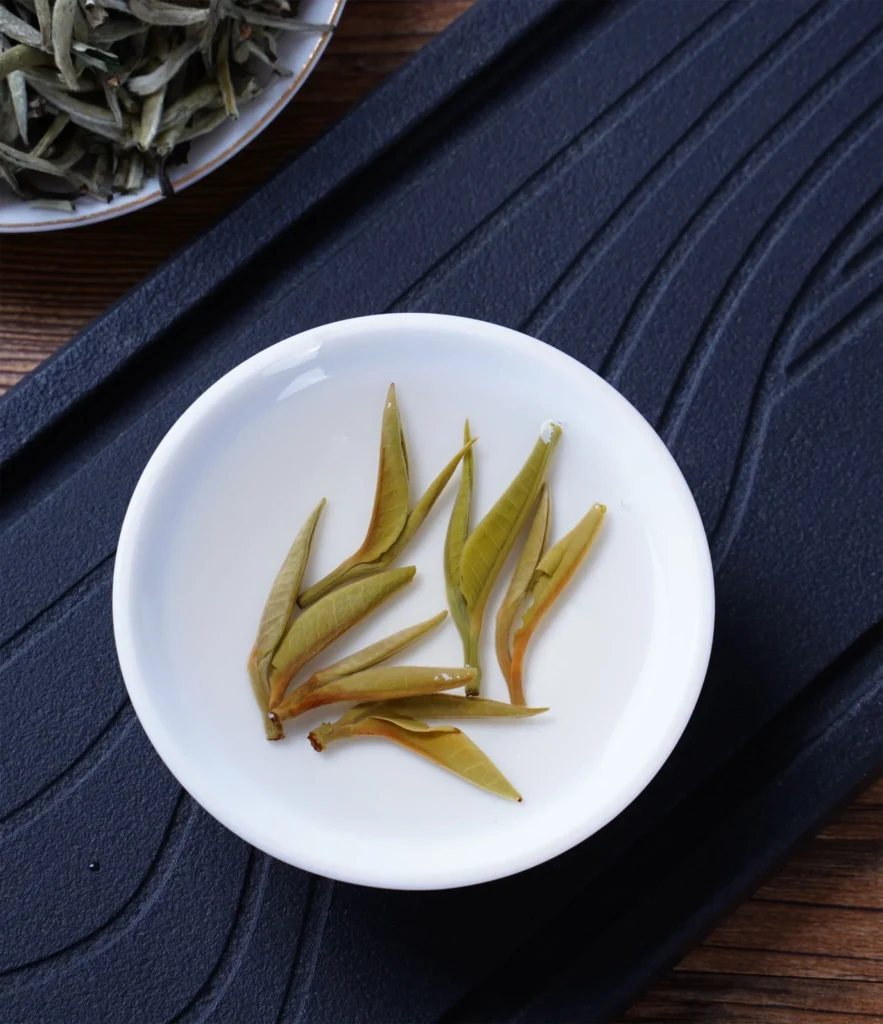
Silver Needle is all bud, so the dry leaf is caffeine-dense, but it brews gently because it takes cooler water and a lighter infusion. Shoumei is picked later, with one bud and several leaves, so its plant material differs from Silver Needle even though both are white tea. Spring green teas like Longjing and Biluochun are plucked early, from tender shoots.
Our white tea guide explains why sources report anywhere from 6 to 75 mg for the same category: dry-leaf caffeine and cup caffeine are different measurements.
Gongfu brewing changes the arithmetic
Western brewing means a few grams of leaf, one long steep, one mug. Gongfu cha uses around 7 to 8 grams of leaf in a small gaiwan, with steeps of 5 to 15 seconds repeated 10 or more times. Caffeine extracts quickly, so the early infusions carry a larger share, but each short steep is small and you sip across a session instead of taking one large dose.
A gaiwan gives you control over leaf, time and pacing, which are the same levers that decide caffeine.
What each type looks like in the cup
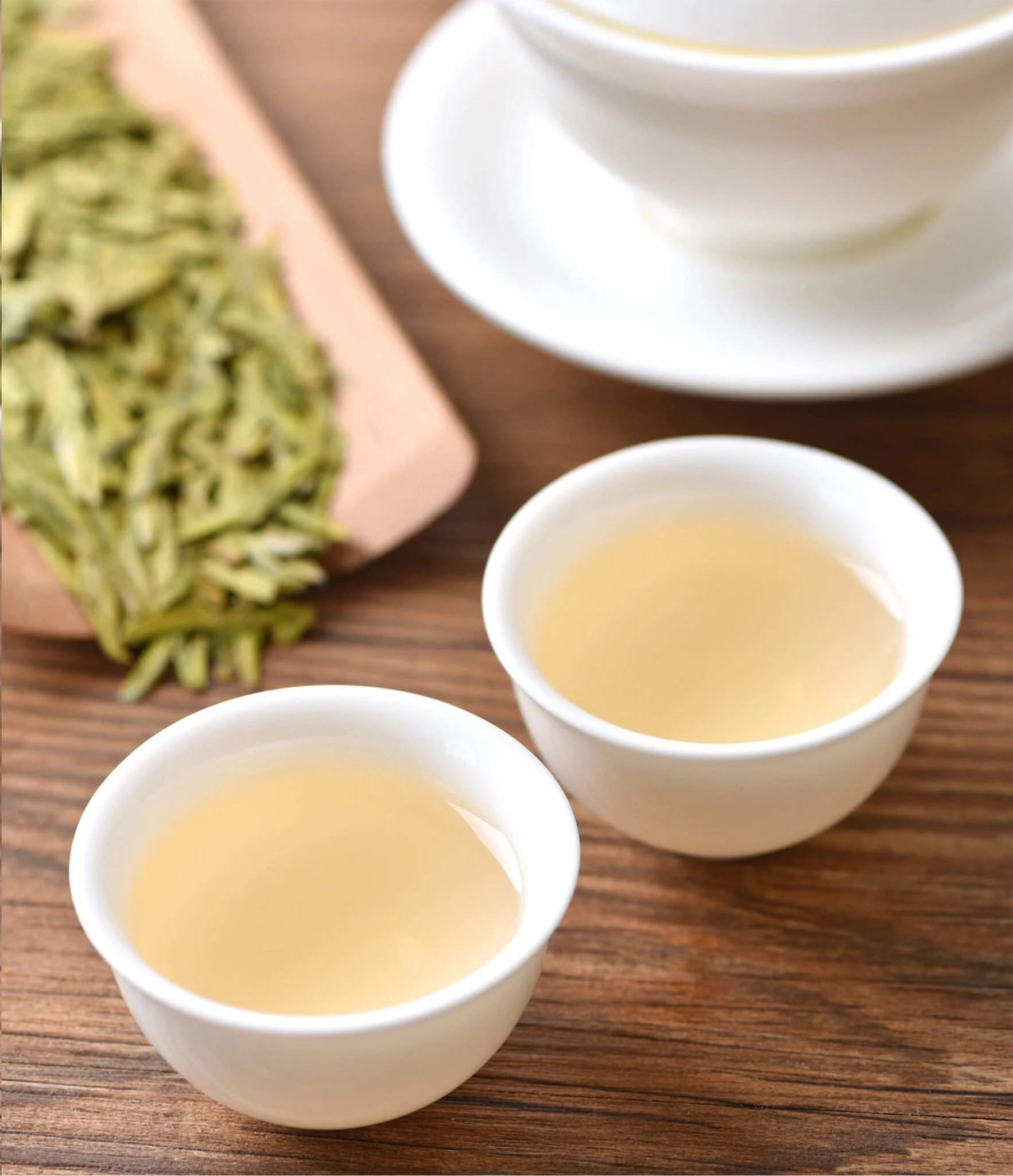
Green tea runs 25 to 50 mg per cup and responds strongly to water temperature. Brew around 80°C, not boiling. Read the full breakdown in does green tea have caffeine, or start with West Lake Longjing from our green tea collection.
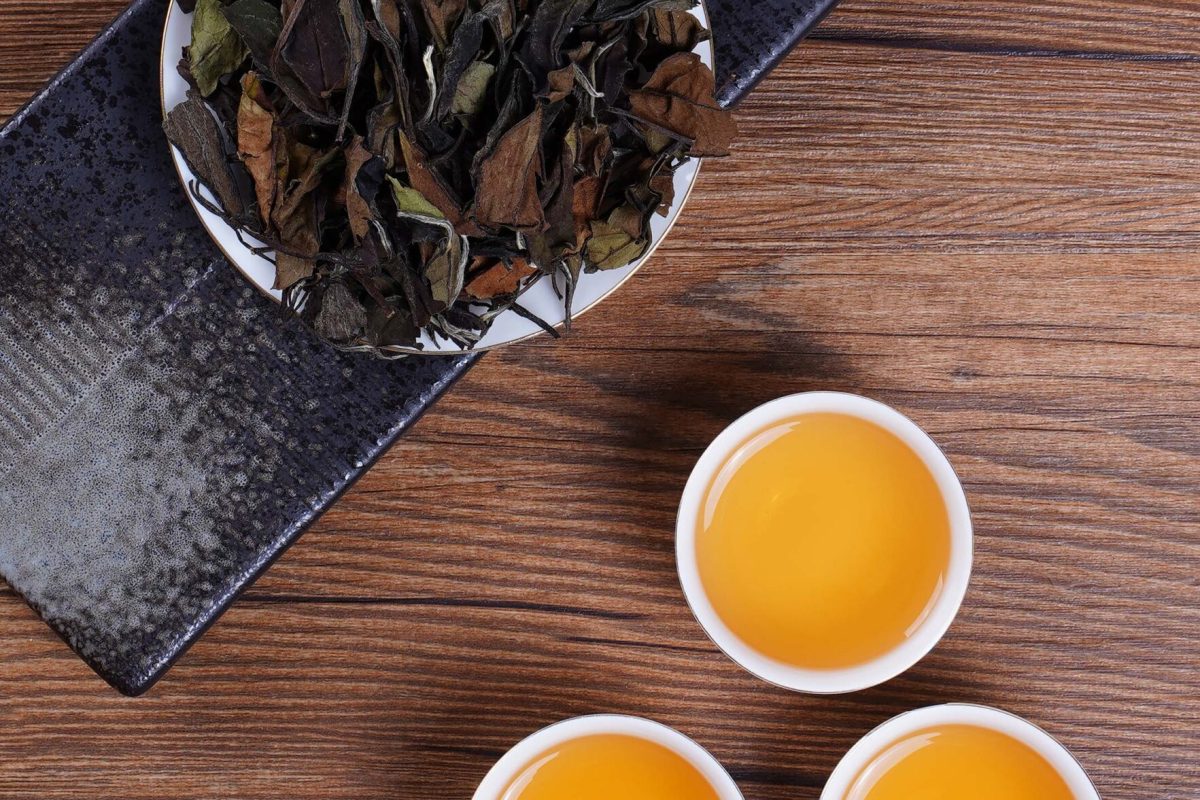
White tea is the lowest range, 15 to 40 mg, with the widest gap between leaf and cup. See does white tea have caffeine, then try Silver Needle or Shoumei in our white tea collection.
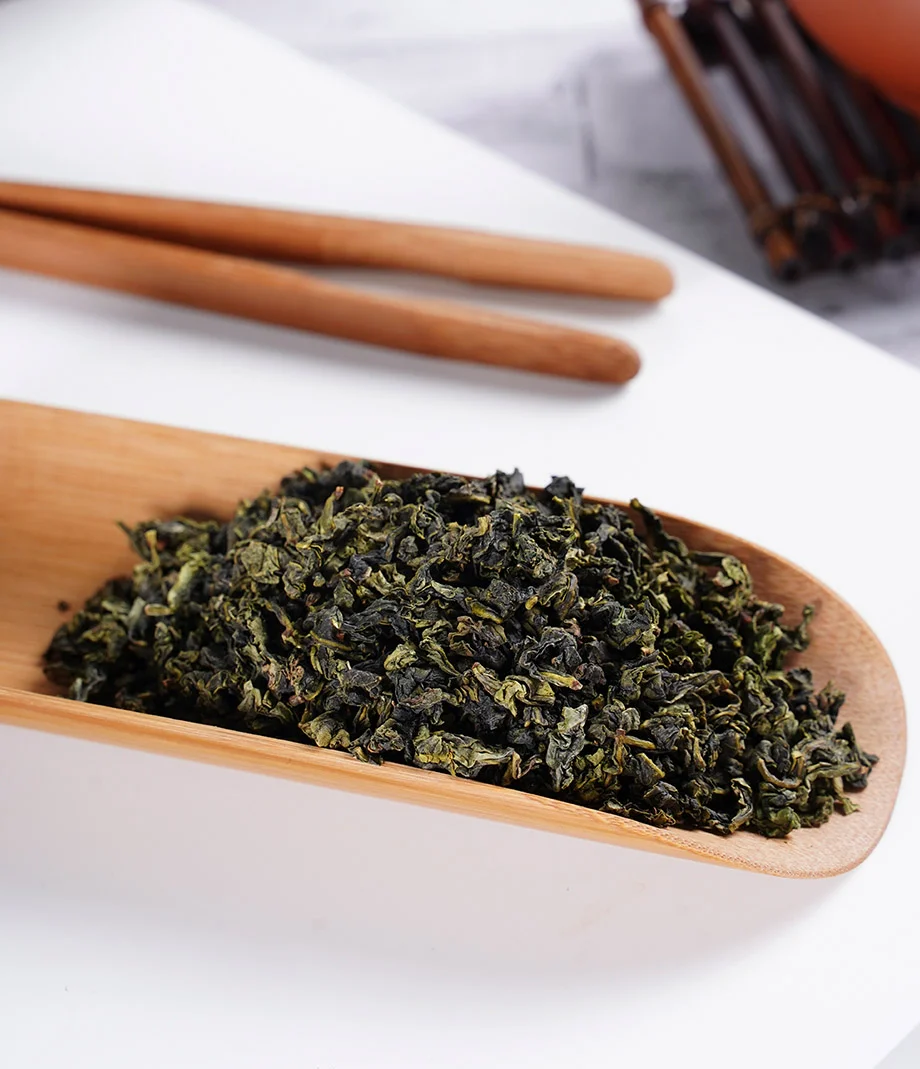
Oolong tea runs 30 to 55 mg and shifts the most with gongfu technique; see our oolong caffeine guide. Tieguanyin and Phoenix Dan Cong Ya Shi Xiang are good places to start in the oolong tea collection.
Pu-erh tea has the widest band, 30 to 70 mg. Fermentation does not burn caffeine off, and in controlled brewing pu-erh read level with black tea.[1] Our pu-erh caffeine guide covers raw against ripe, and the pu-erh collection includes the Jingmai Mountain raw cake.
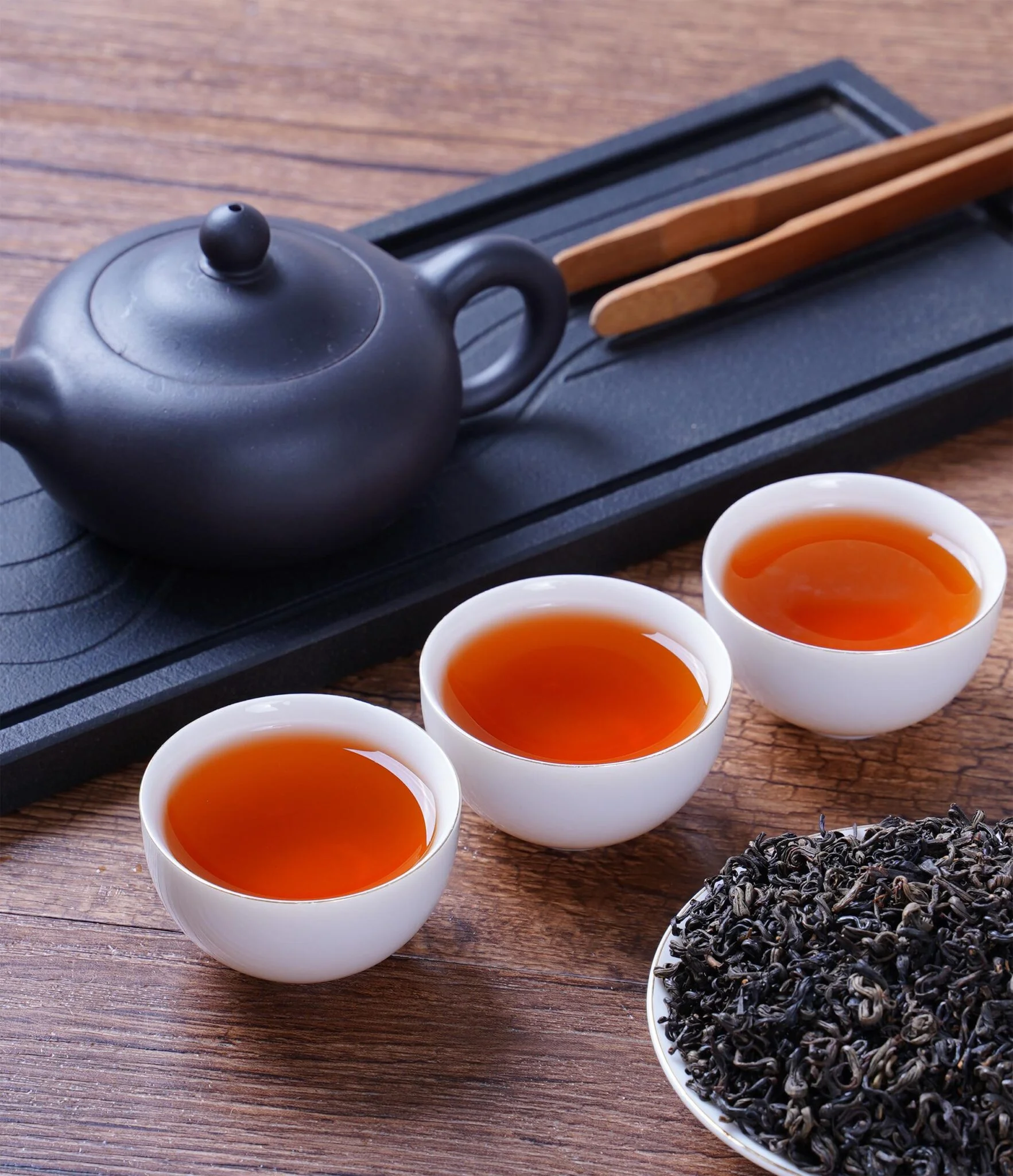
Black tea sits at 30 to 60 mg. The black tea collection is the place to look for a milder swap from coffee.
How to choose a lower-caffeine cup
- Shorten the steep. Two minutes instead of five cuts the number sharply.
- Lower the water temperature. 80°C pulls less than a rolling boil.
- Use less leaf. More leaf in the same water means more caffeine.
- Drink gongfu in the evening, since short steeps let you stop whenever you want.
- Don’t assume a tea type is safe. The ranges overlap, so the brew matters more than the label.
No tea made from the Camellia sinensis leaf is caffeine-free, so the realistic goal is a gentler cup.