
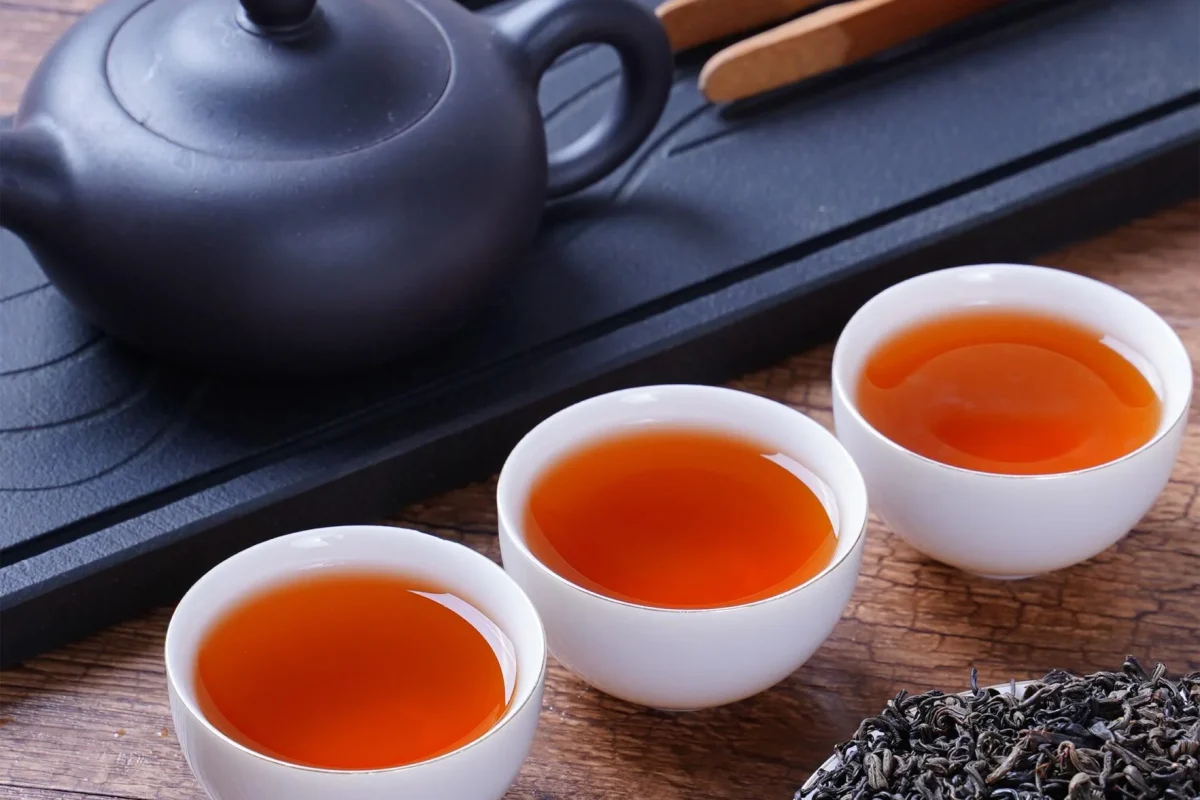
Anyone who has read about the history of Chinese green tea has run into the name Songluo. It is one of the oldest pan-fired green teas on record, and the technique behind it is credited by tea historians as an ancestor of the wok-firing method later used for Longjing. So a Songluo tea that arrives as black leaf, not green, needs an explanation.
Songluo takes its name from Songluo Mountain in Xiuning County, in the Huizhou region of Anhui Province, the same broader area that produces Huangshan Maofeng. The tea was famous during the Ming and Qing dynasties, prized for a pan-firing technique, “chao qing,” that fixed the leaf by tossing it in a hot dry wok rather than steaming it. That method spread to other regions over the following centuries and shaped how much of China’s green tea is made today. Our Songluo Black takes the same leaf material and region and processes it as a fully oxidized black tea instead, which is a real, deliberate departure from the tea’s own history, not an error in the name.
Why make a black tea called Songluo
Xiuning’s leaf and terrain, the same conditions that made the region’s green tea famous, also produce a strong black tea when the leaf is oxidized fully instead of pan-fired green. Anhui is better known internationally for Keemun, a black tea from Qimen County, than for black tea from Xiuning specifically. A Songluo black tea puts Xiuning’s terroir into the format most Western drinkers reach for first, without pretending to be the historical green style.
This is not a blend or a rebrand of a green tea. It is the same region’s leaf, oxidized the way a black tea is made: withered, rolled, fully oxidized, then dried. The result shares a place name with the famous green tea and nothing else in the processing.
How Songluo shaped later green tea
The pan-firing technique matters more than the place name alone. Before “chao qing,” much of China’s green tea was fixed by steaming, the method still used for Japanese sencha today. Songluo’s dry-wok method changes the leaf differently: less grassy, more toasted, with a rounder body. Once the technique proved out in Xiuning, tea makers in nearby regions adapted it for their own leaf, and pan-firing became the default for most Chinese green tea made since, Longjing included. Songluo did not invent every step of what Longjing does today, but the core move, tossing leaf in a dry hot wok instead of steaming it, traces back to this mountain.
That history is also why a black tea named Songluo can sound like a contradiction at first. The name is tied so closely to a specific green-tea technique that repurposing it for a fully oxidized tea reads, at a glance, like a mislabel. It is not. It is a choice about which part of the region’s identity to carry forward: the place and the leaf, not the historical processing method.
What it tastes like
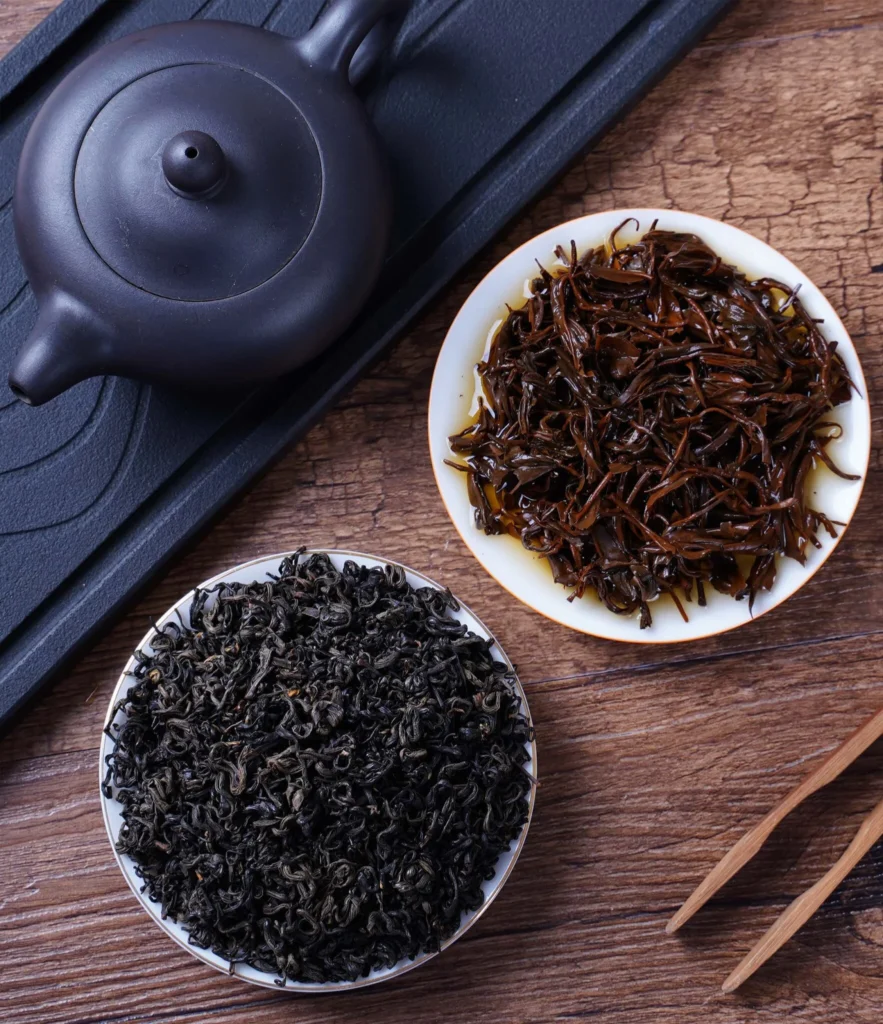
Our Songluo Black is rolled into small, tight curls. The liquor is smooth and mellow, with clear honey notes and a sweet aftertaste that lingers after the cup is empty. It reads closer to a gentle, rounded black tea than to anything sharp or smoky, and it holds up well without milk or sugar.
Compared with Keemun, Anhui’s better-known black tea export, Songluo Black is quieter. Keemun carries a distinct wine-and-cocoa character that made it a base for English breakfast blends for over a century. Songluo Black skips that intensity in favor of straightforward sweetness, closer to what you would want as a daily-drinking tea than as a blending base.
How to brew it
| Setting | Value |
|---|---|
| Water temperature | 195°F to 205°F (90°C to 96°C) |
| Leaf | 1 teaspoon (about 3 grams) per 8 oz cup |
| First infusion | 3 to 4 minutes |
| Later infusions | 2 to 3 short infusions if brewing gongfu-style, 30 to 45 seconds each after a quick rinse |
Western style, in a mug or a small pot, gets you a full, honeyed cup in one steep. Gongfu style, in a gaiwan with a short rinse first, draws out more of the sweetness across several shorter infusions and is the better choice if you want to taste how the leaf changes cup to cup.
Who it suits
Reach for Songluo Black if you already drink Keemun or Dianhong and want something gentler on the same shelf, or if you are new to Chinese black tea and want an easy entry point before moving toward smokier or more tannic styles. It also works well as a morning tea for someone who finds most black teas too sharp without milk: the honey sweetness carries the cup on its own.
Skip it if you specifically want the historical Songluo green, the pan-fired style the name is best known for. We do not currently carry that version, and this black tea is not a substitute for it, just a different tea that shares a mountain and a name.
Where it fits
Songluo Black sits alongside the rest of our black tea range, next to teas like Yunnan Gold Tip, for anyone building a rotation of Chinese black teas beyond the more commonly known styles. It is also part of our wider Anhui collection, which draws on the same province’s reputation for precision harvesting and processing.
Start with the Songluo Black itself, or browse our full black tea category to see where it sits next to the rest of the range.