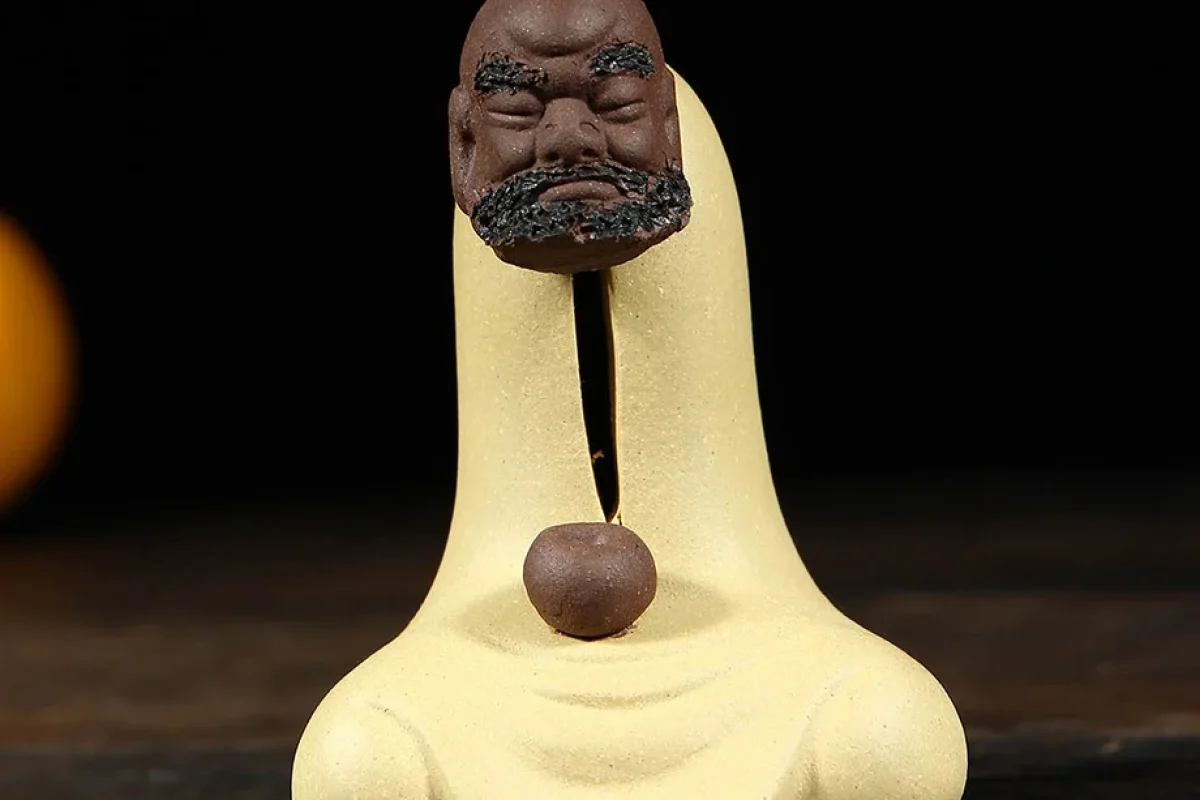
A tea pet is a small clay figurine that sits on the tea tray during gongfu tea practice. You pour tea over it, never from it. Its meaning comes from two things at once. First, the figure itself: carved into an animal, a zodiac form, or a mythical creature with a specific symbolic charge. Second, the practice of feeding it, which turns a decoration into a companion. Neither half works alone. Skip the feeding and a tea pet is just a sculpture. Skip the meaning and it’s just an object you happen to pour tea on.
What a Tea Pet Actually Is
The Chinese word for tea pet, chong, is closer to “companion” than “pet” in the Western sense.[1] The object emerged alongside gongfu cha, the small-vessel brewing method Chaozhou developed.[2] It still shapes how people serve tea across southern China. Potters traditionally shaped tea pets from Yixing zisha clay, the same unglazed, porous purple clay behind the region’s most prized teapots. Most trace the origin to the Yuan dynasty (1271 to 1368). Potters started saving small offcuts of zisha clay from teapot production then and shaping them into figures instead of discarding them.
Zisha clay is porous, so it behaves differently from glazed ceramic: it absorbs the liquid poured over it. Months of use change the color and surface of the figure and leave a faint scent of the tea it has absorbed. That’s not folklore; it’s a physical property of the clay. The symbolism sits on top of that fact. People treat a tea pet that visibly changes over time as something that responds to attention. That response is where the meaning comes from.
Why You “Feed” a Tea Pet Instead of Just Displaying It
In gongfu practice, brewers discard the first pour over the leaves rather than drink it; they call it the rinse. It clears dust and opens the leaf before brewing the tea itself. That rinse, or the first short infusion, goes on the tea pet. Some practitioners use whatever remains in the fairness pitcher[3] after pouring the cups. Never feed the pet soap or detergent, and never rinse it with anything but plain water between sessions.
Practitioners call this “raising” a tea pet, the same verb used for raising a child or an animal. That word choice is deliberate: you don’t maintain a tea pet, you nourish it. Each session adds a small amount of color and character that you can’t add back once lost, so nobody scrubs a tea pet hard enough to remove its patina. The meaning of a specific figure only matters once someone commits to this ongoing, unhurried process. A dragon tea pet sitting unfed on a shelf carries none of the meaning that three years of raising gives it.
What the Figures Mean: Animals, Zodiac Forms, and Virtues
Most tea pets take the form of an animal. Each one carries a specific, commonly understood meaning rather than a vague one.
- Dog. Represents loyalty and vigilance. Hence’s own dog figure, Tea Pet No.1, carries this meaning directly.
- Cow (ox). One of the twelve zodiac animals, it represents patience, steady nourishment, and quiet potential rather than speed. Tea Pet No.2 and Niuniu, No.5 both take this form.
- Gourd (hulu). Not an animal, but one of the most common tea pet shapes. Wide at the base and narrow at the neck, the gourd reads as a vessel that gathers and holds, so people associate it with longevity, protection, and abundance. Lulu, No.6 is Hence’s version.
- Pig. A common figure elsewhere in the tradition, representing honesty and material wealth.
- Bird. Meaning depends on the species. A crane or phoenix form generally points to happiness and long life. Other birds carry narrower, more regional meanings.
Some tea pets take historical or religious figures instead of animals. Hence’s Bodhidharma tea pet, No.4, depicts the monk credited with bringing Chan Buddhism from India to China, whose teaching drew on the Lankavatara Sutra. As a tea pet, that figure represents meditation, discipline, and wisdom: virtues that gongfu practice itself asks for through its meditative attention.
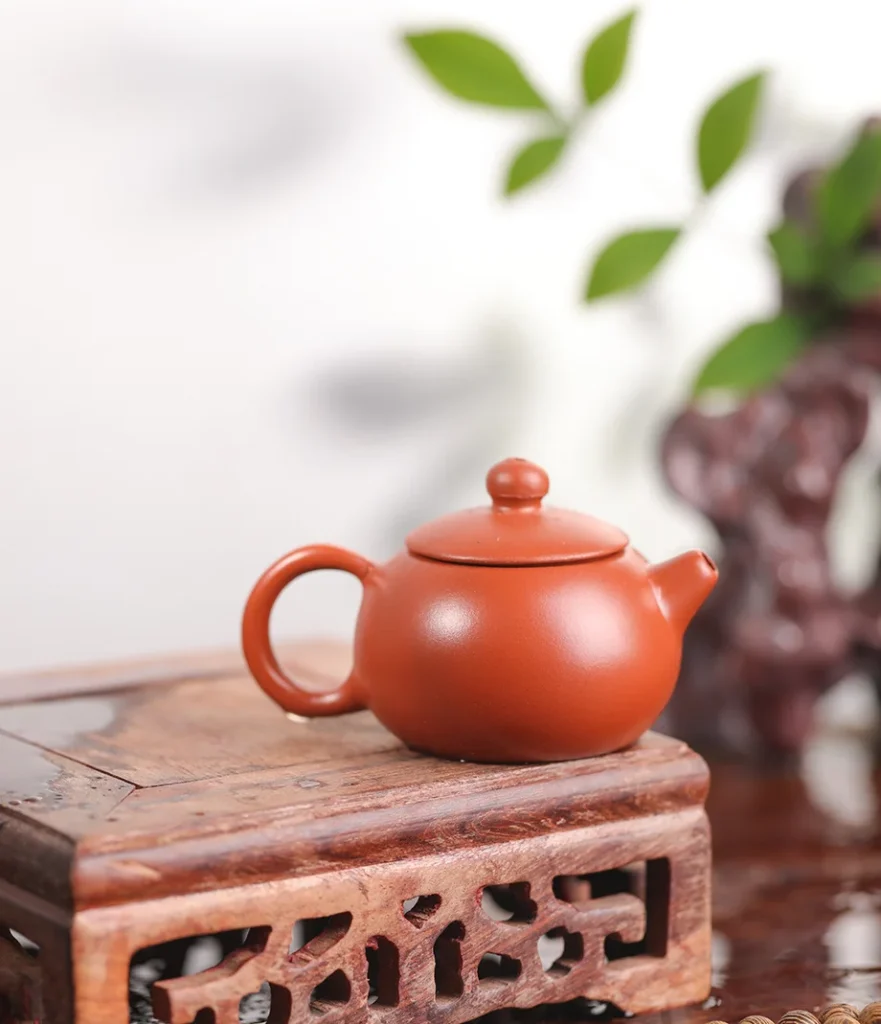
Other tea pets take the shape of miniature teaware. Huhu, No.7, a small zisha teapot form, represents simplicity and a direct connection to the tea itself. Its meaning is the practice, not a symbol layered on top of it.
Mythical Figures: Pixiu, Qilin, and the Money Toad
Three mythical figures appear often enough in tea pet form to name specifically, alongside real animals.
Pixiu is a winged, lion-like creature that legend says has no anus, so it can consume wealth but never expel it. That trait makes it one of the most common wealth-attracting figures in Chinese decorative tradition, tea pets included.
Qilin is a hooved, dragon-scaled creature that people associate with prosperity, good governance, and the arrival of a wise or benevolent presence. It appears less often than pixiu but carries similarly high-status symbolism.
Jin chan, the three-legged money toad usually shown with a coin in its mouth, carries a narrower meaning: financial luck. It shows up constantly in shop and home decor, and its appearance as a tea pet follows the same logic.
Don’t confuse these in a caption or a gift note. Each carries a specific enough meaning that the wrong name undercuts the reason someone chose that figure in the first place.
Where a Tea Pet Sits and How to Feed It
On a gongfu tea tray, the tea pet sits to the side, within easy reach of the person pouring. It never sits in the direct path between the gaiwan and the cups. It should not crowd the fairness pitcher or block the drainage tray beneath the gaiwan.
To feed a tea pet:
- Pour the discarded rinse water, or a short first infusion, directly and evenly over the figure. Uneven pouring produces uneven color over time.
- Use only water or tea. No soap, no detergent, no scrubbing with anything abrasive.
- For cleaning between sessions, a soft tea brush with fine bristles is enough. Rinsing between sessions is optional, not required.
- Stay consistent. Feeding the same tea pet with wildly different teas slows and muddies the color change; many practitioners keep one pet for a single tea type or session.
Choosing a Tea Pet
The right tea pet is the one whose meaning matches what the person actually wants from their practice, not the one that looks most striking on a shelf. A patience-focused gongfu habit points toward the cow. Someone treating tea as a meditative practice might choose the Bodhidharma figure. For a tea pet that represents the ritual itself, with nothing symbolic layered on top, the zisha teapot form fits best.
Hence sources its tea pet collection from the same Yixing zisha clay behind the region’s traditional teaware, shaped the way this article describes. Pair one with zisha teaware, brew using the gongfu cha method, and a tea pet stops being a decorative object within the first few sessions of use. In Chinese, the concept was never about ownership. It was always about raising.