
White tea contains the same catechins as green tea, in overlapping amounts, and almost no human trial has tested white tea itself. Every claim below follows from those two facts.
Most pages on white tea benefits list antioxidants, heart health, skin and weight loss, and give each the same stock sentence. However, the research behind those sentences comes from cell dishes and rats, from studies of green tea, or from lab extracts nobody brews at home. Here is what researchers have measured, in what, and what it means for a cup of Silver Needle or Shou Mei.
White tea carries the same catechins as green tea, in overlapping amounts
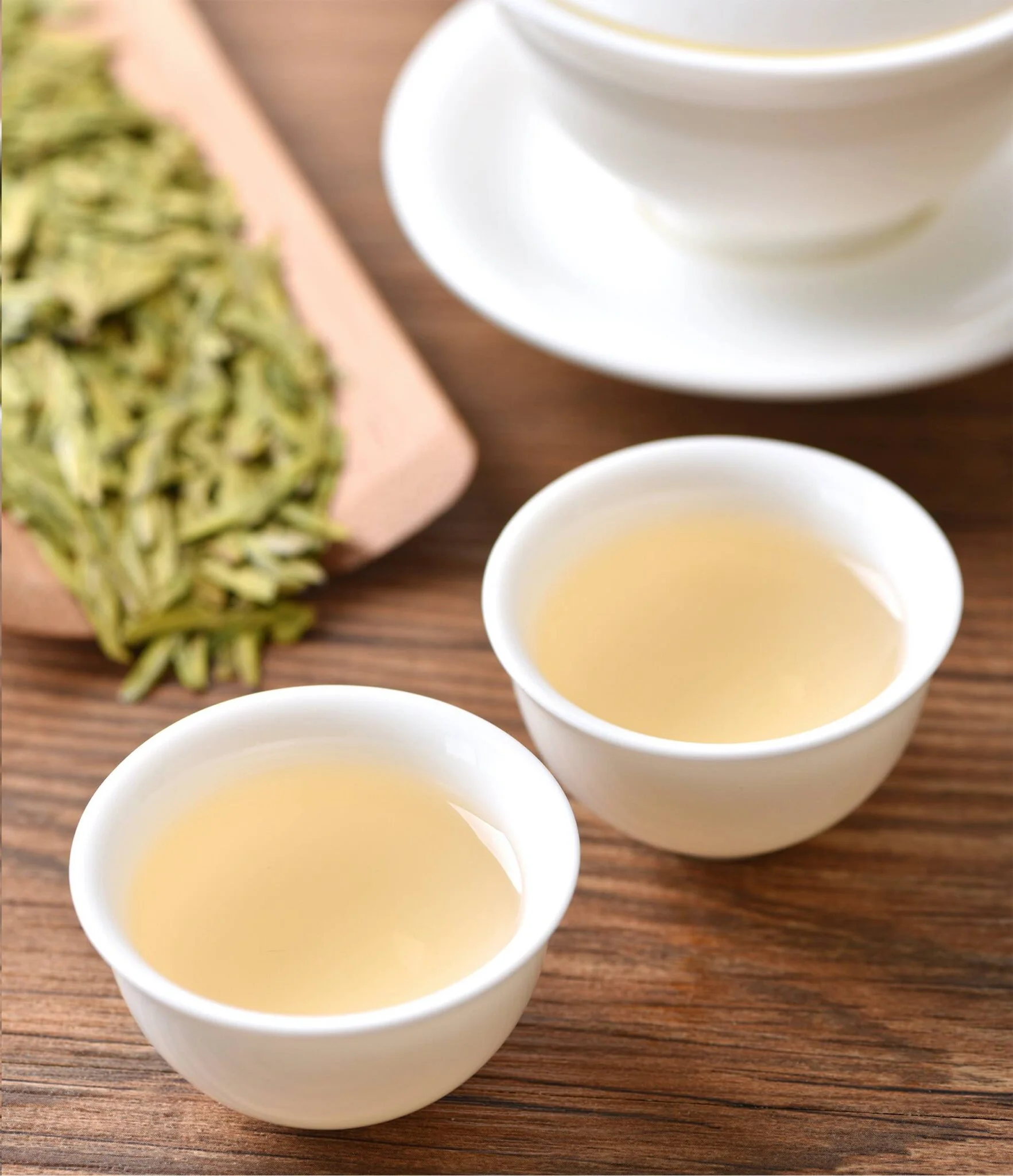
Producers make white tea from buds and young leaves, then wither and dry them with minimal processing. Catechins are its dominant polyphenols, and EGCG makes up about 59% of the catechin total in both white and green tea.[1]
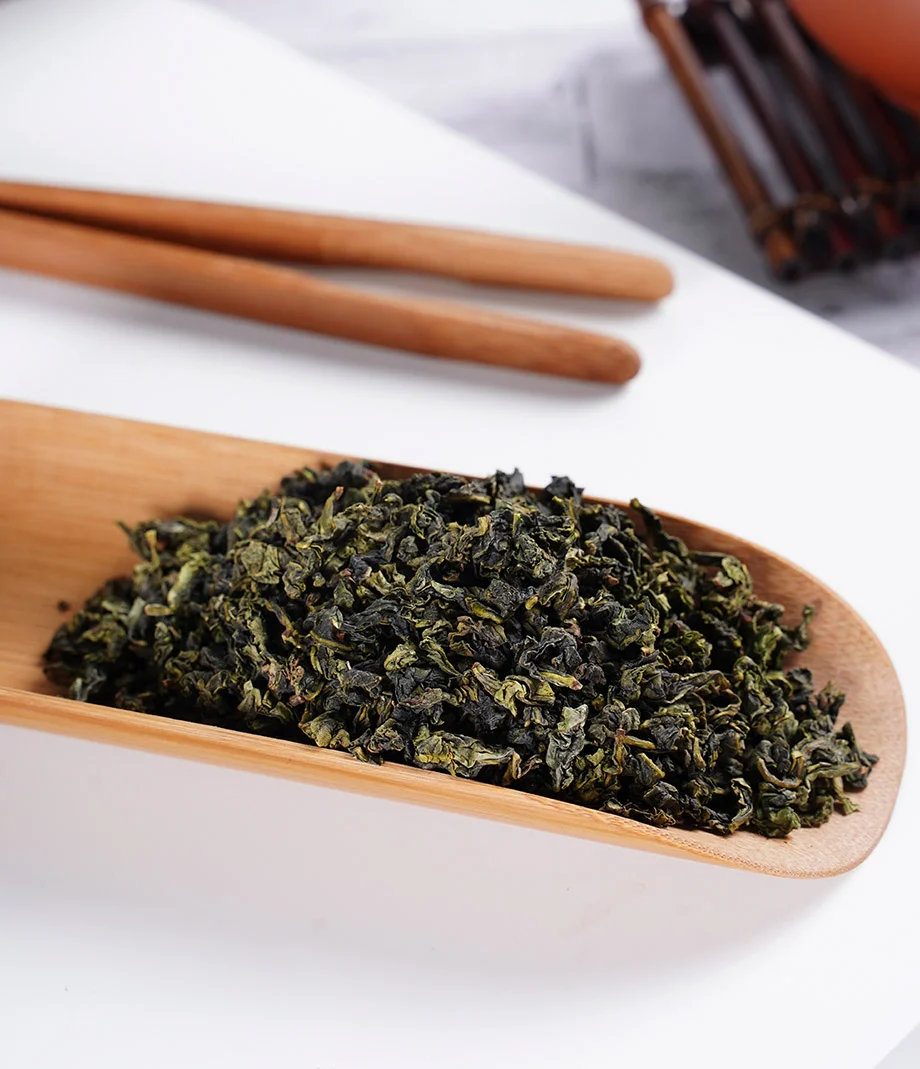
A 2023 review in Food Science & Nutrition reports white tea polyphenol content at 10.60 to 25.95 g per 100 g of dry leaf, and green tea at 13.7 to 24.7 g.[1] Those ranges, in fact, overlap almost completely. As a result, neither tea wins on chemistry. The answer depends on which white tea and which green tea you compare.
Silver Needle leads in the dry leaf, and the cup tells a different story
Silver Needle is the bud-only grade, so people often use it to argue that white tea beats green. A lab comparison of five commercial teas supports that claim in one place only. Silver Needle leaf extract had the highest total polyphenols and EGCG of the group. In infusions, however, green tea was the better source, and the Silver Needle infusions held very low concentrations of both.[2]
The same study tested water from 60°C to 95°C and steeps from 5 to 30 minutes. Hotter water and longer steeping did not reliably raise those concentrations.[2]
In other words, white tea has more antioxidants than green tea in a lab flask. In a cup, the leaf, the water and the clock decide.
Human trials on white tea itself barely exist
The 2023 review is blunt about this. It finds a lack of clinical studies on white tea. Instead, the evidence comes mainly from cell cultures and animals: rat lipid studies, human fat-cell cultures, and glucose and insulin work in mice and pre-diabetic rats.[1] Findings on tea and weight loss are contradictory and inconclusive, and most human data concern tea in general or green tea.[1]
For that reason, these claims remain unestablished for white tea in people:
- Protection against heart disease
- Weight loss
- Blood sugar control
- Slower skin aging
Nobody has disproven any of them. Still, none has a white tea trial behind it.
Catechins barely leave the gut
Absorption also explains part of the gap between lab results and a cup of tea. According to the same review, less than 5% of the catechins that rats swallow reach the bloodstream. In one human measurement, researchers recovered about 1.7% across plasma, urine and feces over 6 hours.[1] Catechins peak in blood 1 to 5 hours after drinking, and the body clears most of them within 24 hours.[1]
A purified EGCG dose in a study and a cup of white tea at your table are therefore different exposures. Results from one do not transfer to the other.
White tea carries the least fluoride of the teas tested
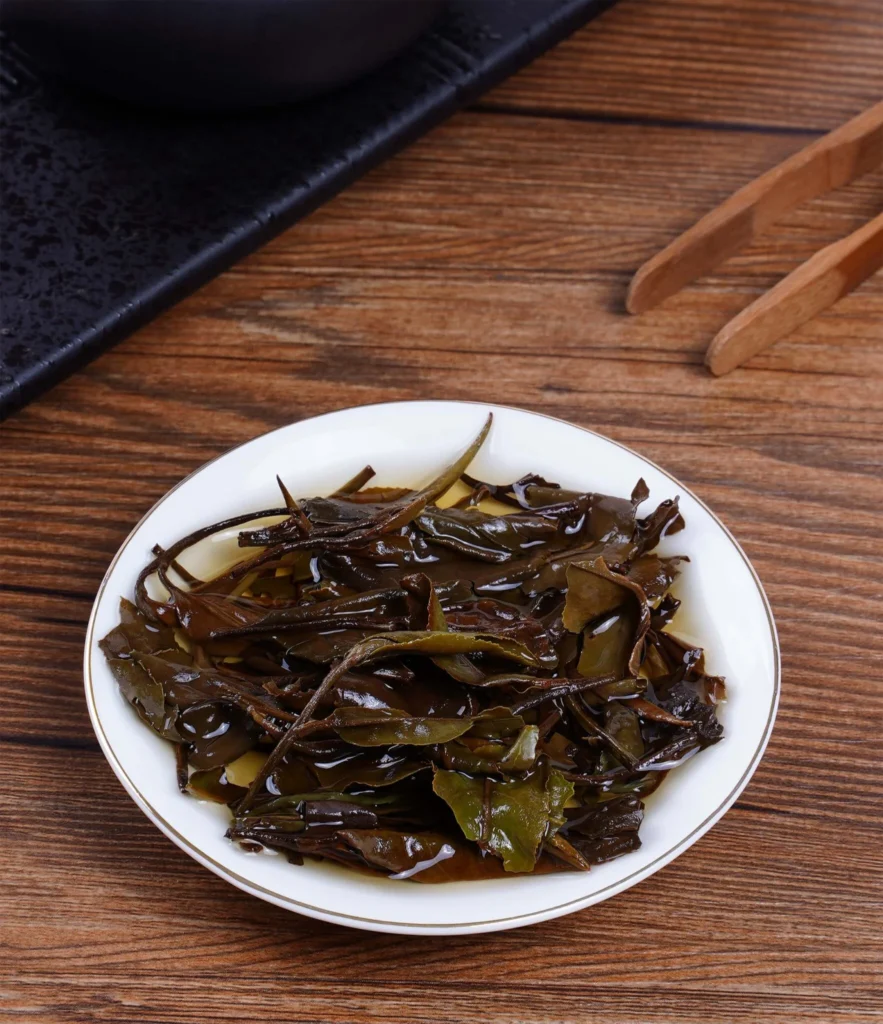
Finally, one result is both specific and clean. A 2021 study in Scientific Reports brewed several tea types for 5 minutes in near-boiling water and measured the fluoride in each cup:[3]
| Tea type | Fluoride in the cup (mg/L) |
|---|---|
| White | 0.21 |
| Herbal | 0.40 |
| Oolong | 0.86 |
| Green | 1.19 |
| Black | 2.54 |
White tea stayed at 0.21, 0.21 and 0.20 mg/L across 5, 10 and 20 minute steeps. Green and oolong, on the other hand, kept releasing fluoride the longer they brewed.[3] If you drink several cups a day and track fluoride, white tea is the lowest option in that dataset.
Caffeine in white tea depends on the grade
White tea is not caffeine-free, and the amount moves with the plant material. Silver Needle uses buds only. Shou Mei, in contrast, comes from later picking, to a standard of one bud with three to five leaves. Our guide to caffeine in white tea puts the typical published range at 15 to 40 mg per 8 oz cup, against 80 to 100 mg for brewed coffee. It also explains why one page says 6 mg and another says 75. If you limit caffeine, count white tea in your daily total.
Silver Needle and Shou Mei suit different drinkers
Both teas come from Fuding in Fujian, and both take 80°C to 85°C water. Still, they differ in what the pickers take, and that changes the cup.
| Silver Needle | Shou Mei | |
|---|---|---|
| What pickers take | Fattest buds only, early April before Qingming | One bud with three to five leaves, from mid-April |
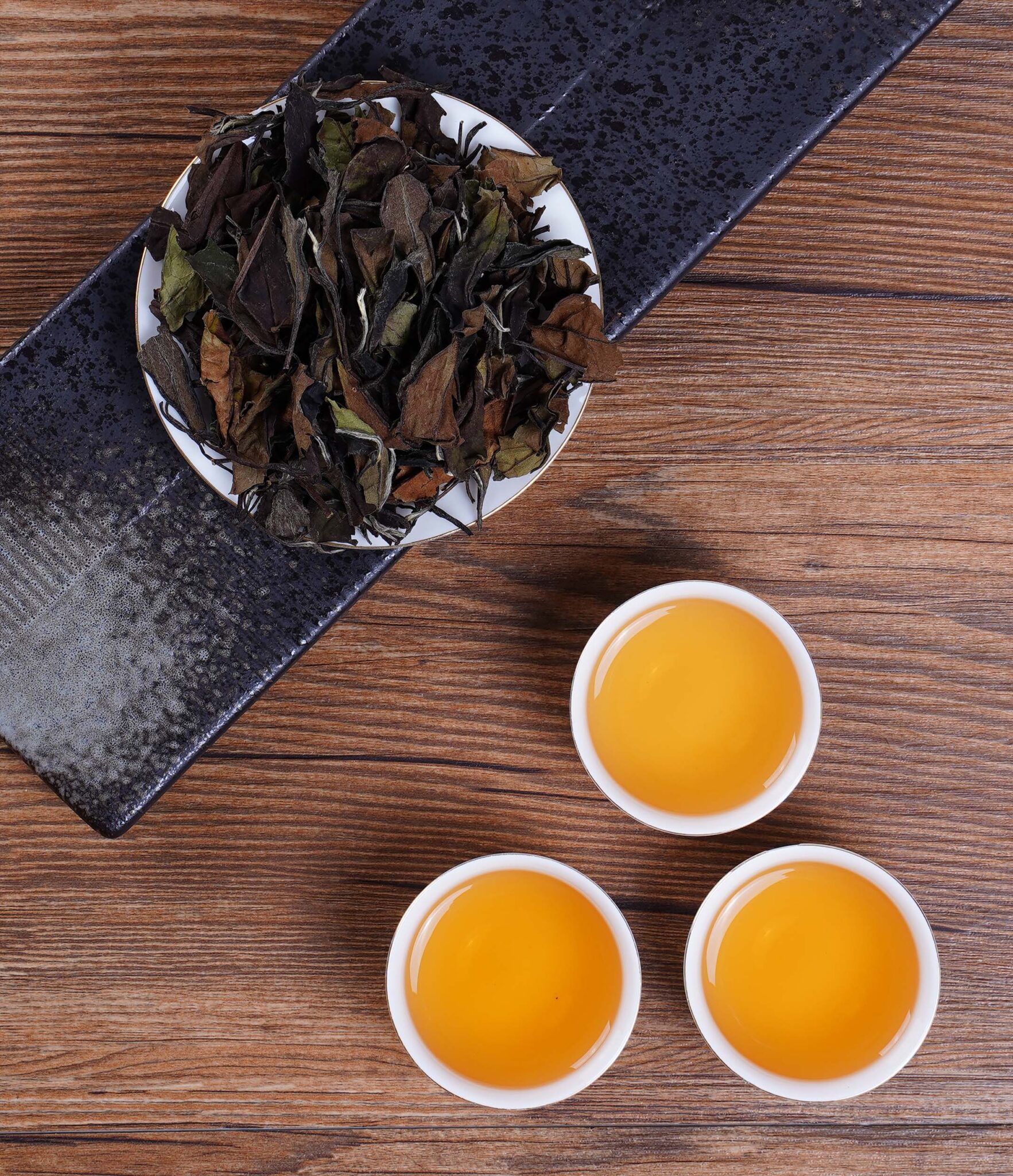
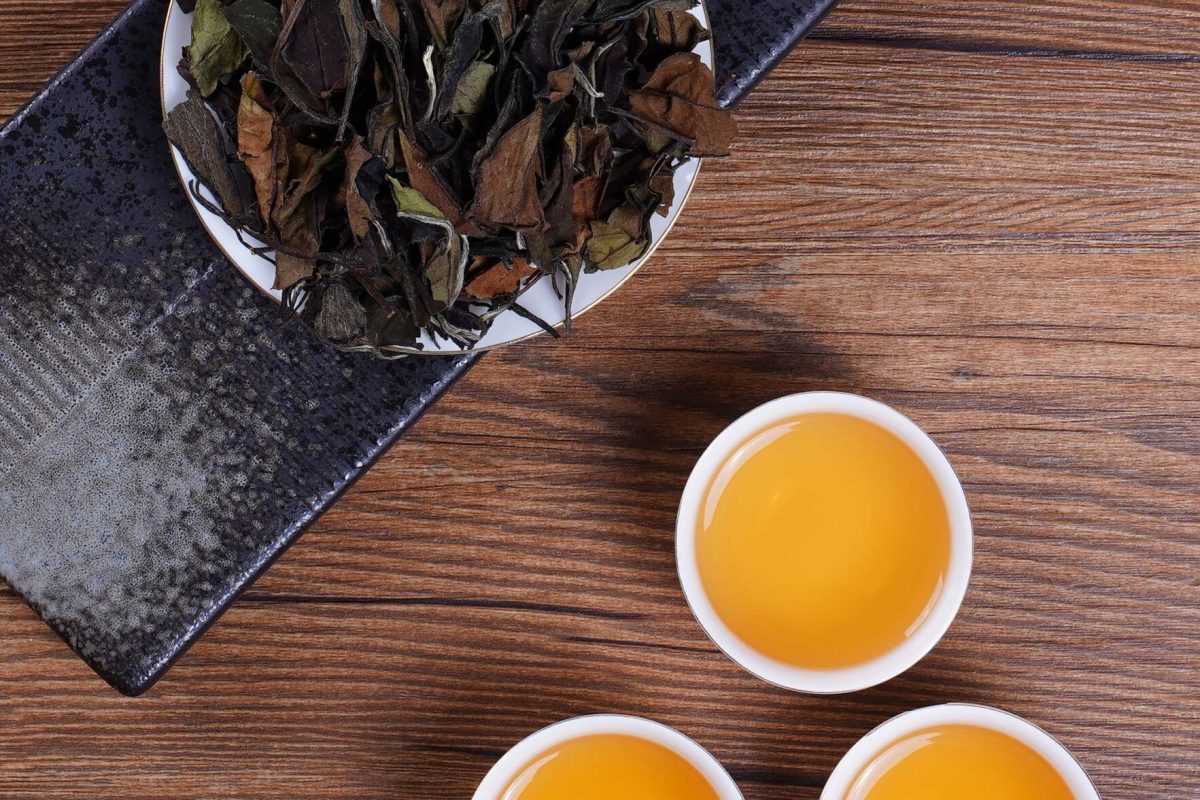
| Dry leaf | Silvery-white, downy needles | Brown, like withered fallen leaves |
| Liquor | Pale, light yellow-green | Orange to dark yellow |
| Flavor | Fresh flowers, sweet, delicate | Mellow, thick and smooth |
| Good for | A light, aromatic cup | After a heavy meal or on a hot day |
Shou Mei is the cheaper, bolder grade, so it keeps developing in the jar for years. Our Shou Mei guide covers how it ages and where it sits among the four white tea grades.
Brew it for a full cup, not a weak one
First, use 80°C to 85°C water, as printed on each product page, in a gaiwan, glass or porcelain pot. Hotter water does not reliably buy more extraction, according to the lab work above. Besides, the bud grades are the delicate end of the range.
Next, adjust the amount of leaf, because that lever works. In a gaiwan, start at 4 g of bud-grade white tea or 5 g of Shou Mei per 100 ml, and follow the grip, ratio and timing steps in our gaiwan guide. For a comparison with green tea, our write-up of green tea antioxidants shows how brewing changes what reaches the cup.
Daily intake is a separate question, and we answer it in how much tea to drink each day.
Choose by what you want in the cup
Pick white tea for its taste, its low fluoride and its moderate caffeine load. Do not pick it for a health outcome that no trial has tested. To taste the difference between the bud grade and the leaf grade, start with a pack of Silver Needle and a pack of Shou Mei from our white tea collection.