
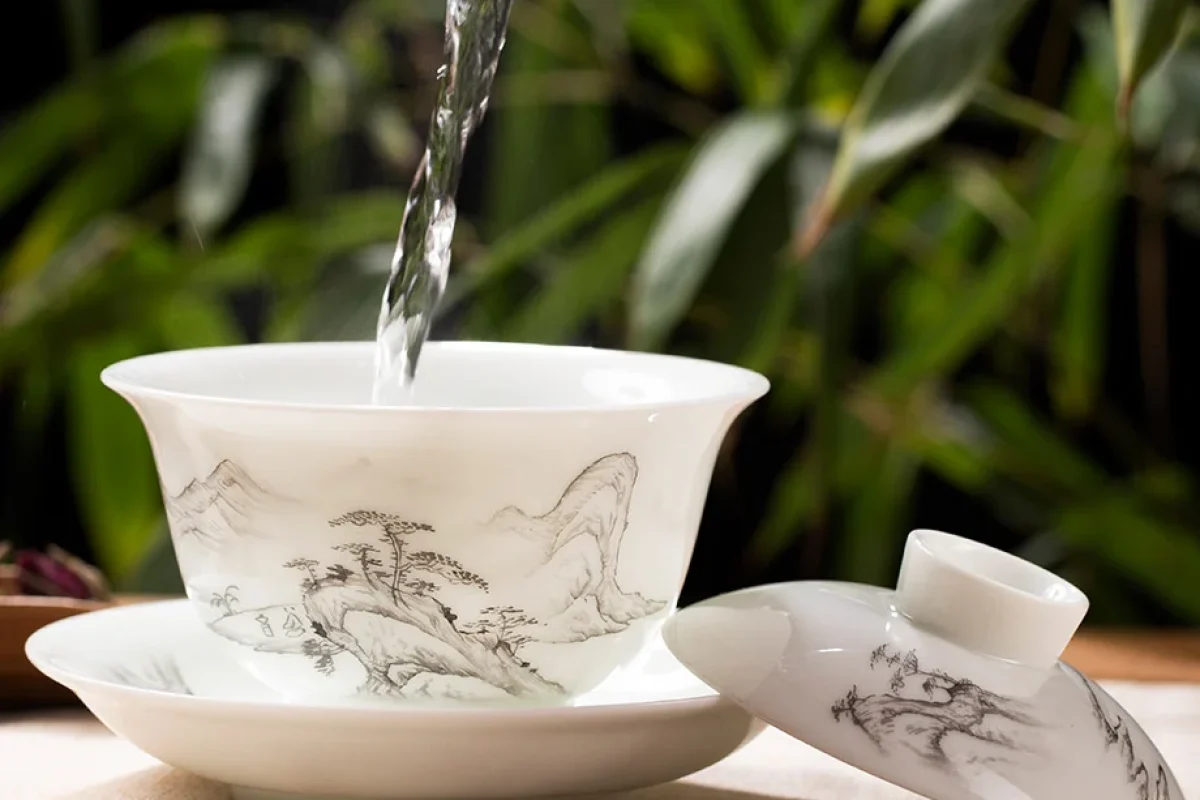
The gaiwan looks like the hardest piece of teaware on the table and is the simplest. It has three parts and nothing that moves or needs cleaning beyond a rinse. What stops most people is the first pour, when the lid slips or the rim turns out to be hotter than expected.
A gaiwan is a lidded bowl used to steep and pour loose-leaf tea. You put leaves in the cup, add hot water, cover it, and after a few seconds tilt the whole vessel forward so the liquor runs out through the gap between lid and rim while the leaves stay behind. The lid does the straining, which is the whole of the mechanism.
The three parts and what they mean
A gaiwan is traditionally called San Cai Wan, the Three Talent Bowl, or San Cai Bei, the Three Talent Cup. The three talents are heaven, earth, and humanity. The lid is the sky, the saucer is the earth, and the cup between them stands for the people in the middle.
Each part also does a job:
- The lid strains the leaf, traps aroma between pours, and lets you adjust the pour gap
- The cup holds the leaf and water, with a flared rim that keeps heat away from your fingers
- The saucer carries the whole thing and catches drips
The grip, which is the only hard part
Heat is the reason people give up on gaiwans, and the grip is the fix. There are two holds worth learning.
The traditional hold: take the flared edge of the cup with your thumb and middle finger, and steady the lid with your index finger. Your fingers stay on the rim, which is the coolest part of the vessel because it sits above the water line and away from the liquid.
The safer hold, and the one we recommend for beginners: spread your fingers against the underside of the saucer, hold the lid down with your thumb, and lift saucer and cup together. Your skin never touches the hot porcelain at all.
Beginners can also use two hands. One steadies the saucer, the other controls the lid. There is no penalty for this and it is better than a dropped gaiwan.
Three things that make heat worse, all avoidable:
- Overfilling. Fill to 70 or 80 percent, never to the rim. Water at the rim heats the exact spot your fingers hold.
- Hesitating. A slow pour keeps your hand over rising steam. Commit to the motion.
- Choosing a gaiwan with a shallow rim flare. The flare is what creates the cool ledge. Our Jingdezhen porcelain gaiwans are shaped with a pronounced flare for this reason.
Sizing your gaiwan
For one or two drinkers, 100ml to 120ml is the standard working size and the easiest to handle. Larger gaiwans hold more water, which means more weight and more heat in the same grip.
Buy for the number of people you usually serve, not the maximum you might one day serve. A 150ml gaiwan used alone means you either brew too much tea or you brew a small amount of leaf in a large vessel, which throws the ratio off.
Leaf ratios and steep times
Gongfu brewing uses far more leaf and far shorter steeps than western brewing. The point is to pull many short infusions from the same leaf and taste how the tea changes across them.
Start at 5 grams of leaf per 100ml for most teas, then adjust:
| Tea type | Leaf per 100ml | Water temp | First steep |
|---|---|---|---|
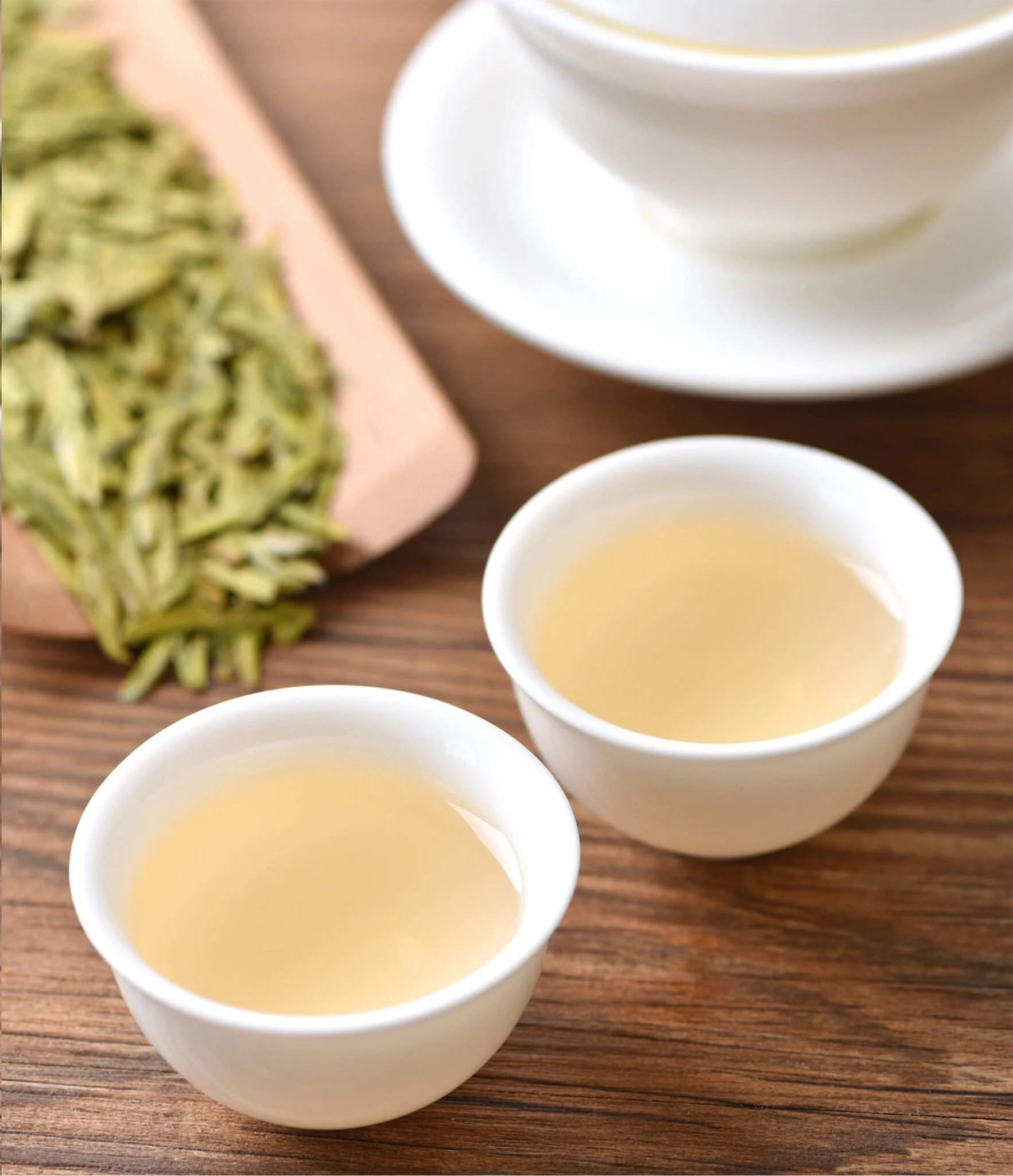
| Green | 3g | 175°F to 185°F | 15 seconds |
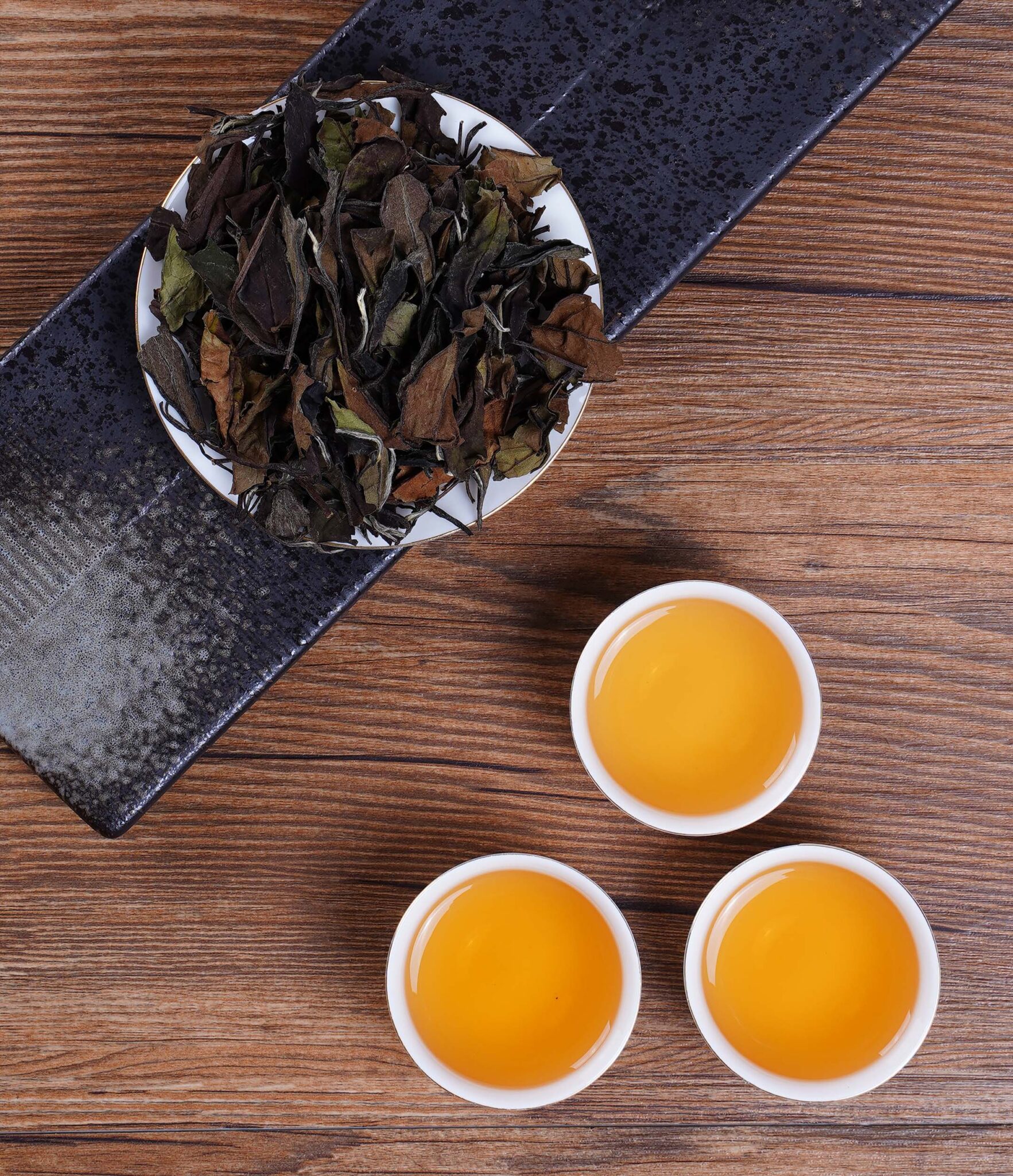
| White (bud grades) | 4g | 190°F | 20 seconds |
| White (Shou Mei, aged) | 5g | 200°F to 208°F | 10 seconds |
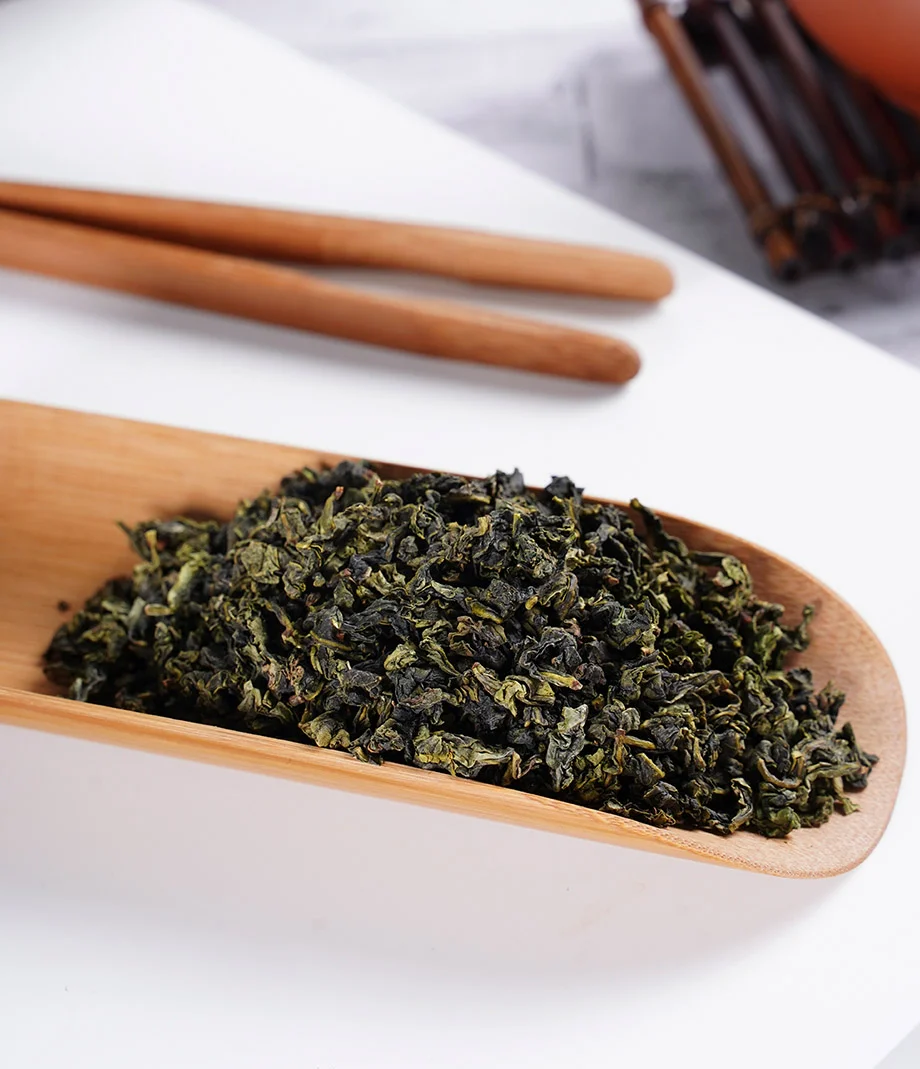
| Oolong (rolled) | 6g | 205°F to 212°F | 20 seconds |
| Oolong (strip, Dancong) | 5g | 205°F to 212°F | 8 seconds |
| Black | 4g | 200°F | 10 seconds |
| Raw pu-erh | 6g | 205°F to 212°F | 8 seconds |
Add 5 seconds to each infusion after the first. When the liquor starts thinning, add 15 to 20 seconds instead.
Rinse first for anything compressed, aged, or heavily rolled. Pour water over the leaf, discard immediately, and let the wet leaf sit for 20 seconds before the first real infusion. The rinse wakes the leaf and lets tightly rolled tea begin to open, so skipping it costs you the first infusion.
The full sequence
- Warm the gaiwan. Pour hot water in, swirl, discard onto the saucer or into a waste bowl. A cold vessel steals heat from the first infusion.
- Add the leaf. Weigh it if you can. Eyeballing works after about 20 sessions, not before.
- Smell the dry leaf. Cover the warmed gaiwan with the leaf inside for 10 seconds, then lift the lid and smell. Heat pulls the aroma out and tells you what to expect.
- Pour the water. Aim down the inside wall rather than directly onto the leaf. Fill to 70 or 80 percent.
- Cover and wait. Use the times in the table.
- Pour off completely. Tilt forward, using the lid gap as a strainer. Empty the gaiwan fully. Liquor left behind keeps steeping and turns the next infusion bitter.
- Repeat. Rest the lid ajar between infusions so the leaf does not stew in its own heat. A lid stand keeps it off the table.
Pour into a fairness cup, not straight into the cups
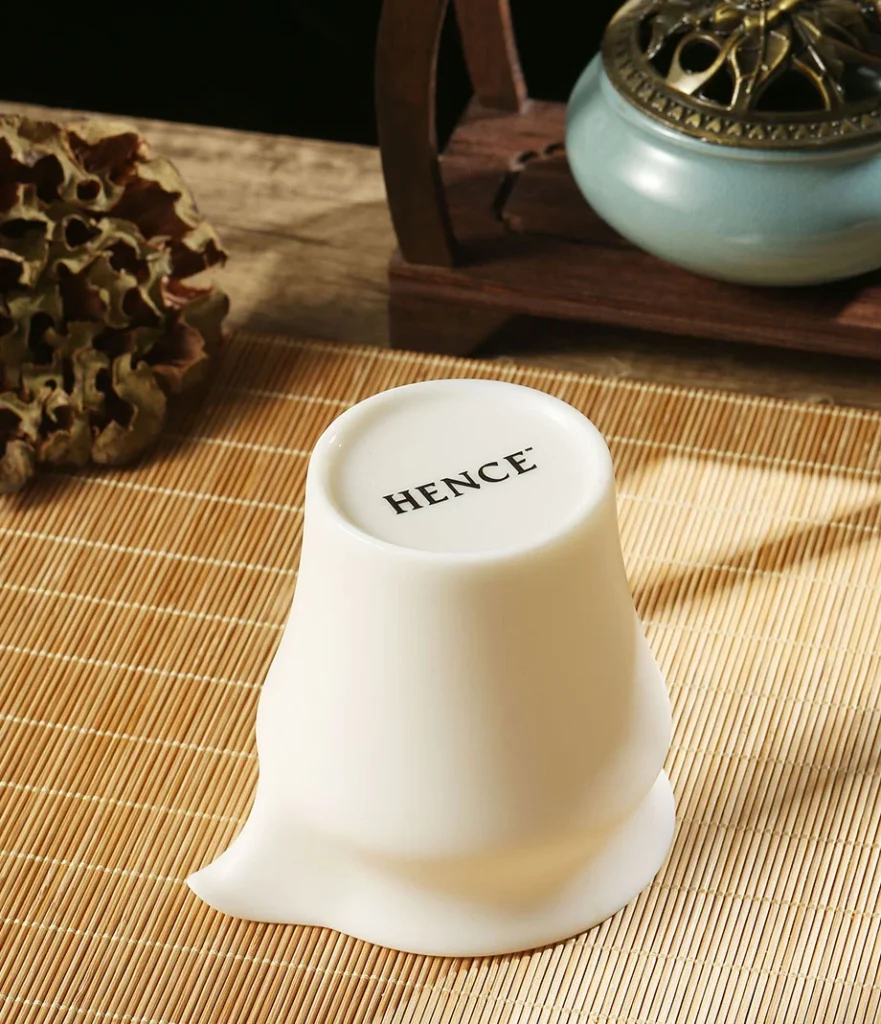
Pour the finished liquor into a gong dao bei, the fairness cup, before serving. Tea poured straight from the gaiwan into several cups comes out stronger at the end of the pour than at the start. Decanting into one vessel first mixes the infusion so every guest gets the same cup. The name for it, cha hai, means ocean of tea.
An old saying holds that a full cup of liquor shows respect for your guest, but a full cup of tea rushes them out the door. Fill tea cups to about 70 percent.
Cleaning and care
Rinse with hot water and skip the soap. Porcelain does not absorb flavor the way zisha clay does, so a gaiwan can move between a green tea and a pu-erh without carrying anything over. That is why tasters reach for one to evaluate unfamiliar tea.
Let it air dry fully before stacking. Trapped moisture between cup and saucer leaves marks over time.
Start with one tea
Brew the same tea in your gaiwan every session for the first two weeks. Changing tea and technique at once means you cannot tell which variable moved the result. A rolled oolong is the most useful teacher because the leaf visibly opens across infusions and the flavor shifts enough that you can taste your own timing mistakes.
For a deeper walk through the full table setup, read our guide to gongfu cha teaware and tools. When you are ready to pick a vessel, start with Gaiwan, Hence No. 1, compare the porcelain range, or browse the full gaiwan collection.