
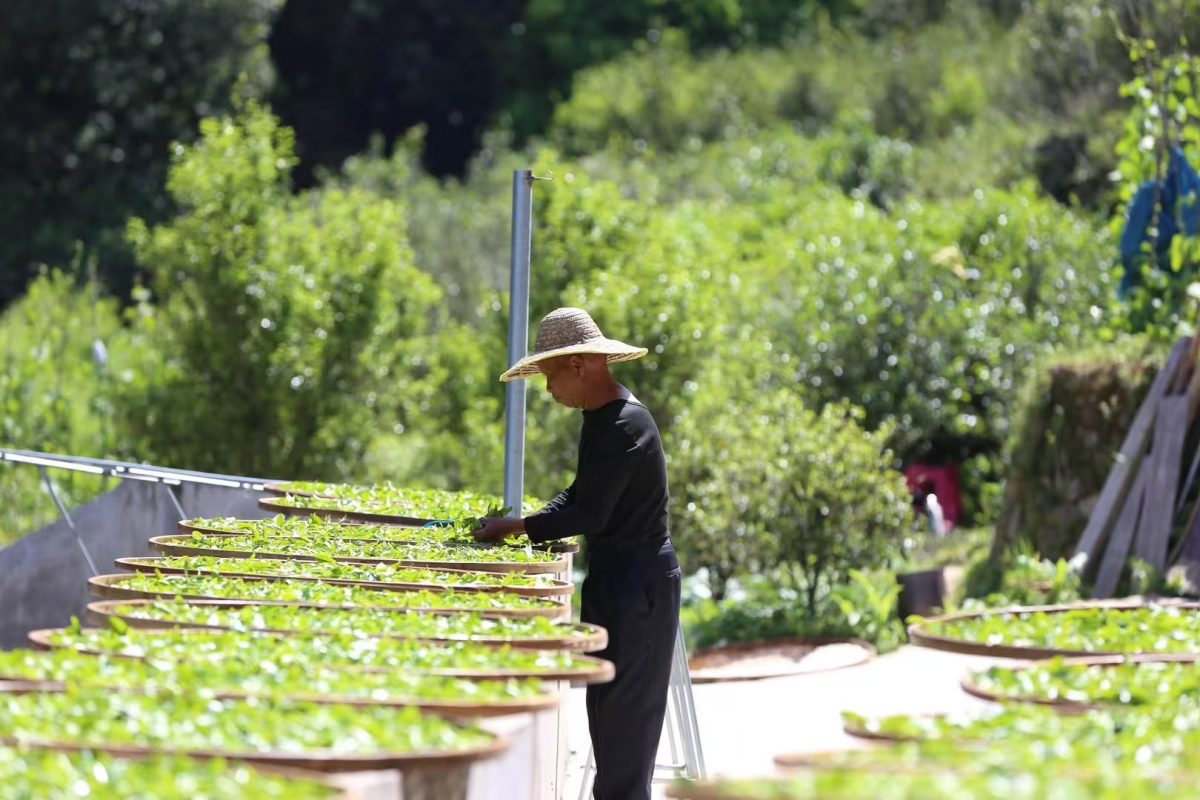
By late afternoon, the processing yards were the busiest places on the mountain.
Wide round bamboo trays, each roughly a meter across, were laid out in rows on metal frames. Every tray was heaped with the day’s pick. Rooftop terraces facing the panorama of slopes and reservoir doubled as drying floors. Fresh trays slid into the line as soon as the leaves arrived from the fields. The trays were tended by hand, with the leaves lifted and shifted periodically to even out the wilt.
The picking, the withering, the oxidation, and the long sequence of roasts that finish the tea make up a calendar that almost no other oolong shares. It is the calendar that explains why Phoenix Dan Cong does not arrive on the market until well after the spring harvests of other regions have already sold out.
The picking standard
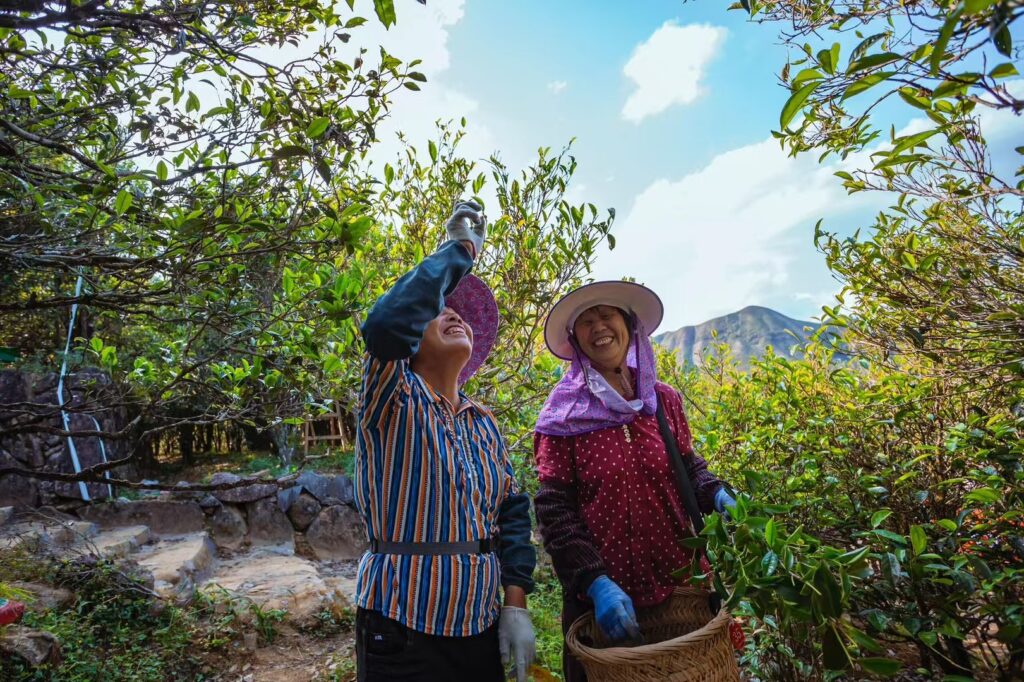
When the harvest is on, mature Dan Cong bushes can rise above shoulder height. On the steeper upper slopes, pickers nearly disappear into the canopy. Picking proceeds slowly, bush by bush. Mature leaves are snipped or twisted off and dropped into woven bamboo baskets or lightweight plastic crates lined for cleanliness. No buds are taken. Broken pieces are avoided. The leaves come off stem-attached.
This is what oolong-stage picking actually looks like. Dan Cong is not picked at the bud, the way many spring greens or buds-only blacks are. Leaves are taken once they have fully opened to small or medium maturity, a few leaves per shoot, lance-shaped and glossy, with the serrated edges typical of the local cultivars.
When a fresh haul is lifted out of a crate at the end of a row, the leaves come up as long green hands, far longer and narrower than what a non-Dan Cong drinker might expect.
That picking standard is the reason the calendar starts later than other oolong regions at comparable latitude. The leaves have to be ready.
Early April to early May
Harvest in Feng Huang Shan runs from early April to early May.
Phoenix Mountain sits at high elevation, but its southern latitude pushes bud break earlier than in the oolong regions of northern Fujian. Because the picking standard requires fully opened leaves, the harvest still lags those northern oolongs at any given moment in the spring. The outer, lower-elevation villages of Feng Huang are typically harvested two to three weeks before Wu Dong village at the top.
Inside any one village, each cultivar has its own micro-season, often only a few days wide.
- Bai Ye, a peachy cultivar, is among the earliest picked.
- Ba Xian, a later-season cultivar with a more elegant profile, can be picked fifteen to twenty days after Bai Ye from the same terroir.
- Ba Xian from the same terroir often sells for two to three times the price of Bai Ye.
Village pairings also matter to the price. Ya Hou village holds the original eight Ba Xian trees from which the cultivar takes its name. A Ba Xian from Ya Hou is generally prized above a Ba Xian from Wu Dong itself, even though Wu Dong is the more famous village. Cultivar and village together set the price, not either one on its own.
This is why a Dan Cong listed only as “Phoenix Dan Cong” tells a buyer very little. Two teas under that label might come off the mountain two weeks apart, from cultivars that command a 3x price difference, and from villages that command another premium on top.
Sun, then oxidation, then night
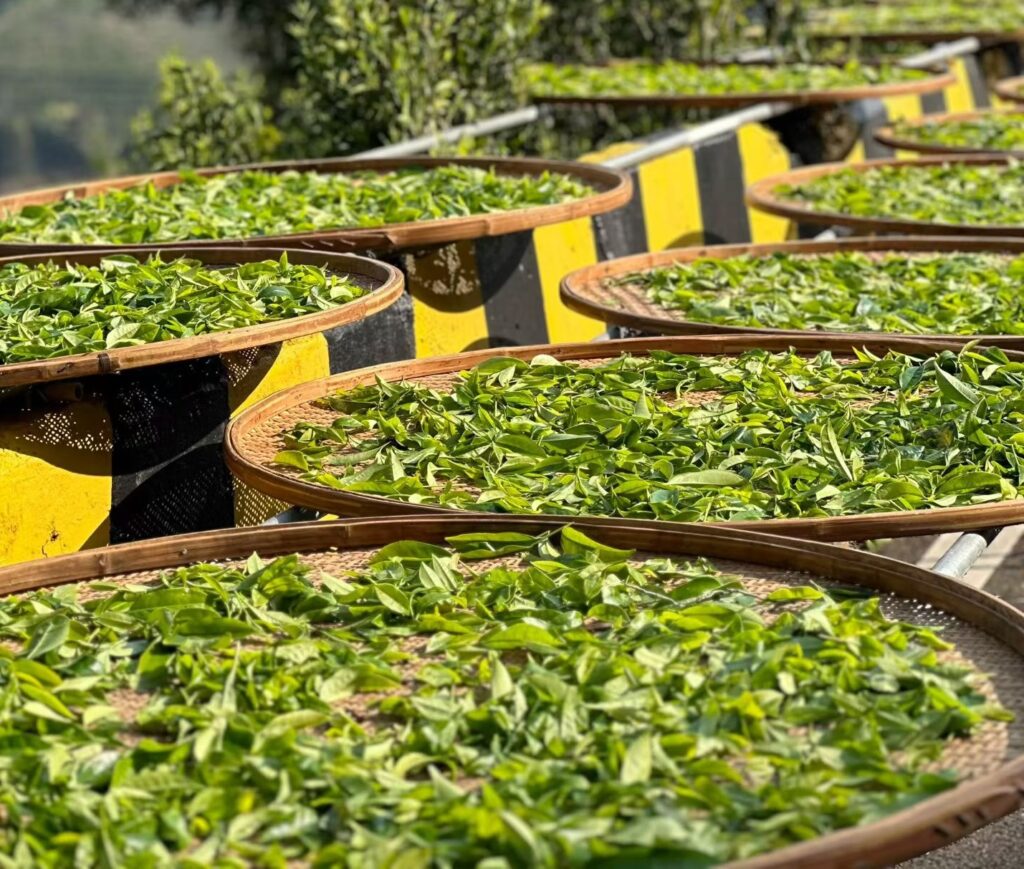
After picking comes solar withering. The bamboo trays on the rooftop are the first stage. The leaves go from rigid to limp in the sun, releasing the first volatile aromatics that will eventually be coaxed into Dan Cong’s signature floral and fruit notes.
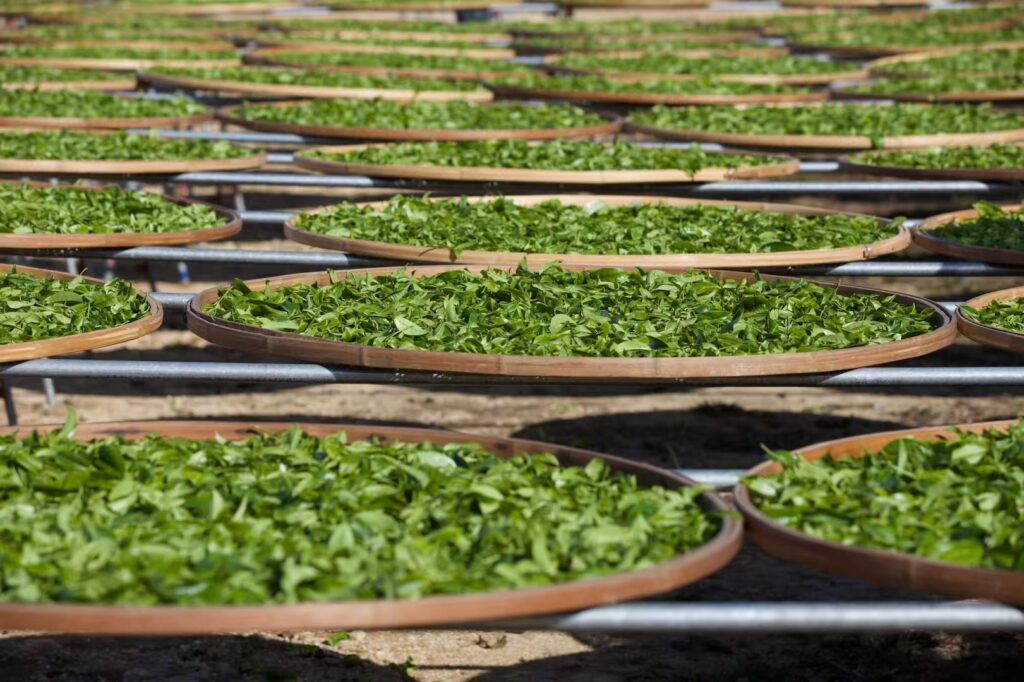
Indoor withering and bruising follow. Then the long oxidation that runs through the night. Production runs around the clock during peak harvest, because the oxidation window for any one batch cannot wait. We watched the rhythm from a rooftop one evening as the trays cycled inside.
What comes off the line at the end of the cycle is maocha. Rough tea. It is dry, dark, and twisted, and it is nowhere near finished.
A month of sorting, then the roasts begin
Sorting follows the maocha stage, done entirely by hand, and can take up to a month per batch. Stems, broken pieces, and off-color leaves are removed one tray at a time.
Then roasting begins.
- Each roast takes six to eight hours.
- Best practice calls for a three-week rest between roasts.
- Traditional Dan Cong is roasted at least twice, often more.
The math on that runs the production cycle into late summer or early fall. A tea that finishes its first roast in mid-May will not finish its second roast until mid-June at the earliest, and a third roast pushes the finish into July.
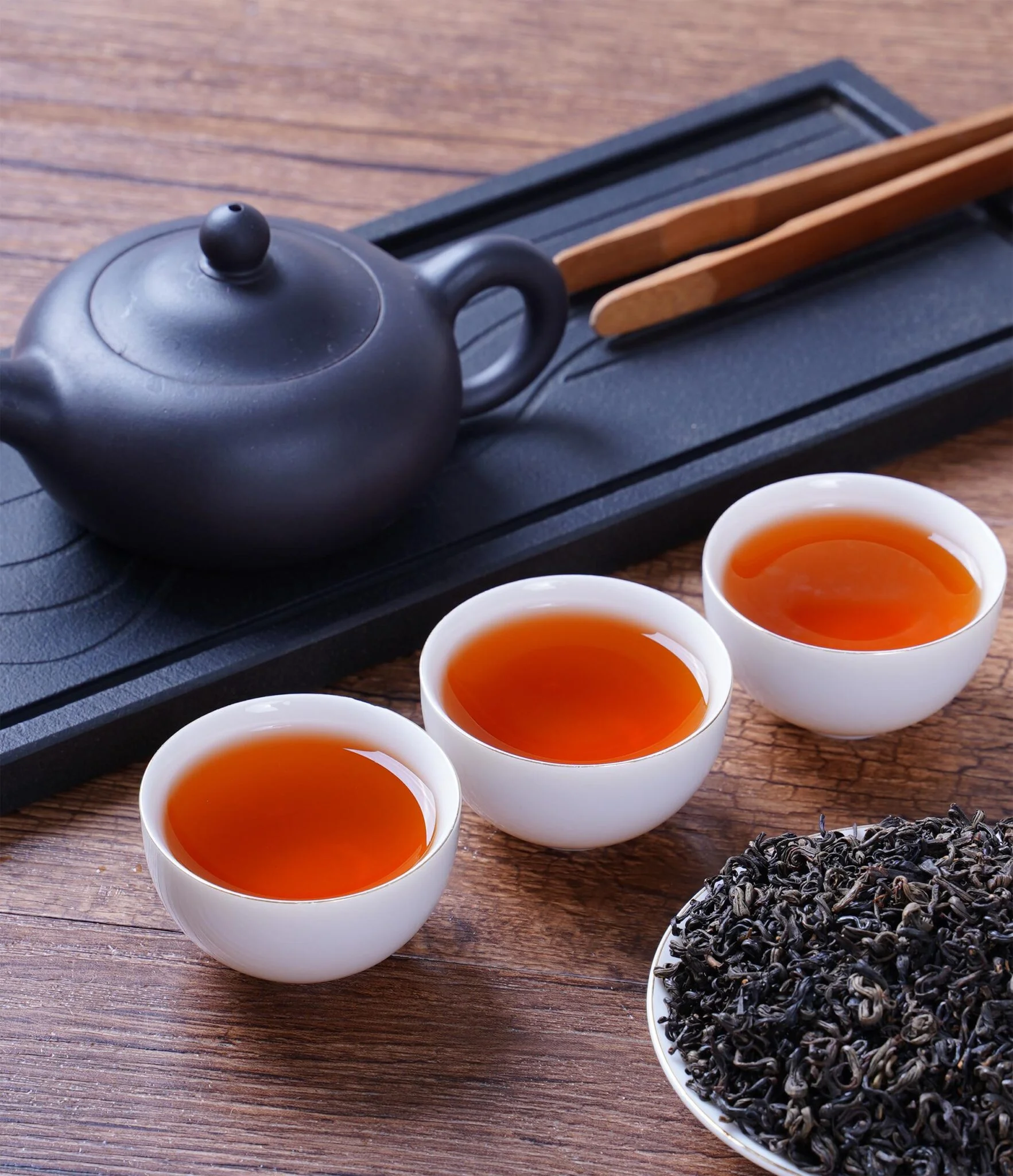
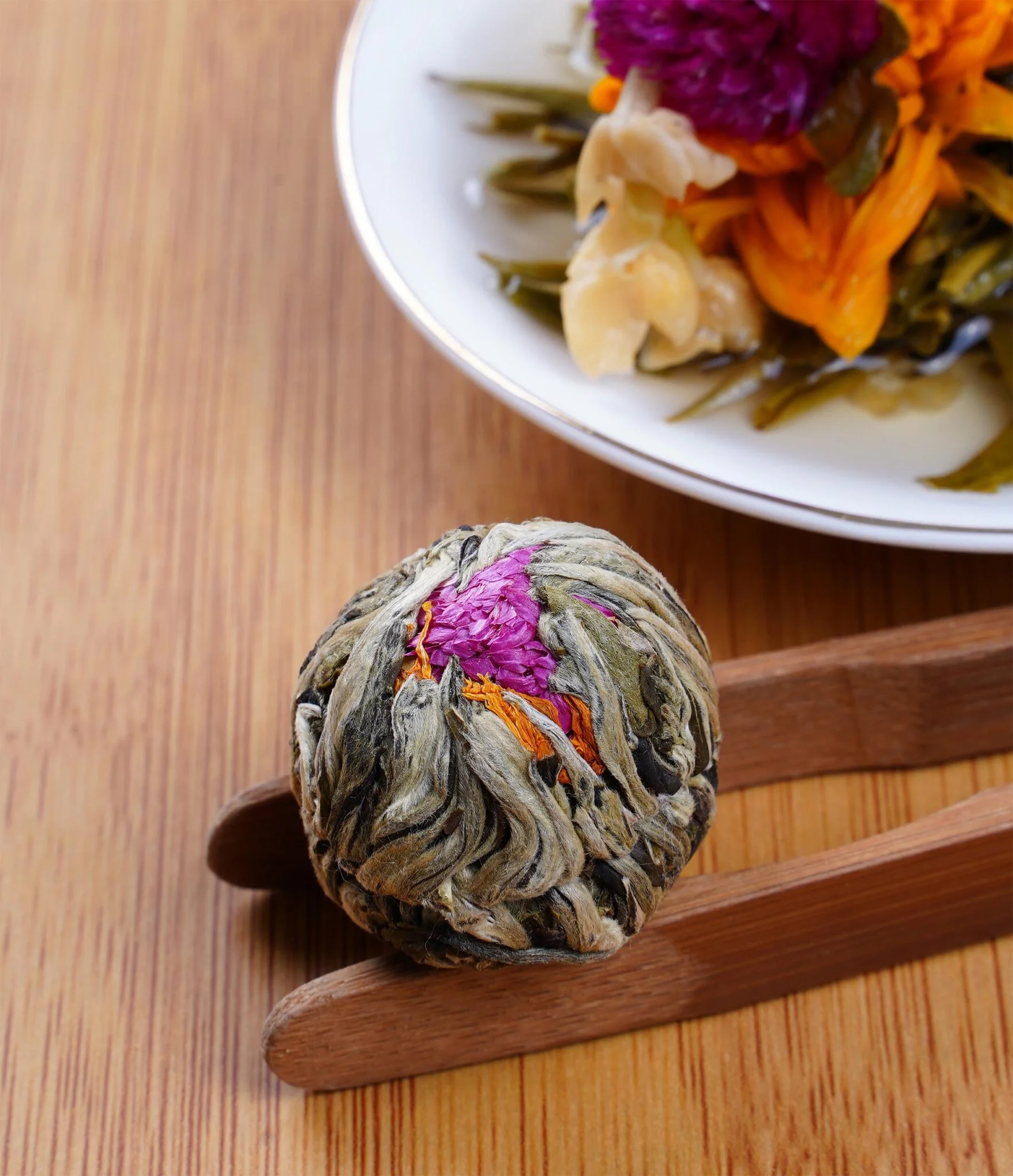
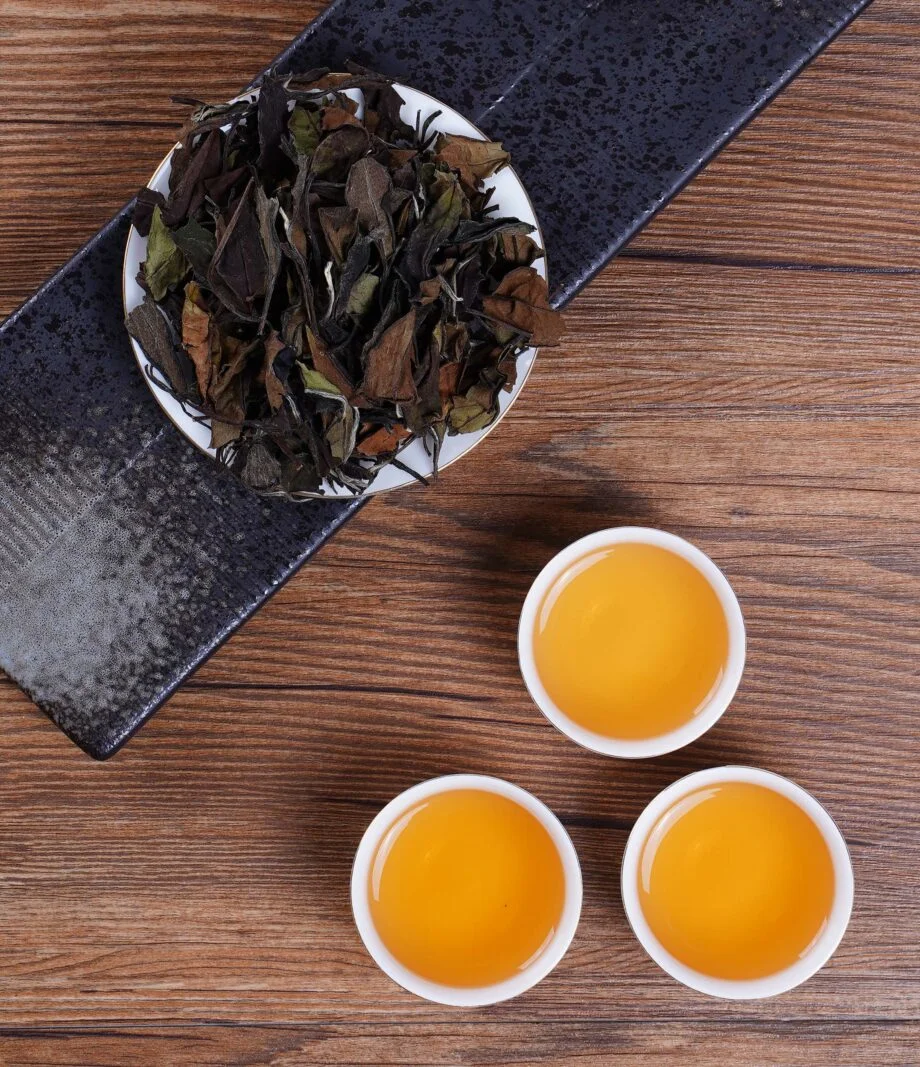
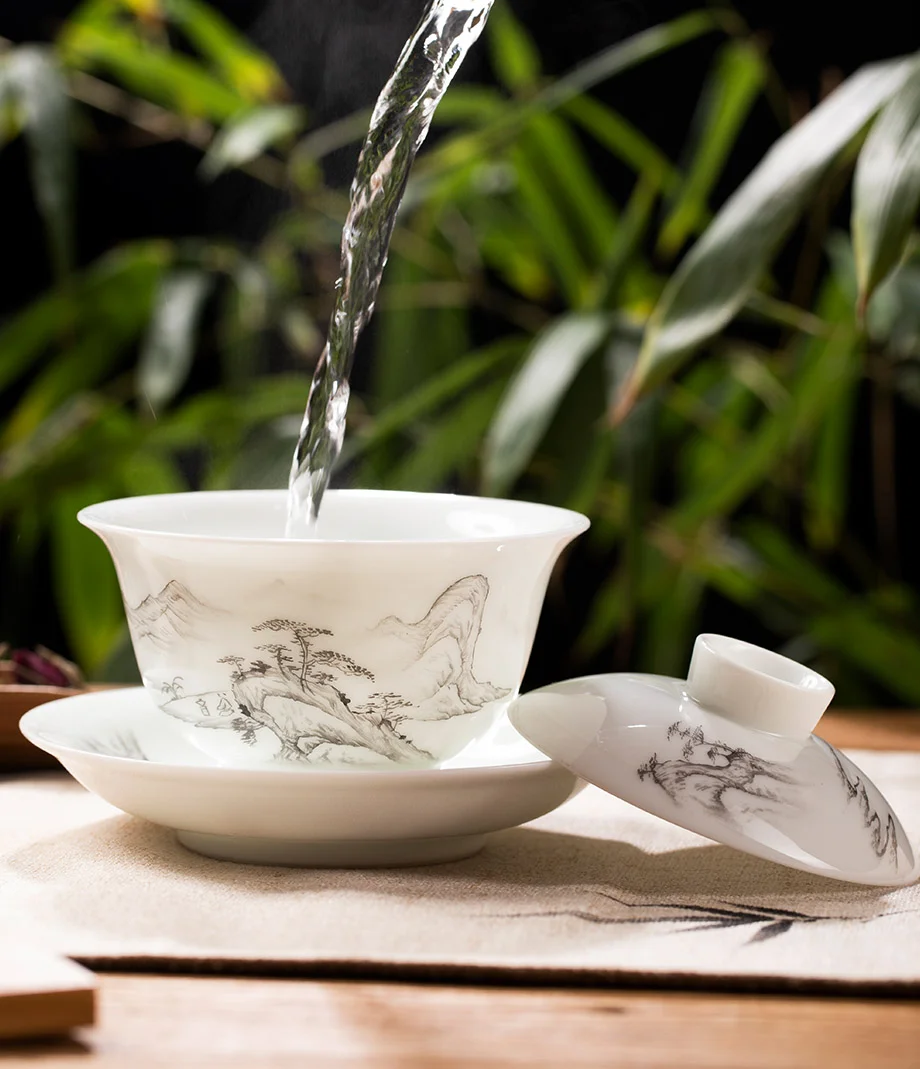
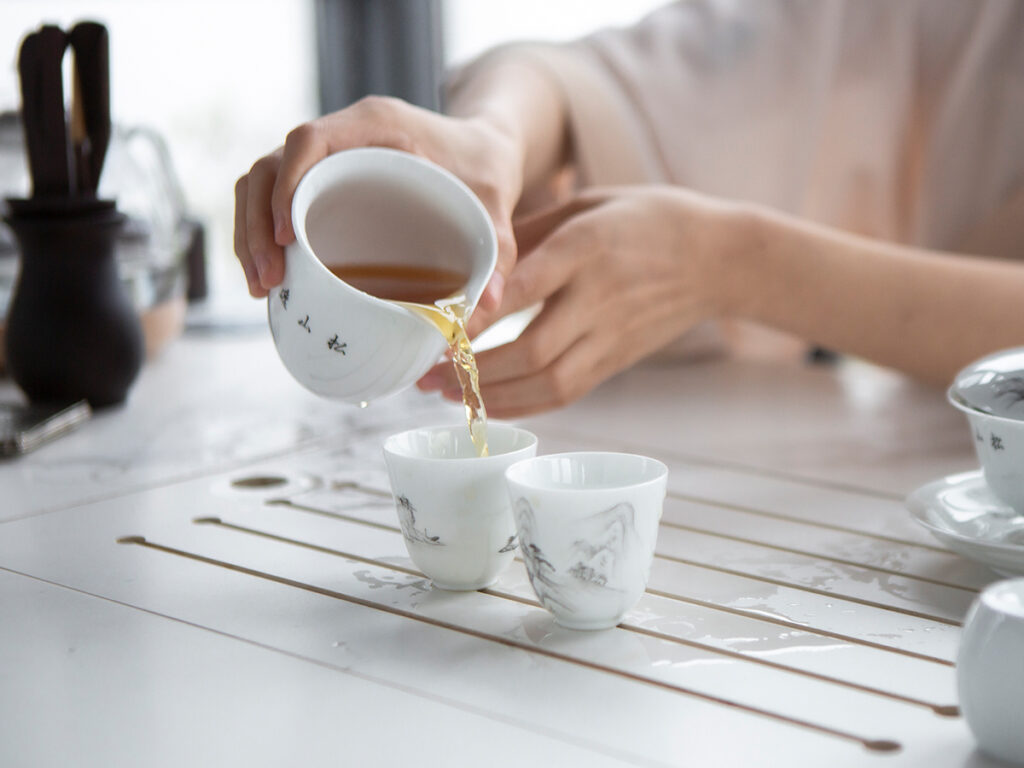
By the time the tea is ready, it bears almost no resemblance to the long fresh leaves we watched come out of the morning baskets. Dry, the leaves are dark and tightly twisted, sitting beside a porcelain gaiwan in the curing room. Brewed, they unfurl in a small white bowl into an amber liquor, recognizably from the same plant but transformed by oxidation and fire.
Authentic Feng Huang Dan Cong is generally not on the market until at least late July. The best of it is later still.
Why we wait
A spring tea that ships in May is not Phoenix Dan Cong as the mountain makes it. It is either a different cultivar processed quickly, a Dan Cong-style tea from outside the core township, or a Phoenix Dan Cong that has been short-roasted to meet a demand it should not be meeting.
Our Dan Cong listings open later in the year for that reason. The lower-elevation teas land first, usually in late July. The higher-elevation batches, including the Wu Dong stock, follow into August and September.
The wait is the product. There is no way to compress the calendar without changing what comes out the other end.
The oolong collection updates as the year’s batches finish roasting. The current Phoenix Dan Cong releases are Mi Lan Xiang Honey Orchid, Ya Shi Xiang, Ya Shi Xiang Roasted, and Phoenix Dan Cong Snowflake.
For the geography behind the village names, the Feng Huang sourcing note is the place to start, and the note on the old trees above the village covers the lao cong question that decides which of the season’s batches command the highest price.