
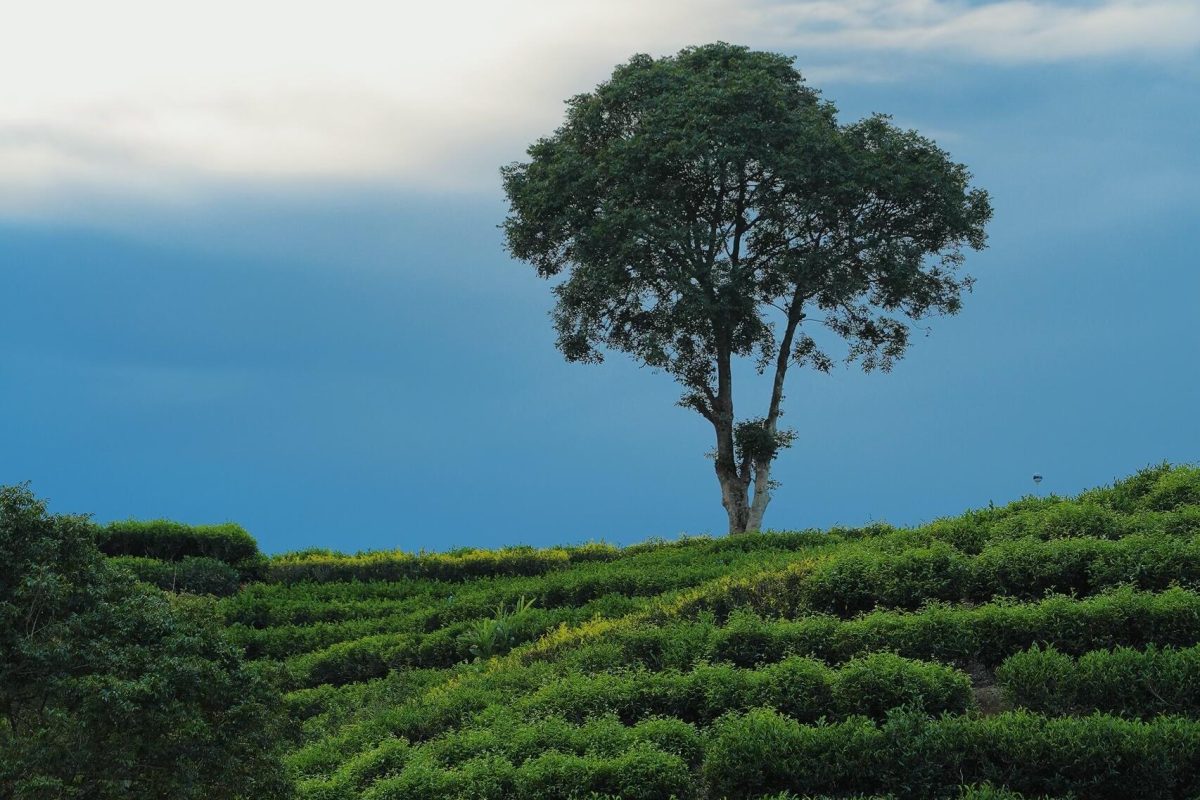
On a rocky outcrop just above one of the upper villages, a stand of old tea trees rose out of the granite. Tall. Multi-stemmed. The bark a weathered grey-brown, with pale green lichen mottled across the south-facing trunks like spilled paint. More architecture than shrub, with the mountain layers receding behind them. A few of the trunks were the diameter of a child’s leg. None of them looked like the chest-high contour rows we had been walking through earlier in the day.
These are the lao cong. The ancient trees.
It is the population that distinguishes Feng Huang from most of China’s tea regions outside Yunnan, and it is the population doing most of the work behind the highest-grade Phoenix Dan Cong on the market. The trouble is that lao cong has no fixed definition, and the gap between what the term implies and what the term covers is wide enough to walk a counterfeit operation through.
What the census says
A survey conducted in the early 1980s counted more than 3,700 tea trees on the mountain over two centuries old. That figure is the one most often cited, and it is the one the term lao cong rests on.
The number has dropped sharply since the 1990s. The current count is unverified. We asked, and got estimates rather than data. The most often-named loss is the Song Zhong, a reputed 700-year-old tree said to descend from the original Song Dynasty bird beak tea. It is no longer alive. The local explanation, repeated to us more than once on the mountain, is that the tree was loved to death. Too much attention. Too many cuttings. Too many visitors.
That story is worth taking seriously, because it is the one anyone selling lao cong is implicitly trading on. A market that prizes ancient trees pressures the trees. The trees that command the highest prices are also the trees most at risk of being lost.
Old roots, younger wood
The newer plantings further down the mountain look very different from the outcrops above. Chest-high bushes. Tidy contour rows. Freshly worked terraces, the soil between rows still dark from the spring rain, footpaths beaten pale between them. The flush of the youngest leaves runs almost yellow-green against the deeper green of the mature canopy. From a distance, they look like any modern tea plantation in southern China.
Even here, the region’s heritage practices show through.
Rather than planting saplings of a chosen cultivar, Phoenix Mountain has long relied on a grafting practice called jia jie. The new wood of a desired cultivar is grafted onto the trunk of an older tree. Look closely at the base of one of these bushes and you can usually find the seam, a thickened collar where the older trunk widens into the younger growth, sometimes still ringed by the dark scar of the original cut. The new growth inherits an established root system and the soil community that root system has built over decades. What looks like a younger bush is often standing on a much older foundation.
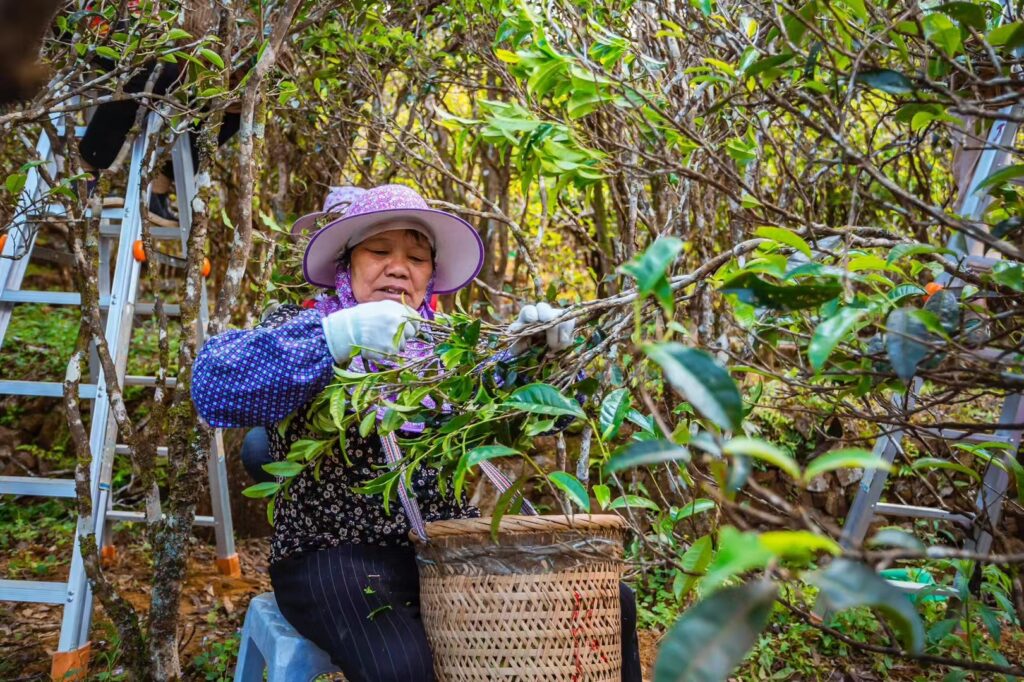
This matters for the term lao cong in a specific way. A tree can be ancient at the root and young in the leaf. A tree can be young at both. A tree can be ancient at both. All three exist on the same mountain. All three sometimes get sold under the same name.
Single-cultivar Dan Cong only emerged as a defined category in the 1980s. The underlying logic of stabilizing distinct cultivars on existing rootstock has run for centuries.
What we look for
When we use the word lao cong on a product page, we are asking the farm to answer three questions, in order.
- Age of the root. Not the age of the visible bush. The age of what is in the ground. This is the part of the tree that defines the flavor profile most drinkers associate with lao cong, the deep mineral undertone that younger bushes do not produce in the same way.
- Age of the wood above the graft. Helpful, secondary. A younger graft on an old root can still produce lao cong character. A young graft on a young root cannot.
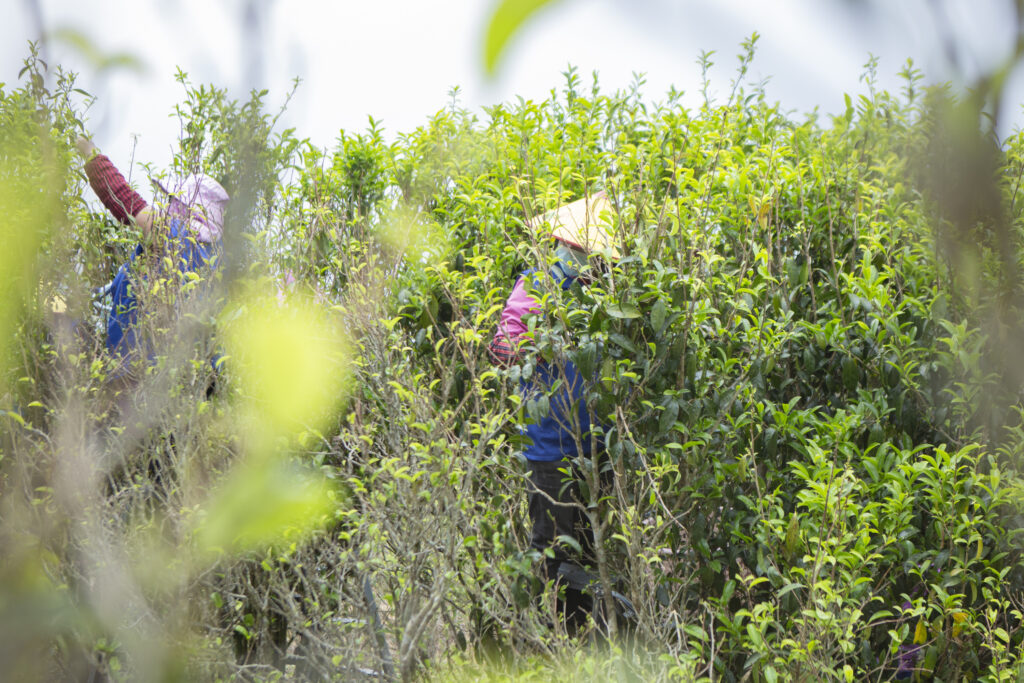
- Yield and pressure. A tree under harvest pressure is a tree closer to the fate of the Song Zhong. A morning of picking from a single lao cong can fill the bottom of one bamboo basket. A row of young bushes a few terraces below will fill the same basket in an hour. We prefer farms that rotate their old-tree harvest and accept the lower volume.
We do not have a numeric threshold for lao cong. Neither does the Chinese market. The honest version of the term is a relationship with a farm that can answer those three questions, and a willingness to take their word when they say a tree is not ready this year.
What this means on the shelf
A few practical consequences for anyone trying to buy lao cong without being taken.
- The phrase “old tree” on its own carries no weight. Ask what is old, the root or the wood, and ask roughly how old.
- A lao cong tea will almost always carry a village name. If the seller cannot tell you the village, the lao cong claim is uninspected.
- Price is a rough but useful signal. Lao cong stock from the upper villages of Feng Huang costs the farms more to harvest, because the yield per tree is lower and the picking is slower. That cost flows downstream. A lao cong priced like a young-bush Dan Cong is almost certainly one of them.
We carry lao cong stock when we can find it from farms we trust. We label it as lao cong only when the farm has answered the three questions above. When we cannot, we sell the tea as the named cultivar it is, at the price the leaf earns on its own merits.
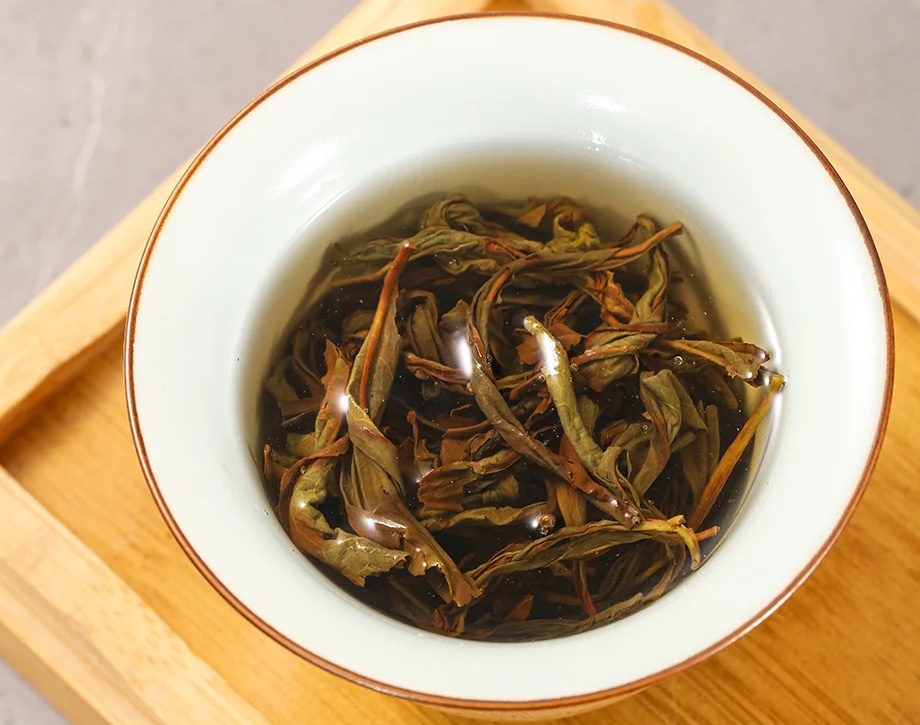
We have asked those three questions on every Dan Cong we list, including the Mi Lan Xiang Honey Orchid, Ya Shi Xiang, and Ya Shi Xiang Roasted. The full oolong collection is the place to browse the rest.
For the geography of the mountain itself, including why village names carry so much weight in any Dan Cong claim, the Feng Huang sourcing note covers the landscape this post sits inside. The harvest calendar post explains why the lao cong stock specifically tends to arrive later in the season than the rest.